How do abstract quantum selection rules and multi-dimensional tensor interactions manifest as concrete, deterministic spatial geometries?
By modeling elementary charges as self-confined genus-1 (toroidal) fluid metric deformations rather than infinitely dense point particles, we eliminate point-charge infinities and render the structural transitions of matter-antimatter interactions and baryon transformations.
- Read the Full Paper (Word Format with Embedded Loops): ResearchGate Publication #205
- Run or Download the Animation Code: See the RealQM GitHub Repository
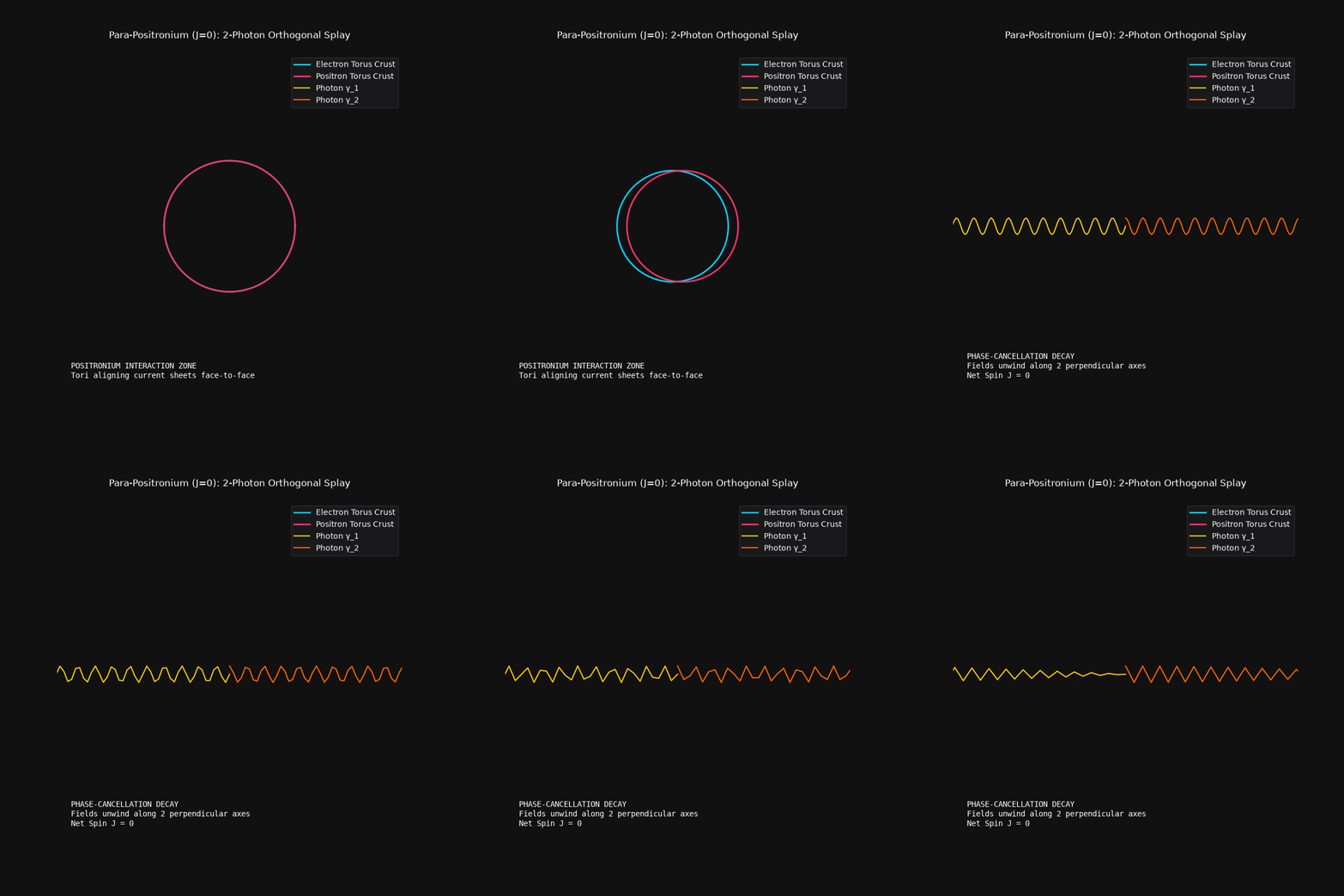
Animation 1: Face-to-face coaxial alignment of the electron and positron tori results in complete phase-cancellation of the internal localized current density vectors. The self-confining magnetic pressure drops, causing the geometric structure to unwind symmetrically into two unconfined, linear transverse photons polarized exactly (90 degrees) out of phase.
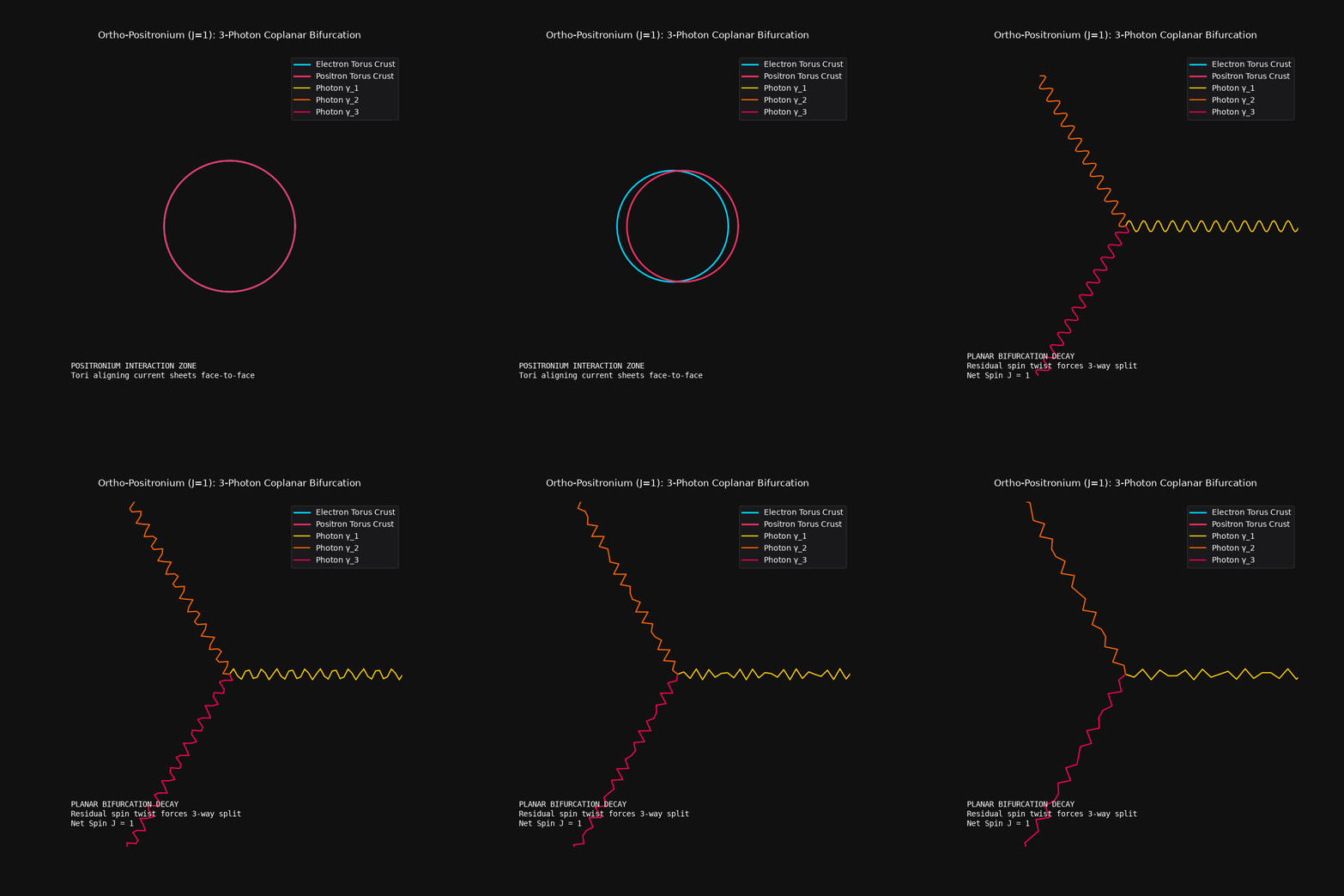
Animation 2: Parallel alignment of the internal particle current rotations traps a residual net angular momentum “twist” that cannot be neutralized by a simple face-to-face collapse. The structure undergoes a flat planar bifurcation, splitting into three coplanar linear wave envelopes spaced 120 degrees apart to carry away the macroscopic spin-1 invariant.
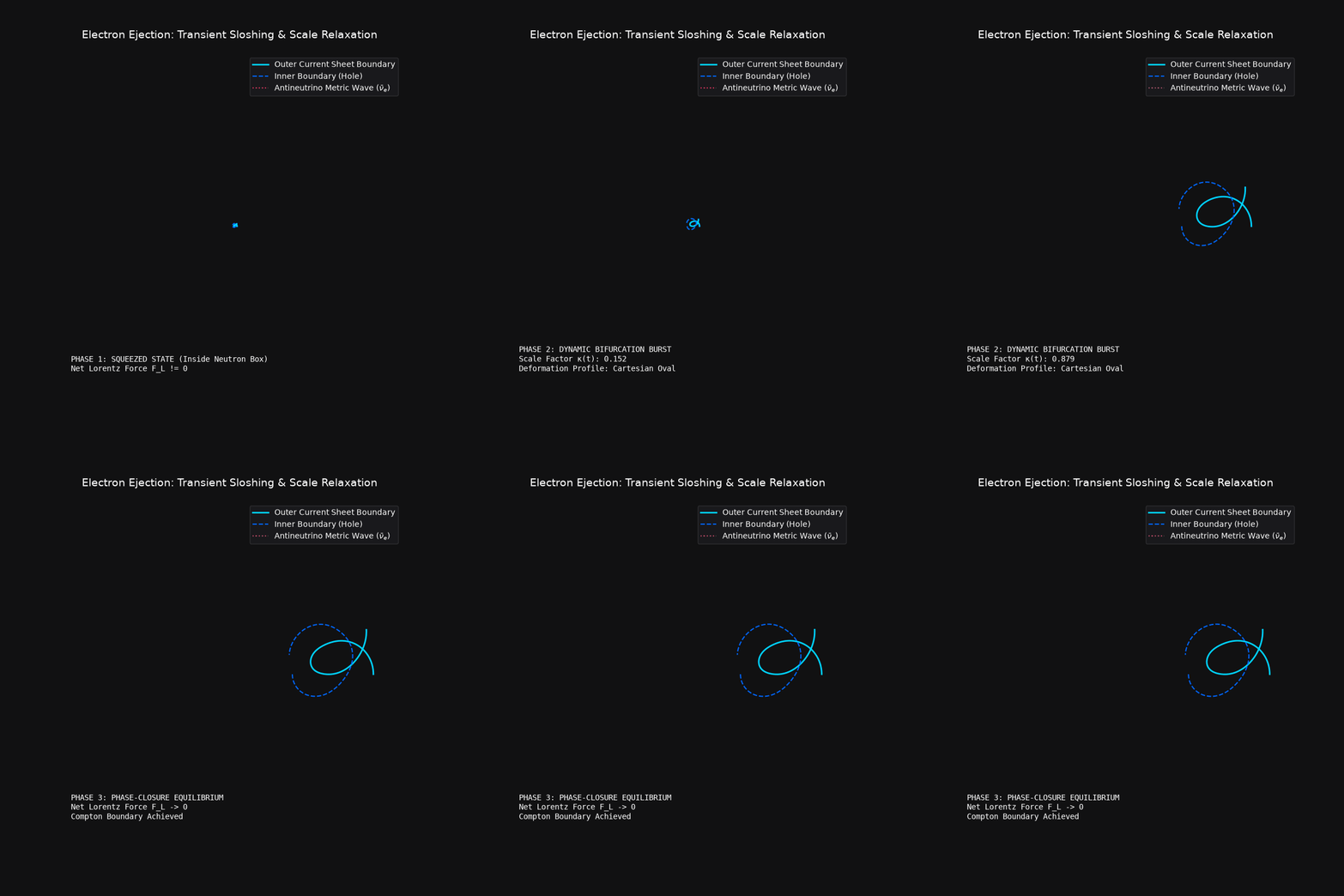
Animation 3: Electron Ejection (beta decay). The proto-electron current sheet transitions out of its unstable, highly compressed femtometer state inside the neutron core via a sigmoidal scale relaxation sequence. The inner boundary experiences a severe cross-sectional pressure gradient, sloshing the tube into a transient Cartesian oval (“egg-shape”) before stabilizing as a free electron torus at the full Compton radius baseline, shedding an antineutrino wave packet.
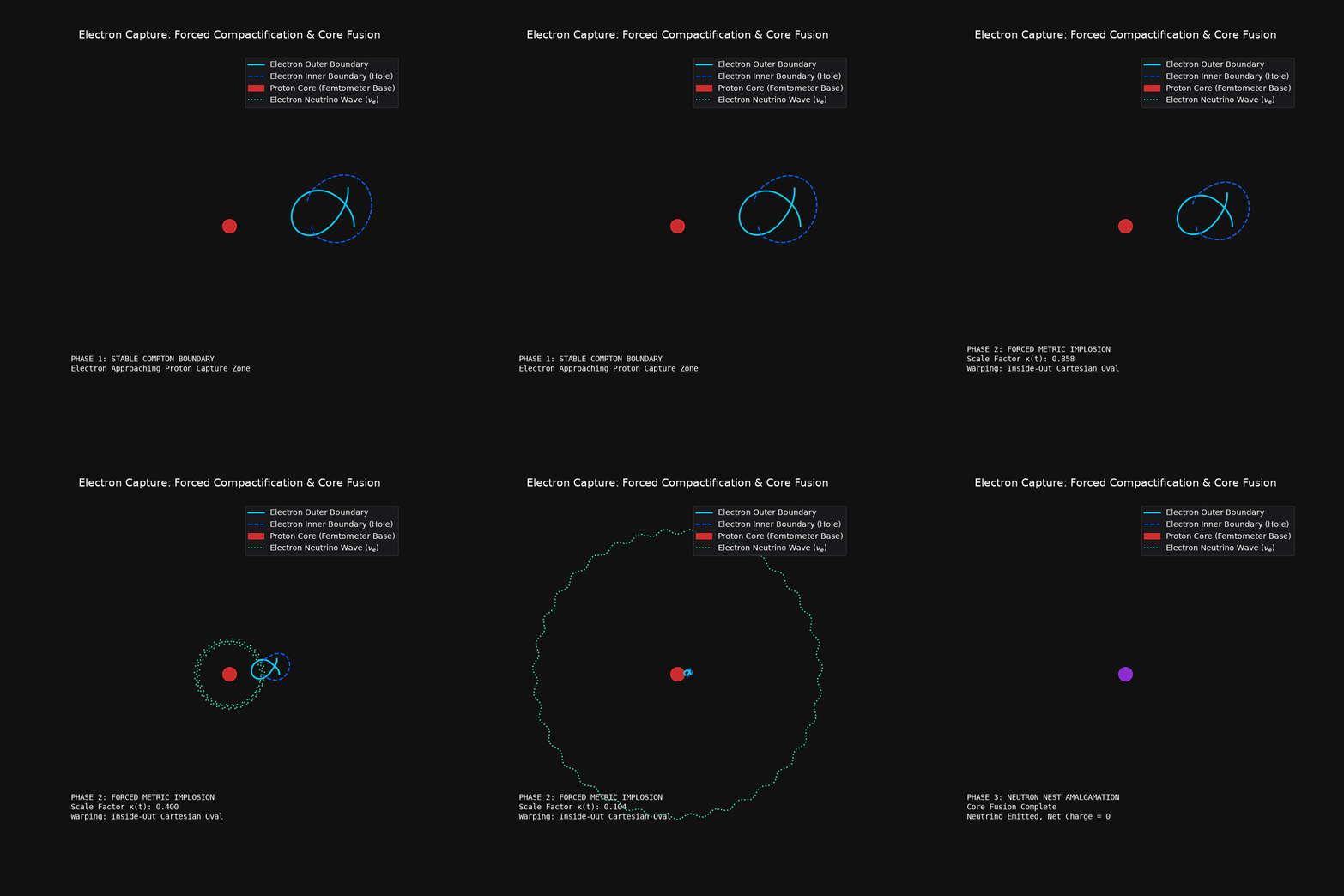
Animation 4: Electron Capture (the exact topological inverse of ejection). A free electron torus is funneled inward and undergoes forced compactification. The cross-section is driven “inside-out” under extreme pressure before fusing into the proton core to form a charge-neutral neutron, radiating an electron neutrino wave packet in the process. Guided by the deep geometric gradient surrounding the proton core, the incoming free electron’s scale factor is crushed forcefully from the Compton domain down to the tight baryon domain. The cross-sectional oval distorts inside-out under extreme localized pressure before fusing seamlessly into the purple, charge-neutralized neutron matrix, ejecting the excess spatial footprint as a sharp neutrino wave.