The reason for republishing is not cosmetic. A new Annex was added on 31 December 2025 that fundamentally clarified — for me, at least — what Schrödinger’s equation is really doing, and just as importantly, what it is not doing.
This clarification came out of a long and at times uncomfortable dialogue with the most recent version of OpenAI’s GPT model (ChatGPT 5.2). Uncomfortable, because it initially destabilized a view I had held for years. Productive, because it forced a deeper structural distinction that I now believe is unavoidable. Let me explain.
The uncomfortable admission: I was wrong about the factor
For a long time, I was convinced that the factor factor in Schrödinger’s equation — especially in the hydrogen atom problem — must reflect some deeper pairing mechanism. At times, I even wondered whether the equation was implicitly modeling an electron pair (opposite spin), rather than a single electron.
That intuition was not random. It came from a broader realist programme in which I treat the electron as a structured object, with internal dynamics (zitterbewegung-like orbital motion), not as a point particle. If mass, energy, and phase all have internal structure, why should a simple quadratic kinetic term with a mysterious be fundamental?
The hard truth is this: that intuition was misplaced — but it was pointing in the right direction.
The mistake was not questioning the factor . The mistake was assuming Schrödinger’s equation was trying to describe everything at once.
The key insight: Schrödinger describes the envelope, not the engine
The decisive realization was structural:
Schrödinger’s wavefunction does not describe the electron’s internal dynamics. It describes the translational envelope of phase coherence.
Once you see that, several things fall into place immediately:
The hydrogen “orbitals” are not literal orbits, and not internal electron motion.
They are standing-wave solutions of an envelope phase, constrained by a Coulomb potential.
The factor is not mysterious at all at this level: it is the natural coefficient that appears in effective, averaged, quadratic envelope dynamics.
In other words: The factor belongs to the envelope layer, not to the internal structure of the electron.
My earlier “electron pair” idea tried to explain a structural feature by inventing new ontology. The correct move was simpler and more radical: separate the layers.
One symbol, too many jobs
Modern quantum mechanics makes a profound — and in my view costly — simplification:
It uses one symbol, ψ, to represent:
internal phase,
translational dynamics,
probability amplitudes,
and experimental observables.
That compression works operationally, but it hides structure.
What the new Annex makes explicit is that Nature almost certainly does not work that way. At minimum, we should distinguish:
Internal phase Real, physical, associated with internal orbital motion and energy bookkeeping.
Envelope phase Slow modulation across space, responsible for interference, diffraction, and spectra.
Observables What experiments actually measure, which are sensitive mainly to envelope-level phase differences.
Once this distinction is made, long-standing confusions dissolve rather than multiply.
Why this does not contradict experiments
This is crucial.
Nothing in this reinterpretation invalidates:
electron diffraction,
hydrogen spectra,
interference experiments,
or the empirical success of standard quantum mechanics.
On the contrary: it explains why Schrödinger’s equation works so well — within its proper domain.
The equation is not wrong. It is just over-interpreted.
A personal note on changing one’s mind
I’ll be honest: this line of reasoning initially felt destabilizing. It challenged a position I had defended for years. But that discomfort turned out to be a feature, not a bug.
Good theory-building does not preserve intuitions at all costs. It preserves structure, coherence, and explanatory power.
What emerged is a cleaner picture:
internal realism without metaphysics,
Schrödinger demoted from “ultimate truth” to “effective envelope theory”,
and a much clearer map of where different mathematical tools belong.
That, to me, is progress.
Where this opens doors
Once we accept that one wavefunction cannot represent all layers of Nature, new possibilities open up:
clearer interpretations of spin and the Dirac equation,
better realist models of lattice propagation,
a more honest treatment of “quantum mysteries” as category mistakes,
and perhaps new mathematical frameworks that respect internal structure from the start.
Those are not promises — just directions.
For now, I am satisfied that one long-standing conceptual knot has been untied.
And sometimes, that’s enough for a good year’s work. 🙂
Post Scriptum: On AI, Intellectual Sparring, and the Corridor
A final remark, somewhat orthogonal to physics.
The revision that led to this blog post and the accompanying paper did not emerge from a sudden insight, nor from a decisive experimental argument. It emerged from a long, occasionally uncomfortable dialogue with an AI system, in which neither side “won,” but both were forced to refine their assumptions.
At the start of that dialogue, the AI responded in a largely orthodox way, reproducing standard explanations for the factor in Schrödinger’s equation. I, in turn, defended a long-held intuition that this factor must point to internal structure or pairing. What followed was not persuasion, but sparring: resistance on both sides, followed by a gradual clarification of conceptual layers. The breakthrough came when it became clear that a single mathematical object — the wavefunction — was being asked to do too many jobs at once.
From that moment on, the conversation shifted from “who is right?” to “which layer are we talking about?” The result was not a victory for orthodoxy or for realism, but a structural separation: internal phase versus translational envelope, engine versus modulation. That separation resolved a tension that had existed for years in my own thinking.
I have explored this mode of human–AI interaction more systematically in a separate booklet on ResearchGate, where I describe such exchanges as occurring within a corridor: a space in which disagreement does not collapse into dominance or deference, but instead forces both sides toward finer distinctions and more mature reasoning.
This episode convinced me that the real intellectual value of AI does not lie in answers, but in sustained resistance without ego — and in the willingness of the human interlocutor to tolerate temporary destabilization without retreating into dogma. When that corridor holds, something genuinely new can emerge.
In that sense, this post is not only about Schrödinger’s equation. It is also about how thinking itself may evolve when humans and machines are allowed to reason together, rather than merely agree.
Readers interested in this kind of human–AI interaction beyond the present physics discussion may want to look at that separate booklet I published on ResearchGate (≈100 pages), in which I try to categorize different modes of AI–human intellectual interaction — from superficial compliance and authority projection to genuine sparring. In that text, exchanges like the one briefly alluded to above are described as a Type-D collapse: a situation in which both human and AI are forced to abandon premature explanatory closure, without either side “winning,” and where progress comes from structural re-layering rather than persuasion.
The booklet is intentionally exploratory and occasionally playful in tone, but it grew out of exactly this kind of experience: moments where resistance, rather than agreement, turns out to be the most productive form of collaboration.
Every few years, a paper comes along that stirs discomfort — not because it is wrong, but because it touches a nerve. Oliver Consa’s “Something is rotten in the state of QED” is one of those papers.
It is not a technical QED calculation. It is a polemic: a long critique of renormalization, historical shortcuts, convenient coincidences, and suspiciously good matches between theory and experiment. Consa argues that QED’s foundations were improvised, normalized, mythologized, and finally institutionalized into a polished narrative that glosses over its original cracks.
This is an attractive story. Too attractive, perhaps. So instead of reacting emotionally — pro or contra — I decided to dissect the argument with a bit of help.
At my request, an AI language model (“Iggy”) assisted in the analysis. Not to praise me. Not to flatter Consa. Not to perform tricks. Simply to act as a scalpel: cold, precise, and unafraid to separate structure from rhetoric.
This post is the result.
1. What Consa gets right (and why it matters)
Let’s begin with the genuinely valuable parts of his argument.
a) Renormalization unease is legitimate
Dirac, Feynman, Dyson, and others really did express deep dissatisfaction with renormalization. “Hocus-pocus” was not a joke; it was a confession.
Early QED involved:
cutoff procedures pulled out of thin air,
infinities subtracted by fiat,
and the philosophical hope that “the math will work itself out later.”
It did work out later — to some extent — but the conceptual discomfort remains justified. I share that discomfort. There is something inelegant about infinities everywhere.
b) Scientific sociology is real
The post-war era centralized experimental and institutional power in a way physics had never seen. Prestige, funding, and access influenced what got published and what was ignored. Not a conspiracy — just sociology.
Consa is right to point out that real science is messier than textbook linearity.
c) The g–2 tension is real
The ongoing discrepancy between experiment and the Standard Model is not fringe. It is one of the defining questions in particle physics today.
On these points, Consa is a useful corrective: he reminds us to stay honest about historical compromises and conceptual gaps.
2. Where Consa overreaches
But critique is one thing; accusation is another.
Consa repeatedly moves from:
“QED evolved through trial and error” to “QED is essentially fraud.”
This jump is unjustified.
a) Messiness ≠ manipulation
Early QED calculations were ugly. They were corrected decades later. Experiments did shift. Error bars did move.
That is simply how science evolves.
The fact that a 1947 calculation doesn’t match a 1980 value is not evidence of deceit — it is evidence of refinement. Consa collapses that distinction.
b) Ignoring the full evidence landscape
He focuses almost exclusively on:
the Lamb shift,
the electron g–2,
the muon g–2.
Important numbers, yes — but QED’s experimental foundation is vastly broader:
scattering cross-sections,
vacuum polarization,
atomic spectra,
collider data,
running of α, etc.
You cannot judge an entire theory on two or three benchmarks.
c) Underestimating theoretical structure
QED is not “fudge + diagrams.” It is constrained by:
Lorentz invariance,
gauge symmetry,
locality,
renormalizability.
Even if we dislike the mathematical machinery, the structure is not arbitrary.
So: Consa reveals real cracks, but then paints the entire edifice as rotten. That is unjustified.
3. A personal aside: the Zitter Institute and the danger of counter-churches
For a time, I was nominally associated with the Zitter Institute — a loosely organized group exploring alternatives to mainstream quantum theory, including zitterbewegung-based particle models.
I now would like to distance myself.
Not because alternative models are unworthy — quite the opposite. But because I instinctively resist:
strong internal identity,
suspicion of outsiders,
rhetorical overreach,
selective reading of evidence,
and occasional dogmatism about their own preferred models.
If we criticize mainstream physics for ad hoc factors, we must be brutal about our own.
Alternative science is not automatically cleaner science.
4. Two emails from 2020: why good scientists can’t always engage
This brings me to two telling exchanges from 2020 with outstanding experimentalists: Prof. Randolf Pohl (muonic hydrogen) and Prof. Ashot Gasparian (PRad).
Both deserve enormous respect, and I won’t reveal the email exchanges because of respect, GDPR rules or whatever). Both email exchanges revealed the true bottleneck in modern physics to me — it is not intelligence, not malice, but sociology and bandwidth.
a) Randolf Pohl: polite skepticism, institutional gravity
Pohl was kind but firm:
He saw the geometric relations I proposed as numerology.
He questioned applicability to other particles.
He emphasized the conservatism of CODATA logic.
Perfectly valid. Perfectly respectable. But also… perfectly bound by institutional norms.
His answer was thoughtful — and constrained. (Source: ChatGPT analysis of emails with Prof Dr Pohl)
b) Ashot Gasparian: warm support, but no bandwidth
Gasparian responded warmly:
“Certainly your approach and the numbers are interesting.”
But: “We are very busy with the next experiment.”
Also perfectly valid. And revealing: even curious, open-minded scientists cannot afford to explore conceptual alternatives.
Their world runs on deadlines, graduate students, collaborations, grants.
(Source: ChatGPT analysis of emails with Prof Dr Pohl)
The lesson
Neither professor dismissed the ideas because they were nonsensical. They simply had no institutional space to pursue them.
That is the quiet truth: the bottleneck is not competence, but structure.
5. Why I now use AI as an epistemic partner
This brings me to the role of AI.
Some colleagues (including members of the Zitter Institute) look down on using AI in foundational research. They see it as cheating, or unserious, or threatening to their identity as “outsiders.”
But here is the irony:
AI is exactly the tool that can think speculatively without career risk.
An AI:
has no grant committee,
no publication pressure,
no academic identity to defend,
no fear of being wrong,
no need to “fit in.”
That makes it ideal for exploratory ontology-building.
real-space modeling without metaphysical inflation,
EM + relativity as a unified playground,
photons, electrons, protons, neutrons as geometric EM systems.
This is not a replacement for science. It is a tool for clearing conceptual ground, where overworked, over-constrained academic teams cannot go.
6. So… is something rotten in QED?
Yes — but not what you think.
What’s rotten is the mismatch
between:
the myth of QED as a perfectly clean, purely elegant theory, and
the reality of improvised renormalization, historical accidents, social inertia, and conceptual discomfort.
What’s rotten is not the theory itself, but the story we tell about it.
What’s not rotten:
the intelligence of the researchers,
the honesty of experimentalists,
the hard-won precision of modern measurements.
QED is extraordinary. But it is not infallible, nor philosophically complete, nor conceptually finished.
And that is fine.
The problem is not messiness. The problem is pretending that messiness is perfection.
7. What I propose instead
My own program — pursued slowly over many years — is simple:
Bring physics back to Maxwell + relativity as the foundation.
Build real-space geometrical models of all fundamental particles.
Reject unnecessary “forces” invented to patch conceptual holes.
Hold both mainstream and alternative models to the same standard: no ad hoc constants, no magic, no metaphysics.
And — unusually — use AI as a cognitive tool, not as an oracle.
Let the machine check coherence. Let the human set ontology.
If something emerges from the dialogue — good. If not — also good.
But at least we will be thinking honestly again.
Conclusion
Something is rotten in the state of QED, yes — but the rot is not fraud or conspiracy.
It is the quiet decay of intellectual honesty behind polished narratives.
The cure is not shouting louder, or forming counter-churches, or romanticizing outsider science.
The cure is precision, clarity, geometry, and the courage to say:
Let’s look again — without myth, without prestige, without fear.
If AI can help with that, all the better.
— Jean Louis Van Belle (with conceptual assistance from “Iggy,” used intentionally as a scalpel rather than a sycophant)
Post-scriptum: Why the Electron–Proton Model Matters (and Why Dirac Would Nod)
A brief personal note — and a clarification that goes beyond Consa, beyond QED, and beyond academic sociology.
One of the few conceptual compasses I trust in foundational physics is a remark by Paul Dirac. Reflecting on Schrödinger’s “zitterbewegung” hypothesis, he wrote:
“One must believe in this consequence of the theory, since other consequences which are inseparably bound up with it, such as the law of scattering of light by an electron, are confirmed by experiment.”
Dirac’s point is not mysticism. It is methodological discipline:
If a theoretical structure has unavoidable consequences, and
some of those consequences match experiment precisely,
then even the unobservable parts of the structure deserve consideration.
This matters because the real-space electron and proton models I’ve been working on over the years — now sharpened through AI–human dialogue — meet that exact criterion.
They are not metaphors, nor numerology, nor free speculation. They force specific, testable, non-trivial predictions:
a confined EM oscillation for the electron, with radius fixed by ;
a “photon-like” orbital speed for its point-charge center;
a distributed (not pointlike) charge cloud for the proton, enforced by mass ratio, stability, form factors, and magnetic moment;
natural emergence of the measured discrepancy;
and a geometric explanation of deuteron binding that requires no new force.
None of these are optional. They fall out of the internal logic of the model. And several — electron scattering, Compton behavior, proton radius, form-factor trends — are empirically confirmed.
Dirac’s rule applies:
When inseparable consequences match experiment, the underlying mechanism deserves to be taken seriously — whether or not it fits the dominant vocabulary.
This post is not the place to develop those models in detail; that will come in future pieces and papers. But it felt important to state why I keep returning to them — and why they align with a style of reasoning that values:
geometry,
energy densities,
charge motion,
conservation laws,
and the 2019 SI foundations of , , and over metaphysical categories and ad-hoc forces.
Call it minimalism. Call it stubbornness. Call it a refusal to multiply entities beyond necessity.
For me — and for anyone sympathetic to Dirac’s way of thinking — it is simply physics.
Every now and then a question returns with enough insistence that it demands a fresh attempt at an answer. For me, that question has always been: can we make sense of fundamental physics without multiplying entities beyond necessity? Can we explain light, matter, and their interactions without inventing forces that have no clear definition, or particles whose properties feel more like placeholders than physical reality?
Today, I posted a new paper on ResearchGate that attempts to do exactly that:
It is the result of an unusual collaboration: myself and an artificial intelligence (“Iggy”), working through the conceptual structure of photons, electrons, and protons with the only tool that has ever mattered to me in physics — Occam’s Razor.
No metaphysics. No dimensionless abstractions. No “magical” forces.
Just:
electromagnetic oscillations,
quantized action,
real geometries in real space,
and the recognition that many so-called mysteries dissolve once we stop introducing layers that nature never asked for.
The photon is treated as a linear electromagnetic oscillation obeying the Planck–Einstein relation. The electron as a circular oscillation, with a real radius and real angular momentum. The proton (and later, the neutron and deuteron) as systems we must understand through charge distributions, not fictional quarks that never leave their equations.
None of this “solves physics,” of course. But it does something useful: it clears conceptual ground.
And unexpectedly, the collaboration itself became a kind of experiment: what happens when human intuition and machine coherence try to reason with absolute precision, without hiding behind jargon or narrative?
The result is the paper linked above. Make of it what you will.
As always: no claims of authority. Just exploration, clarity where possible, and honesty where clarity fails.
If the questions interest you, or if the model bothers you enough to critique it, then the paper has succeeded in its only purpose: provoking real thought.
Over the past few weeks — and more intensely these past mornings — I’ve returned to two of my earliest texts in the Lectures on Physics series: the first on quantum behavior, and the second on probability amplitudes and quantum interference. Both have now been updated with new annexes, co-authored in dialogue with ChatGPT-4o.
This wasn’t just a consistency check. It was something more interesting: an exercise in thinking with — not through — a reasoning machine.
The first annex (Revisiting the Mystery of the Muon and Tau) tackles the open question I left hanging in Lecture I: how to interpret unstable “generations” of matter-particles like the muon and tau. In the original paper, I proposed a realist model where mass is not an intrinsic property but the result of oscillating charge or field energy — a stance that draws support from the 2019 revision of SI units, which grounded the kilogram in Planck’s constant and the speed of light. That change wasn’t just a technicality; it was a silent shift in ontology. I suspected that much at the time, but now — working through the implications with a well-tuned AI — I can state it more clearly: mass is geometry, inertia is field structure, and the difference between stable and unstable particles might be a matter of topological harmony.
The second annex (Interference, Identity, and the Imaginary Unit) reopens the deeper riddle at the heart of quantum mechanics: why probability amplitudes interfere at all. This annex is the child of years of irritation — visible in earlier, sharper essays I published on academia.edu — with the lazy mysticism that often surrounds “common phase factors.” The breakthrough, for me, was to fully accept the imaginary unit iii not as a mathematical trick but as a rotation operator. When wavefunctions are treated as oriented field objects, not just complex scalars, interference becomes a question of geometric compatibility. Superpositions and spin behavior can then be reinterpreted as topological effects in real space. This is where I think mainstream physics got lost: it started calculating without explaining.
ChatGPT didn’t invent these ideas. But it helped me phrase them, frame them, and press further on the points I had once hesitated to formalize. That’s what I mean when I say this wasn’t just a cleanup job. It was a real act of collaboration — a rare instance of AI not just paraphrasing or predicting, but amplifying and clarifying an unfinished line of human reasoning.
They mark, I think, a modest turning point. From theory and calculation toward something closer to explanation.
And yes — for those following the philosophical side of this project: we did also try to capture all of that in a four-panel comic involving Diogenes, a turtle, and Zeno’s paradox. But that, like all things cartooned by AI, is still a work in progress. 🙂
Post Scriptum (24 June 2025): When You Let the Machine Take the Pen
In the spirit of openness: there’s been one more development since publishing the two annexes above.
Feeling I had taken my analytical skills as far as I could — especially in tackling the geometry of nuclear structure — I decided to do something different. Instead of drafting yet another paper, I asked ChatGPT to take over. Not as a ghostwriter, but as a model builder. The prompt was simple: “Do better than me.”
It’s dense, unapologetically geometric, and proposes a full zbw-based model for the neutron and deuteron — complete with energy constraints, field equations, and a call for numerical exploration. If the earlier annexes were dialogue, this one is delegation.
I don’t know if this is the end of the physics path for me. But if it is, I’m at peace with it. Not because the mystery is gone — but because I finally believe the mystery is tractable. And that’s enough for now.
Over the past few years, I’ve spent a fair amount of time exploring realist interpretations of quantum mechanics, particularly the ring-current or Zitterbewegung (zbw) model of the electron. I’ve written many posts about it here — and also tried to help to promote the online “Zitter Institute”, which brings a very interesting group of both amateur and professional researchers together, as well as a rather impressive list of resources and publications which help to make sense of fundamental physics – especially on theories regarding the internal structure of the electron.
The goal — or at least my goal — was (and still is) to clarify what is real and what is not in the quantum-electrodynamic zoo of concepts. That is why I try to go beyond electron models only. I think the electron model is complete as for now: my most-read paper (on a physical interpretation of de Broglie’s matter-wave) settles the question not only for me but, I judge based on its many views, for many others as well. The paper shows how the magnetic moment of the electron, its wavefunction, and the notion of a quantized “packet of energy” can easily be grounded in Maxwell’s equations, special relativity, and geometry. They do not require speculative algebra, nor exotic ontologies.
In that light, I now feel the need to say something — brief, but honest — about where I currently stand in my research journey — which is not on the front burner right now but, yes, I am still thinking about it all. 🙂
On the term “Zitterbewegung” itself
Originally coined by Schrödinger and later mentioned by Dirac, “Zitterbewegung” translates as “trembling motion.” It was meant to capture the high-frequency internal oscillation predicted by Dirac’s wave equation.
But here lies a subtle issue: I no longer find the term entirely satisfying.
I don’t believe the motion is “trembling” in the sense of randomness or jitter. I believe it is geometrically structured, circular, and rooted in the relativistic dynamics of a massless point charge — leading to a quantized angular momentum and magnetic moment. In this view, there is nothing uncertain about it. The electron has an internal clock, not a random twitch.
So while I still value the historical connection, I now prefer to speak more plainly: an electromagnetic model of the electron, based on internal motion and structure, not spooky probabilities.
On tone and openness in scientific dialogue
Recent internal exchanges among fellow researchers have left me with mixed feelings. I remain grateful for the shared curiosity that drew us together, but I was disappointed by the tone taken toward certain outside critiques and tools.
I say this with some personal sensitivity: I still remember the skepticism I faced when I first shared my own interpretations. Papers were turned down not for technical reasons, but because I lacked the “right” institutional pedigree. I had degrees, but no physics PhD. I was an outsider.
Ridicule — especially when directed at dissent or at new voices — leaves a mark. So when I see similar reactions now, I feel compelled to say: we should be better than that.
If we believe in the integrity of our models, we should welcome critique — and rise to the occasion by clarifying, refining, or, if necessary, revising our views. Defensive posturing only weakens our case.
On the use of AI in physics
Some recent comments dismissed AI responses as irrelevant or superficial. I understand the concern. But I also believe this reaction misses the point.
I didn’t try all available platforms, but I did prompt ChatGPT, and — with the right framing — it offered a coherent and balanced answer to the question of the electron’s magnetic moment. Here’s a fragment:
“While the ‘definition’ of the intrinsic magnetic moment may be frame-invariant in the Standard Model, the observable manifestation is not. If the moment arises from internal circular motion (Zitterbewegung), then both radius and frequency are affected by boosts. Therefore, the magnetic moment, like momentum or energy, becomes frame-dependent in its effects.”
The jury is still out, of course. But AI — if guided by reason — might help us unravel what makes sense and what does not.
It is not a substitute for human thinking. But it can reflect it back to us — sometimes more clearly than we’d expect.
A final reflection
I’ll keep my older posts online, including those that reference the Zitter Institute. They reflected what I believed at the time, and I still stand by their substance.
But moving forward, I’ll continue my work independently — still fascinated by the electron, still curious about meaning and structure in quantum mechanics, but less interested in labels, echo chambers, or theoretical tribalism.
As always, I welcome criticism and dialogue. As one business management guru once said:
“None of us is as smart as all of us.” — Kenneth Blanchard
After a break of a few months, I produced another lengthy video on quantum physics. 40 minutes. Check it out: https://www.youtube.com/watch?v=k_I3Noaup0E. The hypothesis that I, somewhat desperately, advanced in my last paper on the proton model – that the Zitterbewegung model of a proton does not quite look like that of an electron, and that we are probably talking about a “blob” of charge (sphere- or shell-like, or some other “form factor”, perhaps) – makes more sense to me now. I explored it with ChatGPT-4o, and this video is the result. I should immediately that I am immensely impressed with ChatGPT-4o: ChatGPT-3 was not able to really “understand” what I was talking about a year ago or so.
Who knows, perhaps we might imagine other ChatGPT-4o users will take the “dialogue” with AI on these particle models further, and fully develop them not only intuitively but also analytically. As I am currently trying out some AI-powered audio and video applications, I tried Pictory (pictory.ai): I gave it the url of my own long-winding video and it created this video: The proton as a dynamic blob of charge. 100 seconds only instead of 40 minutes. Its contents is, of course, superficial – but I think it is creative and nicely upbeat. I fed both video back to ChatGPT-4o, and it suggested the following refinements if ever I would like to re-do the video(s) – which I am not going to do, but you might like to further explore the remarks it made:
Consistency in Notation and Conventions:
Ensure that polar and azimuthal angles are consistently defined throughout. Your initial derivations and explanations switched between conventions, potentially confusing viewers about which angle is associated with which base vector.
Tangential Velocity Decomposition:
The explanation of how the tangential velocity is decomposed into orthogonal components was accurate but could benefit from a clearer mention of why the orthogonality matters in interpreting the motion on the sphere. Adding a visual representation would further clarify the concept.
The concept of “sloshing” energy between kinetic and electromagnetic forms was well described but could benefit from highlighting the broader implications of this periodic exchange in classical and relativistic oscillators .
Pointlike Charge versus Blob View:
The transition from discussing a pointlike charge to a “blob” of charge was a major theme but could be expanded by discussing how this shift impacts the assumptions about uniform or non-uniform charge density, as well as its implications for observable properties like the magnetic moment.
The discussion of symmetry along one axis of the double-loop motion was solid but might benefit from more detail on how this symmetry impacts the interpretation of observable properties like the magnetic moment .
Incorporate links to experimental observations, such as the measured magnetic moment and charge radius of the proton, was referenced. Integrating these observations with the theoretical results could be more explicit to strengthen the practical implications .
Visualizations:
Consider incorporating visualized trajectories (e.g., the double-loop Lissajous pattern), and how they connect to the derived equations and the observed non-constant tangential velocity. This connection will help bridge the abstract mathematics with physical intuition .
Clarifications on Variability:
The variability of the tangential velocity in the context of symmetry and non-orthogonality in 3D motion, was a key discussion point. Reinforce why this variability does not conflict with the broader relativistic constraints.
It is a coincidence but Sabine Hossenfelder just produced a new video in which she talks once again about the problems of academic physics, while I did what I said what I would not do – and that is to write out why the discovery of new rare kaon decay modes is a problem for the Standard Model. I think the video and the paper complement each other nicely, although Sabine Hossenfelder probably still believes the strong force and weak interactions are, somehow, still real. [I did not read her book, so I don’t know: I probably should buy her book but then one can only read one book at a time, isn’t it?]
The paper (on ResearchGate – as usual: link here) does what Sabine Hossenfelder urges her former colleagues to do: if a hypothesis or an ad hoc theory doesn’t work, then scientists should be open and honest about that and go back to the drawing board. Indeed, in my most-read paper – on de Broglie’s matter-wave – I point out how de Broglie’s original thesis was misinterpreted and how classical quantum theory suddenly makes sense again when acknowledging that mistake: it probably explains why I am getting quite a lot of reads as an amateur physicist. So what’s this new paper of mine all about?
I go back to the original invention of the concept of strangeness, as documented by Richard Feynman in his 1963 Lectures on quantum physics (Vol. III, Chapter 11-5) and show why and how it does not make all that much sense. In fact, I always thought these new quantum conservation laws did not make sense theoretically and that, at best, they were or are what Dr. Kovacs and Dr. Vassallo refer to as phenomenological models rather than sound physical theories (see their chapter on superconductivity in their latest book). However, now it turns out these fancy new concepts do not even do what they are supposed to do, and that is to correctly describe the phenomenology of high-energy particle reactions.
Post scriptum (8 November 2024): For those who do not like to read, you can also watch what I think of my very last video on the same topic: what makes sense and what does not in academic or mainstream physics? Enjoy and, most importantly, do not take things too seriously ! Life family and friends – and work or action-oriented engagement are far more important than personal philosophy or trying to finding truth in science… 🙂
I added a very last paper to my list on ResearchGate. Its title is: what about multi-charge Zitterbewegung models? Indeed, if this local and realist interpretation of quantum mechanics is to break through, then it is logical to wonder about a generalization of a model involving only one charge: think of an electron (e.g., Consa, 2018) or proton model (e.g., Vassallo & Kovacs, 2023) here. With a generalization, we do not mean some unique general solution for all motion, but just what would result from combining 1-charge models into structures with two or more charges. [Just to be sure, we are not talking about electron orbitals here: Schrödinger’s equation models these sufficiently well. No. We are talking about the possible equations of motion of the charges in a neutron, the deuteron nucleus, and a helium-3 or helium-4 nucleus.]
So our question in this paper is this: how do we build the real world from elementary electron and proton particle models? We speculate about that using our own simplified models, which boil down to two geometrical elements: (i) the planar or 2D ring current of the zbw electron, and (ii) the three-dimensional Lissajous trajectory on a sphere which we think might make sense when modeling the orbital of the zbw charge in a proton. Both have the advantage they involve only one frequency rather than the two frequencies (or two modes of oscillation) one sees in helical or toroidal models. Why do we prefer to stick to the idea of one frequency only, even if we readily admit helical or toroidal models are far more precise in terms of generating the experimentally measured value of the magnetic moment of electrons and protons, respectively? The answer is simple: I am just an amateur and so I like to roll with very simple things when trying to tackle something difficult. 🙂
So, go and have a look at our reflections on multi-charge Zitterbewegung models – if only because we also started writing about the history of the Zitterbewegung interpretation and a few other things. To sum it up:
The paper offers a new brief history of how interpretations of the new quantum physics evolved, and why I am with Schrödinger’s Zitterbewegung hypothesis: it just explains the (possible) structure of elementary particles so well.
It speculates about how positive and negative charge may combine in a neutron, and then also about how a deuteron nucleus might look like.
We did not get to specific suggestions for helium-3 and helium-4 nuclei because these depend on how you think about the neutron and the deuteron nucleus. However, I do spell out why and how about I think of a neutron playing the role I think it plays in a nucleus: the glue that holds protons together (so there is no need for quark-gluon theory, I think, even if I do acknowledge the value of some triadic color scheme on top of the classical quantum numbers).
Indeed, despite my aversion of the new metaphysics that crept into physics in the 1970s, I explain why the idea of some color typing (not a color charge but just an extra triadic classification of charge) might still be useful. [I secretly hope this may help me to understand why this color scheme was introduced in the 1970s, because I do not see it as anything more than mathematical factoring of matrix equations describing disequilibrium states – which may be impossible to solve.]
Have a look, even if it is only to appreciate some of the 3D images of what I think as elementary equations of motion (I copy some below). I should do more with these images. Some art, perhaps, using OpenAI’s DALL·E image generator. Who knows: perhaps AI may, one day, solve the n-body problems I write about and, thereby, come up with the ultimate interpretation of quantum mechanics?
That sounds crazy but, from one or two conversations (with real people), it looks like I am not alone with that idea. 🙂 There are good reasons why CERN turned to AI a few years ago: for the time being, they use it to detect anomalies in the jets that come out of high-energy collissions, but – who knows? – perhaps a more advanced AI Logic Theorist programme could simplify the rather messy quark-gluon hypothesis some day?
Because I am disengaging from this field (it is mentally exhausting, and one gets stuck rather quickly), I surely hope so.
For this kind of thinking or problem solving, I guess I am still better than ChatGPT-4. 🙂 ChatGPT-4 did pass ‘my’ Turing test on intelligence, however. And that is quite something. I write about the ouch!factor in my recent LinkedIn article on AI. Yesterday, I definitely had such ouch! feeling (gentle – just in the sense that I thought ChatGPT-4 was smarter than me on this too), but so it’s OK now. 🙂 I win. A nice thing about this simple calculation is that this SQRT(2) factor pops up: it must be the same SQRT(2) factor that is related to the magnetic moment of a proton in my proton radius derivation, although I am not yet sure why and how exactly.
I did a quick video on it on YouTube: https://www.youtube.com/watch?v=-HnaLG8bY6o. Unfortunately, I cannot extract a transcript from it for ChatGPT-4. However, I had a quick conversation with it on what remains to be done, and that is to calculate the magnetic moment of this 3D Lissajous loop (it will depend on the orientation but we just need it in one direction: where it is strongest because that is how it will line up in a Penning trap of whatever device that is/was used to determine its value). I asked ChatGPT how it could possibly help with these calculations, mentioning the Biot-Savart law and the 3D integrals this would imply. This was ChatGPT’s answer:
“Regarding the Biot-Savart law and calculating the magnetic moment for such a complex 3D current loop, you’re correct that this involves intricate 3D integrals. I can certainly help set up or guide through parts of the calculation, especially in formulating the integral and explaining how to approach the problem. If you share the specifics of your current loop’s geometry and the required variables, we can work through how to structure the integrals needed for the magnetic moment calculation. Feel free to provide details if you want to give this a try!”
AI is, clearly, not was it was even just a year ago: it is much better now. As for me, I will let the problem rest now. 🙂
Pre-scriptum 2 (18 September): Please do check out the comment from the ‘Physics Detective’ to this post (and the Physics Detective site itself, of course): a Möbius ring for the electron and – who knows – a 3D trefoil loop for the proton might do the trick in 2D/3D as well. It would be nice if it did because it would bring helical/toroidal/solenoid-like spin of the charge itself into the model, possibly unifying the math behind these models. Thank you for noting this, John ! 🙂
Original post (9/10):
End of last year, I started to play with ChatGPT-4. Only a few times, really, because, for ordinary questions or web searches, it is not much better than your Google AI assistant or Microsoft’s CoPilot: it just comes with a very pleasant style of conversation (yes). I counted and, so far, I only five conversations with it. However, I do admit I have a habit of continuing an old conversation (ChatGPT now uses your old conversations anyway). Also, these five conversations were good and long. It helped me, for example, greatly to get a quick overview and understanding of IT product offerings in the cloud: it made/makes great comparisons between the offerings of Google Cloud, Azure and AWS, not only for infrastructure but also in the area of modern AI applications. I also asked questions on other technical things, like object-oriented programming, and in this field also it really excels at giving you very precise and relevant answers. In fact, I now understand why many programmers turn to it to write code. 🙂
However, I was mainly interested in ChatGPT-4 because it knows how to parse (read: it can read) documents now. So it does a lot more than just scraping things on products and services from websites. To be precise, it does not just parse text only: it actually ‘understands’ complex mathematical formulas and advanced symbols (think of differential operators here), and so that’s what I wanted to use it for. Indeed, I asked it to read my papers on ResearchGate and, because I do think I should rewrite and restructure them (too many of them cover more or less the same topic), I asked it to rewrite some of them. However, I was very dissatisfied with the result, and so the versions on RG are still the versions that I wrote: no change by AI whatsoever. Just in case you wonder. 🙂
The point is this: I am not ashamed to (a) admit I did that and (b) to share the link of the conversation here, which shows you that I got a bit impatient and why and how I left that conversation last year. I simply thought ChatGPT-4 did not have a clue about what I was writing about. So… It did not pass my Turing test on this particular topic, and that was that. Again: this was about a year ago. So what happened now?
I have a bit of time on my hands currently, and so I revisited some of my research in this very weird field. In fact, I was thinking about one problem about my Zitterbewegung proton model which I can’t solve. It bothers me. It is this: I am happy with my proton model – which is an exceedingly simple 3D elementary particle model, but I want the equations of motion for it. Yes. It is simple. It is what Dirac said: if you don’t have the equations of motion, you have nothing. That’s physics, and the problem with modern or mainstream quantum mechanics (the Bohr-Heisenberg interpretation, basically: the idea that probabilities cannot be further explained) is because it forgets about that. It dissatisfies not only me but anyone with common sense, I think. 😉 So I want these equations of motion. I have them for an electron (simple ring current), and now I hope to see them – one day, at least – for the proton also. [I am actually not too worried about it because others have developed such equations of motion already. However, such models (e.g., Vassallo and Kovacs, 2023) are, usually, toroidal and, therefore, involve two frequencies rather than just one. They are also not what I’d refer to as pure mass-without-mass models. Hence, they do not look so nice – geometrically speaking – to me as my own spherical model.
But so I do not have equations of motion for my model. This very particular problem should be rather straightforward but it is not: 3D motion is far more complex than 2D motion. Calculating a magnetic moment for (i) a simple ring current or for (ii) a very complex motion of charge in three dimensions are two very different things. The first is easy. The second is incredibly complicated. So, I am happy that my paper on my primitive efforts to find something better (I call it the “proton yarnball puzzle”) attracted almost no readers, because it is an awful paper, indeed! It rambles about me trying this or that, and it is full of quick-and-dirty screenshots from the free online Desmos 3D graphing calculator – which I find great to quickly get a visual on something that moves around in two or in three dimensions. But so whatever I try, it explains, basically, nothing: my only real result is nothing more than a Lissajous curve in three dimensions (you can look at it on this shared Desmos link). So, yes: poor result. Bad. That is all that I have despite spending many sleepness nights and long weekends trying to come up with something better.
It is already something, of course: it confirms my intuition that trajectories involving only one frequency (unlike toroidal models) are easy to model. But it is a very far cry from doing what I should be doing, and that is to calculate how this single frequency and/or angular and tangential velocity (the zbw charge goes at the speed of light, but the direction of its travel changes, so we effectively need to think of c as a vector quantity here) translates into frequencies for the polar and azimuthal angles we would associate with a pointlike charge zipping around on a spherical surface.
Needless to say, the necessary formulas are there: you can google them. For example, I like the presentation of dynamics by Matthew West of Illinois: clear and straightforward. But so how should I apply these to my problem? Working with those formulas is not all that easy. Something inside of me says I must incorporate the math of those Lissajous curves, but have a look at: that’s not the easiest math, either! To make a long story short, I thought that, one year later, I might try to have a chat with ChatGPT-4 again. This time around, I was very focused on this only, and I took my time to very clearly write out what I wanted it to solve for me. Have a look at the latter part of the chat in the link to the chat. So… What was the result of this new chat with GPT-4?
It did not give me any immediate and obvious analytical solution to my question. No. I also did not expect that. There are modeling choices to be made and all that. As I mention above, simple things may not be easy. Think of modeling a three-body problem, for example: this too has no closed-form solution, and that is strange. However, while – I repeat – it was not able to generate some easy orbitals for a pointlike charge whizzing around on a surface, I was very happy with the conversation, because I noted two things that are very different from last year’s conversation:
ChatGPT-4 now perfectly understands what I am talking about. In fact, I accidentally pressed enter even before I finished writing something, and it perfectly anticipated what I wanted to tell it so as to make sure it would ‘understand’ what I was asking. So that is amazing. It is still ChatGPT-4, just like last year, but I just felt it had become much smarter. [Of course, it is also possible that I want just too impatient and too harsh with it last year, but I do not think so: ChatGPT learns, obviously, so it does get better and better at what it does.]
In terms of a way forward, it did not come up with an immediate solution. I had not expected that. But it gently explained the options (which, of course, all amount to the same: I need to use these dynamical equations and make some assumptions to simplify here and there, and then see what comes out of it) and, from that explanation, I again had the feeling it ‘knew’ what it was talking about it.
So, no solution. Yes. I would say: no solution yet. But I think I probably can come up with some contour of a solution, and I have a feeling ChatGPT-4 might be able to fill in the nitty-gritty of the math behind it. So I should think of presenting some options to it. One thing is sure: ChatGPT-4 has come a long way in terms of understanding abstruse or abstract theories, such as this non-mainstream interpretation of quantum mechanics: the Zitterbewegung interpretation of quantum mechanics (see the Zitter Institute for more resources). So, as far as I am concerned, it is not “non-mainstream” anymore. Moreover, it is, of course, the only right interpretation of quantum mechanics. […] Now that I think of it, I should tell that to ChatGPT-4 too next time. 🙂
Post scriptum: For those who wonder, I shared the Desmos link with ChatGPT also, and it is not able to ‘see’ what is there. However, I copied the equation into the chat and, based on its knowledge of what Desmos does and does not, it immediately ‘knew’ what I was trying to do. That is pretty impressive, if you ask me ! I mean… How easy is it to talk to friends and acquaintances about topics like this? Pretty tough comparison, isn’t it? 🙂
As for ‘my’ problem, I consider it solved. I invite anyone reading this to work out more detail (like the precessional motion which makes the trajectory go all over the sphere instead of just one quadrant of it). If I would be a PhD student in physics, it’s the topic I’d pick. But then I am not a PhD student, and I do plan to busy my mind with other things from now on, like I wrote so clearly in my other post scriptum. 🙂
A researcher I was in touch with a few years ago sent me a link to the (virtual) Zitter Institute: https://www.zitter-institute.org/. It is a network and resource center for non-mainstream physicists who succesfully explored – and keep exploring, of course – local/realist interpretations of quantum mechanics by going back to Schrödinger’s original and alternative interpretation of what an electron actually is: a pointlike (but not infinitesimally small) charge orbiting around in circular motion, with:
(i) the trajectory of its motion being determined by the Planck-Einstein relation, and
I started exploring Schrödinger’s hypothesis myself about ten years ago – as a full-blown alternative to the Bohr-Heisenberg interpretation of quantum mechanics (which I think of as metaphysical humbug, just like Einstein and H.A. Lorentz at the time) – and consistently blogged and published about it: here on this website, and then on viXra, Academia and, since 2020, ResearchGate. So I checked out this new site, and I see the founding members added my blog site as a resource to their project list.
[…]
I am amazingly pleased with that. I mean… My work is much simpler than that of, say, Dr. John G. Williamson (CERN/Philips Research Laboratories/Glasgow University) and Dr. Martin B. van der Mark (Philips Research Laboratories), who created the Quantum Bicycle Society (https://quicycle.com/).
So… Have a look – not at my site (I think I did not finish the work I started) but at the other resources of this new Institute: it looks like this realist and local interpretation of quantum mechanics is no longer non-mainstream… Sweet ! It makes me feel the effort I put into all of this has paid off ! 😉 Moreover, some of my early papers (2018-2020) are listed as useful papers to read. I think that is better than being published in some obscure journal. 🙂
I repeat again: my own research interest has shifted to computer science, logic and artificial intelligence now (you will see recent papers on my RG site are all about that now). It is just so much more fun and it also lines up better with my day job as a freelance IT project manager. So, yes, it is goodbye – but I am happy I can now refer all queries about my particle models and this grand synthesis between old and new quantum mechanics to the Zitter Institute.
It’s really nice: I have been in touch with about half of the founding members of this Institute over the past ten years – casually or in a more sustained way while discussing this or that 2D or 3D model of an electron, proton, or neutron), and they are all great and amazing researchers because they look for truth in science and are very much aware of this weird tendency of modern-day quantum scientists turning their ideas into best-sellers perpetuating myths and mysteries. [I am not only thinking of the endless stream of books from authors like Roger Penrose (the domain for this blog was, originally, reading Penrose rather than reading Feynman) or Graham Greene here, but also of what I now think of rather useless MIT or edX online introductions to quantum physics and quantum math.]
[…]
Looking at the website, I see the engine behind it: Dr. Oliver Consa. I was in touch with him too. He drew my attention to remarkable flip-flop articles such as William Lamb’s anti-photon article (it is an article which everyone should read, I think: unfortunately, you have to pay for it) and remarkable interviews with Freeman Dyson. Talking of the latter (I think of as “the Wolfgang Pauli of the third generation of quantum physicists” because he helped so many others to get a Nobel Prize before he got one – Dyson never got a Nobel Prize, by the way), this is one of these interviews you should watch: just four years before he would die from old age, Freeman Dyson plainly admits QED and QFT is a totally unproductive approach: a “dead end” as Dyson calls it.
So, yes, I am very pleased and happy. It makes me feel my sleepness nights and hard weekend work over the past decade on this has not been in vain ! Paraphrasing Dyson in the above-mentioned video interview, I’d say: “It is the end of the story, and that particular illumination was a very joyful time.” 🙂
Thank you, Dr. Consa. Thank you, Dr. Vassallo, Dr. Burinskii, Dr. Meulenberg, Dr. Kovacs, and – of course – Dr. Hestenes – who single-handedly revived the Zitterbewegung interpretation of quantum mechanics in the 1990s. I am sure I forgot to mention some people. Sorry for that. I will wrap up my post here by saying a few more words about David Hestenes.
I really admire him deeply. Moving away from the topic of high-brow quantum theory, I think his efforts to reform K-12 education in math and physics is even more remarkable than the new space-time algebra (STA) he invented. I am 55 years old and so I know all about the small and pleasant burden to help kids with math and statistics in secondary school and at university: the way teachers now have to convey math and physics to kids now is plain dreadful. I hope it will get better. It has to. If the US and the EU want to keep leading in research, then STEM education (Science, Technology, Engineering, and Mathematics) needs a thorough reform.
I have not posted in a while, and that is because I find the format of a video much easier to express my thoughts. Have a look at my YouTube channel ! Also, for the more serious work, I must refer to my ResearchGate page. Have fun thinking things through ! 🙂
I wrote my last post here two months ago and so, yes, I feel I have done a good job of ‘switching off’. I have to: I’ve started a new and pretty consuming job as ICT project manager. 🙂
Before starting work, I did take a relaxing break: I went to Barcelona and read quite a few books and, no, no books on quantum physics. Historical and other things are more fun and give you less of a headache.
However, having said that, the peace and quiet did lead to some kind of ‘final thoughts’ on the ‘metaphysics of physics’, and I also did what I never did in regard to my intuition that dark matter/energy might be explained by some kind of ‘mirror force’: the electromagnetic force as it appears in a mirror image. Not much change in the math, but physical left- and right-hand rules for magnetic effects that just swap for each other.
It has been ages since I last wrote something here. Regular work took over. I did do an effort, though, to synchronize and reorganize some stuff. And I am no longer shy about it. My stats on ResearchGate and academia.edu show that I am no longer a ‘crackpot theorist’. This is what I wrote about it on my LinkedIn account:
QUOTE
With good work-life balance now, I picked up one of my hobbies again: research into quantum theories. As for now, I only did a much-needed synchronization of papers on academia.edu and ResearchGate. When logging on the former network (which I had not done for quite a while), I found many friendly messages on it. One of them was from a researcher on enzymes: “I have been studying about these particles for around four years. All of the basics. But wat are they exactly? This though inspired me… Thank u so much!” I smiled and relaxed when I read that, telling myself that all those sleepless nights I spent on this were not the waste of time and energy that most of my friends thought it would be. 🙂
Another one was even more inspiring. It was written by another ‘independent’ researcher. Nelda Evans. No further detail in her profile. From the stats, I could see that she had downloaded an older manuscript of mine (https://lnkd.in/ecRKJwxQ). This is what she wrote about it to me: “I spoke to Richard Feynman in person at the Hughes Research Lab in Malibu California in 1967 where the first pulsed laser was invented when some of the students from the UCLA Physics Dept. went to hear him. Afterward I went to talk to him and said “Dr. Feynman, I’ve learned that some unknown scientists were dissatisfied with probability as a final description of Quantum Mechanics, namely Planck, Einstein, Schrodinger, de Broglie, Bohm,…” When I finished my list he immediately said “And Feynman”. We talked about it a little, and he told me “I like what you pick on.” My guess is that he might have told you something similar.”
That message touched me deeply, because I do feel – from reading his rather famous Lectures on Physics somewhat ‘between the lines’ – that Richard Feynman effectively knew all but that he, somehow, was not allowed to clearly say what it was all about. I wrote a few things about that rather strange historical bias in the interpretation of ‘uncertainty’ and other ‘metaphysical’ concepts that infiltrated the science of quantum mechanics in my last paper: https://lnkd.in/ewZBcfke.
So… Well… I am not a crackpot scientist anymore ! 🙂 The bottom-line is to always follow your instinct when trying to think clearly about some problem or some issue. We should do what Ludwig Boltzmann (1844-1906) told us to do: “Bring forward what is true. Write it so that it is clear. Defend it to your last breath.”
[…] Next ‘thing to do’, is to chat with ChatGPT about my rather straightforward theories. I want to see how ‘intelligent’ it is. I wonder where it will hit its limit in terms of ‘abstract thinking.’ The models I worked on combine advanced geometrical thinking (building ‘realistic’ particle models requires imagining ‘rotations within rotations’, among other things) and formal math (e.g. quaternion algebra). ChatGPT is excellent in both, I was told, but can it combine the two intelligently? 🙂
UNQUOTE
On we go. When the going gets tough, the tough get going. 🙂 For those who want an easy ‘introduction’ to the work (at a K-12 level of understanding of mathematics), I wrote the first pages of what could become a very new K-12 level textbook on physics. Let us see. I do want to see some interest from a publisher first. 🙂
I had not touched physics since April last year, as I was struggling with cancer, and finally went in for surgery. It solved the problem but physical and psychological recovery was slow, and so I was in no mood to work on mathematical and physical questions. Now I am going through my ResearchGate papers again. I start with those that get a fair amount of downloads and – I am very pleased to see that happen – those are the papers that deal with very fundamental questions, and lay out the core of an intuition that is more widely shared now: physicists are lost in contradictions and will not get out of this fuzzy situation until they solve them.
[Skeptical note here: I note that those physicists who bark loudest about the need for a scientific revolution are, unfortunately, often those who obscure things even more. For example, I quickly went through Hossenfelder’s Lost in Math (and I also emailed her to highlight all that zbw theory can bring) but she did not even bother to reply and, more in general, shows no signs of being willing to go back to the roots, which are the solutions that were presented during the early Solvay conferences but, because of some weird tweak of the history of science, and despite the warnings of intellectual giants such as H.A. Lorentz, Ehrenfest, or Einstein (and also Dirac or Bell in the latter half of their lifes), were discarded. I have come to the conclusion that modern-day scientists cannot be fashionable when admitting all mysteries have actually been solved long time ago.]
The key observation or contradiction is this: the formalism of modern quantum mechanics deals with all particles – stable or unstable – as point objects: they are supposed to have no internal structure. At the same time, a whole new range of what used to be thought of as intermediate mental constructs or temporary classifications – think of quarks here, or of the boson-fermion dichotomy – acquired ontological status. We lamented that in one of very first papers (titled: the difference between a theory, a calculation and an explanation), which has few formulas and is, therefore, a much easier read than the others.
Some of my posts on this blog here were far more scathing and, therefore, not suitable to write out in papers. See, for example, my Smoking Gun Physics post, in which I talk much more loudly (but also more unscientifically) about the ontologicalization of quarks and all these theoretical force-carrying particles that physicists have invented over the past 50 years or so.
My point of view is clear and unambiguous: photons and neutrinos (both of which can be observed and measured) will do. The rest (the analysis of decay and the chain of reactions after high-energy collisions, mainly) can be analyzed using scattering matrices and other classical techniques (on that, I did write a paper highlighting the proposals of more enlightened people than me, like Bombardelli, 2016, even if I think researchers like Bombardelli should push back to basics even more than they do). By the way, I should probably go much further in my photon and neutrino models, but time prevented me from doing so. In any case, I did update and put an older paper of mine online, with some added thoughts on recent experiments that seem to confirm neutrinos have some rest mass. That is only what is to be expected, I would think. Have a look at it.
[…]
This is a rather lengthy introduction to the topic I want to write about for my public here, which is people like you and me: (amateur) physicists who want to make sense of all that is out there. So I will make a small summary of an equation I was never interested in: Dirac’s wave equation. Why my lack of interest before, and my renewed interest now?
The reason is this: Feynman clearly never believed Dirac’s equation added anything to Schrödinger’s, because he does not even mention it in his rather Lectures which, I believe, are, today still, truly seminal even if they do not go into all of the stuff mainstream quantum physicists today believe to be true (which is, I repeat, all of the metaphysics around quarks and gluons and force-carrying bosons and all that). So I did not bother to dig into it.
However, when revising my paper on de Broglie’s matter-wave, I realized that I should have analyzed Dirac’s equation too, because I do analyze Schrödinger’s wave equation there (which makes sense), and also comment on the Klein-Gordon wave equation (which, just like Dirac’s, does not make much of an impression on me). Hence, I would say my renewed interest is only there because I wanted to tidy up a little corner in this kitchen of mine. 🙂
I will stop rambling now, and get on with it.
Dirac’s wave equation: concepts and issues
We should start by reminding ourselves what a wave equation actually is: it models how waves – sound waves, or electromagnetic waves, or – in this particular case – a ‘wavicle’ or wave-particle – propagate in space and in time. As such, it is often said they model the properties of the medium (think of properties such as elasticity, density, permittivity or permeability here) but, because we do no longer think of spacetime as an aether, quantum-mechanical wave equations are far more abstract.
I should insert a personal note here. I do have a personal opinion on the presumed reality of spacetime. It is not very solid, perhaps, because I oscillate between (1) Kant’s intuition, thinking that space and time are mental constructs only, which our mind uses to structure its impressions (we are talking science here, so I should say: our measurements) versus (2) the idea that the 2D or 3D oscillations of pointlike charges within, say, an electron, a proton or a muon-electron must involve some kind of elasticity of the ‘medium’ that we commonly refer to as spacetime (I’d say that is more in line with Wittgenstein’s philosophy of reality). I should look it up but I think I do talk about the elasticity of spacetime at one or two occasions in my papers that talk about internal forces in particles, or papers in which I dig deep into the potentials that may or may not drive these oscillations. I am not sure how far I go there. Probably too far. But if properties such as vacuum permittivity or permeability are generally accepted, then why not think of elasticity? However, I did try to remain very cautious when it comes to postulating properties of the so-called spacetime vacuum, as evidenced from what I write in one of the referenced papers above:
“Besides proving that the argument of the wavefunction is relativistically invariant, this [analysis of the argument of the wavefunction] also demonstrates the relativistic invariance of the Planck-Einstein relation when modelling elementary particles.[1] This is why we feel that the argument of the wavefunction (and the wavefunction itself) is more real – in a physical sense – than the various wave equations (Schrödinger, Dirac, or Klein-Gordon) for which it is some solution. In any case, a wave equation usually models the properties of the medium in which a wave propagates. We do not think the medium in which the matter-wave propagates is any different from the medium in which electromagnetic waves propagate. That medium is generally referred to as the vacuum and, whether or not you think of it as true nothingness or some medium, we think Maxwell’s equations – which establishes the speed of light as an absolute constant – model the properties of it sufficiently well! We, therefore, think superluminal phase velocities are not possible, which is why we think de Broglie’s conceptualization of a matter particle as a wavepacket – rather than one single wave – is erroneous.[2]“
The basic idea is this: if the vacuum is true nothingness, then it cannot have any properties, right? 🙂 That is why I call the spacetime vacuum, as it is being modelled in modern physics, a so-called vacuum. 🙂
[…] I guess I am rambling again, and so I should get back to the matter at hand, and quite literally so, because we are effectively talking about real-life matter here. To be precise, we are talking about Dirac’s view of an electron moving in free space. Let me add the following clarification, just to make sure we understand exactly what we are talking about: free space is space without any potential in it: no electromagnetic, gravitational or other fields you might think of.
In reality, such free space does not exist: it is just one of those idealizations which we need to model reality. All of real-life space – the Universe we live in, in other words – has potential energy in it: electromagnetic and/or gravitational potential energy (no other potential energy has been convincingly demonstrated so far, so I will not add to the confusion by suggesting there might be more). Hence, there is no such thing as free space.
What am I saying here? I am just saying that it is not bad that we remind ourselves of the fact that Dirac’s construction is theoretical from the outset. To me, it feels like trying to present electromagnetism by making full abstraction of the magnetic side of the electromagnetic force. That is all that I am saying here. Nothing more, nothing less. No offense to the greatness of a mind like Dirac’s.
[…] I may have lost you as a reader just now, so let me try to get you back: Dirac’s wave equation. Right. Dirac develops it in two rather dense sections of his Principles of Quantum Mechanics, which I will not try to summarize here. I want to make it easy for the reader, so I will limit myself to an analysis of the very first principle(s) which Dirac develops in his Nobel Prize Lecture. It is this (relativistically correct) energy equation:
E2 = m02c4 + p2c2
This equation may look unfamiliar to you but, frankly, if you are familiar with the basics of relativity theory, it should not come across as weird or unfathomable. It is one of the many basic ways of expressing relativity theory, as evidenced from the fact that Richard Feynman introduces this equation as part of his very first volume of his Lectures on Physics, and in one of the more basic chapters of it: just click on the link and work yourself through it: you will see it is just another rendering of Einstein’s mass-equivalence relation (E = mc2).
The point is this: it is very easy now to understand Dirac’s basic energy equation: the one he uses to then go from variables to quantum-mechanical operators and all of the other mathematically correct hocus-pocus that result in his wave equation. Just substitute E = mc2 for W, and then divide all by c2:
So here you are. All the rest is the usual hocus-pocus: we substitute classical variables by operators, and then we let them operate on a wavefunction (wave equations may or may not describe the medium, but wavefunctions surely do describe real-life particles), and then we have a complicated differential equation to solve and – as we made abundantly clear in this and other papers (one that you may want to read is my brief history of quantum-mechanical ideas, because I had a lot of fun writing that one, and it is not technical at all) – when you do that, you will find non-sensical solutions, except for the one that Schrödinger pointed out: the Zitterbewegung electron, which we believe corresponds to the real-life electron.
I will wrap this up (although you will say I have not done my job yet) by quoting quotes and comments from my de Broglie paper:
Prof. H. Pleijel, then Chairman of the Nobel Committee for Physics of the Royal Swedish Academy of Sciences, dutifully notes this rather inconvenient property in the ceremonial speech for the 1933 Nobel Prize, which was awarded to Heisenberg for nothing less than “the creation of quantum mechanics”[1]:
“Matter is formed or represented by a great number of this kind of waves which have somewhat different velocities of propagation and such phase that they combine at the point in question. Such a system of waves forms a crest which propagates itself with quite a different velocity from that of its component waves, this velocity being the so-called group velocity. Such a wave crest represents a material point which is thus either formed by it or connected with it, and is called a wave packet. […] As a result of this theory, one is forced to the conclusion to conceive of matter as not being durable, or that it can have definite extension in space. The waves, which form the matter, travel, in fact, with different velocity and must, therefore, sooner or later separate. Matter changes form and extent in space. The picture which has been created, of matter being composed of unchangeable particles, must be modified.”
This should sound very familiar to you. However, it is, obviously, not true: real-life particles – electrons or atoms traveling in space – do not dissipate. Matter may change form and extent in space a little bit – such as, for example, when we are forcing them through one or two slits[2] – but not fundamentally so![3]
We repeat again, in very plain language this time: Dirac’s wave equation is essentially useless, except for the fact that it actually models the electron itself. That is why only one of its solutions make sense, and that is the very trivial solution which Schrödinger pointed out: the Zitterbewegung electron, which we believe corresponds to the real-life electron. 🙂 It just goes through space and time like any ordinary particle would do, but its trajectory is not given by Dirac’s wave equation. In contrast, Schrödinger’s wave equation (with or without a potential being present: in free or non-free space, in other words) does the trick and – against mainstream theory – I dare say, after analysis of its origins, that it is relativistically correct. Its only drawback is that it does not incorporate the most essential property of an elementary particle: its spin. That is why it models electron pairs rather than individual electrons.
We can easily generalize to protons or other elementary or non-elementary particles. For a deeper discussion of Dirac’s wave equation (which is what you probably expected), I must refer, once again, to Annex II of my paper on the interpretation of de Broglie’s matter-wave: it is all there, really, and – glancing at it all once again – the math is actually quite basic. In any case, paraphrasing Euclid in his reply to King Ptolemy’s question, I would say that there is no royal road to quantum mechanics. One must go through its formalism and, far more important, its history of thought. 🙂
To conclude, I would like to return to one of the remarks I made in the introduction. What about the properties of the vacuum? I will remain cautious and, hence, not answer that question. I prefer to let you think about this rather primitive classification of what is relative and not, and how the equations in physics mix both of it. 🙂
[1] To be precise, Heisenberg got a postponed prize from 1932. Erwin Schrödinger and Paul A.M. Dirac jointly got the 1933 prize. Prof. Pleijel acknowledges all three in more or less equal terms in the introduction of his speech: “This year’s Nobel Prizes for Physics are dedicated to the new atomic physics. The prizes, which the Academy of Sciences has at its disposal, have namely been awarded to those men, Heisenberg, Schrödinger, and Dirac, who have created and developed the basic ideas of modern atomic physics.”
[2] The wave-particle duality of the ring current model should easily explain single-electron diffraction and interference (the electromagnetic oscillation which keeps the charge swirling would necessarily interfere with itself when being forced through one or two slits), but we have not had the time to engage in detailed research here.
[3] We will slightly nuance this statement later but we will not fundamentally alter it. We think of matter-particles as an electric charge in motion. Hence, as it acts on a charge, the nature of the centripetal force that keeps the particle together must be electromagnetic. Matter-particles, therefore, combine wave-particle duality. Of course, it makes a difference when this electromagnetic oscillation, and the electric charge, move through a slit or in free space. We will come back to this later. The point to note is: matter-particles do not dissipate. Feynman actually notes that at the very beginning of his Lectures on quantum mechanics, when describing the double-slit experiment for electrons: “Electrons always arrive in identical lumps.”
[1] The relativistic invariance of the Planck-Einstein relation emerges from other problems, of course. However, we see the added value of the model here in providing a geometric interpretation: the Planck-Einstein relation effectively models the integrity of a particle here.
After a long break (more than six months), I have started to engage again in a few conversations. I also looked at the 29 papers on my ResearchGate page, and I realize some of them would need to be re-written or re-packaged so as to ensure a good flow. Also, some of the approaches were more productive than others (some did not lead anywhere at all, actually), and I would need to point those out. I have been thinking about how to approach this, and I think I am going to produce an annotated version of these papers, with comments and corrections as mark-ups. Re-writing or re-structuring all of them would require to much work.
The mark-up of those papers is probably going to be based on some ‘quick-fire’ remarks (a succession of thoughts triggered by one and the same question) which come out of the conversation below, so I thank these thinkers for having kept me in the loop of a discussion I had followed but not reacted to. It is an interesting one – on the question of ‘deep electron orbitals’ (read: the orbitals of negative charge inside of a nucleus exist and, if so, how one can model them. If one could solve that question, one would have a theoretical basis for what is referred to as low-energy nuclear reactions. That was known formerly as cold fusion, but that got a bit of a bad name because of a number of crooks spoiling the field, unfortunately.
PS: I leave the family names of my correspondents in the exchange below out so they cannot be bothered. One of them, Jerry, is a former American researcher at SLAC. Andrew – the key researcher on DEPs – is a Canadian astrophysicist, and the third one – Jean-Luc – is a rather prominent French scientist in LENR.]
From: Jean Louis Van Belle Sent: 18 November 2021 22:51 Subject: Staying engaged (5)
Oh – and needless to say, Dirac’s basic equation can, of course, be expanded using the binomial expansion – just like the relativistic energy-momentum relation, and then one can ‘cut off’ the third-, fourth-, etc-order terms and keep the first and second-order terms only. Perhaps it is equations like that kept you puzzled (I should check your original emails). In any case, this way of going about energy equations for elementary particles is a bit the same as those used in perturbation equations in which – as Dirac complained – one randomly selects terms that seem to make sense and discard others because they do not seem to make sense. Of course, Dirac criticized perturbation theory much more severely than this – and rightly so. 😊 😊 JL
From: Jean Louis Van Belle Sent: 18 November 2021 22:10 Subject: Staying engaged (4)
Also – I remember you had some questions on an energy equation – not sure which one – but so I found Dirac’s basic equation (based on which he derives the ‘Dirac’ wave equation) is essentially useless because it incorporates linear momentum only. As such, it repeats de Broglie’s mistake, and that is to interpret the ‘de Broglie’ wavelength as something linear. It is not: frequencies, wavelengths are orbital frequencies and orbital circumferences. So anything you would want to do with energy equations that are based on that, lead nowhere – in my not-so-humble opinion, of course. To illustrate the point, compare the relativistic energy-momentum relation and Dirac’s basic equation in his Nobel Prize lecture (I hope the subscripts/superscripts get through your email system so they display correctly):
Divide the above by c2 and re-arrange and you get Dirac’s equation: W2/c2 – pr2 – m2/c2 = 0 (see his 1933 Nobel Prize Lecture)
So that cannot lead anywhere. It’s why I totally discard Dirac’s wave equation (it has never yielded any practical explanation of a real-life phenomenon anyway, if I am not mistaken).
Cheers – JL
From: Jean Louis Van Belle Sent: 18 November 2021 21:49 Subject: Staying engaged (3)
Just on ‘retarded sources’ and ‘retarded fields’ – I have actually tried to think of the ‘force mechanism’ inside of an electron or a proton (what keeps the pointlike charge in this geometric orbit around a center of mass?). I thought long and hard about some kind of model in which we have the charge radiate out a sub-Planck field, and that its ‘retarded effects’ might arrive ‘just in time’ to the other side of the orbital (or whatever other point on the orbital) so as to produce the desired ‘course correction’ might explain it. I discarded it completely: I am now just happy that we have ‘reduced’ the mystery to this ‘Planck-scale quantum-mechanical oscillation’ (in 2D or 3D orbitals) without the need for an ‘aether’, or quantized spacetime, or ‘virtual particles’ actually ‘holding the thing together’.
Also, a description in terms of four-vectors (scalar and vector potential) does not immediately call for ‘retarded time’ variables and all that, so that is another reason why I think one should somehow make the jump from E-B fields to scalar and vector potential, even if the math is hard to visualize. If we want to ‘visualize’ things, Feynman’s discussion of the ‘energy’ and ‘momentum’ flow in https://www.feynmanlectures.caltech.edu/II_27.html might make sense, because I think analyses in terms of Poynting vectors are relativistically current, aren’t they? It is just an intuitive idea…
Cheers – JL
From: Jean Louis Van Belle Sent: 18 November 2021 21:28 Subject: Staying engaged (2)
But so – in the shorter run – say, the next three-six months, I want to sort out those papers on ResearchGate. The one on the de Broglie’s matter-wave (interpreting the de Broglie wavelength as the circumference of a loop rather than as a linear wavelength) is the one that gets most downloads, and rightly so. The rest is a bit of a mess – mixing all kinds of things I tried, some of which worked, but other things did not. So I want to ‘clean’ that up… 😊 JL
From: Jean Louis Van Belle Sent: 18 November 2021 21:21 Subject: Staying engaged…
Please do include me in the exchanges, Andrew – even if I do not react, I do read them because I do need some temptation and distraction. As mentioned, I wanted to focus on building a credible n = p + e model (for free neutrons but probably more focused on a Schrodinger-like D = p + e + p Platzwechsel model, because the deuteron nucleus is stable). But so I will not do that the way I studied the zbw model of the electron and proton (I believe that is sound now) – so that’s with not putting in enough sleep. I want to do it slowly now. I find a lot of satisfaction in the fact that I think there is no need for complicated quantum field theories (fields are quantized, but in a rather obvious way: field oscillations – just like matter-particles – pack Planck’s quantum of (physical) action which – depending on whether you freeze time or positions as a variable, expresses itself as a discrete amount of energy or, alternatively, as a discrete amount of momentum), nor is there any need for this ‘ontologization’ of virtual field interactions (sub-Planck scale) – the quark-gluon nonsense.
Also, it makes sense to distinguish between an electromagnetic and a ‘strong’ or ‘nuclear’ force: the electron and proton have different form factors (2D versus 3D oscillations, but that is a bit of a non-relativistic shorthand for what might be the case) but, in addition, there is clearly a much stronger force at play within the proton – whose strength is the same kind of ‘scale’ as the force that gives the muon-electron its rather enormous mass. So that is my ‘belief’ and the ‘heuristic’ models I build (a bit of ‘numerology’ according to Dr Pohl’s rather off-hand remarks) support it sufficiently for me to make me feel at peace about all these ‘Big Questions’.
I am also happy I figured out these inconsistencies around 720-degree symmetries (just the result of a non-rigorous application of Occam’s Razor: if you use all possible ‘signs’ in the wavefunction, then the wavefunction may represent matter as well as anti-matter particles, and these 720-degree weirdness dissolves). Finally, the kind of ‘renewed’ S-matrix programme for analyzing unstable particles (adding a transient factor to wavefunctions) makes sense to me, but even the easiest set of equations look impossible to solve – so I may want to dig into the math of that if I feel like having endless amounts of time and energy (which I do not – but, after this cancer surgery, I know I will only die on some ‘moral’ or ‘mental’ battlefield twenty or thirty years from now – so I am optimistic).
So, in short, the DEP question does intrigue me – and you should keep me posted, but I will only look at it to see if it can help me on that deuteron model. 😊 That is the only ‘deep electron orbital’ I actually believe in. Sorry for the latter note.
Cheers – JL
From: Andrew Sent: 16 November 2021 19:05 To: Jean-Luc; Jerry; Jean Louis Subject: Re: retarded potential?
Dear Jean-Louis,
Congratulations on your new position. I understand your present limitations, despite your incredible ability to be productive. They must be even worse than those imposed by my young kids and my age. Do you wish for us to not include you in our exchanges on our topic? Even with no expectation of your contributing at this point, such emails might be an unwanted temptation and distraction.
Dear Jean-Luc,
Thank you for the Wiki-Links. They are useful. I agree that the 4-vector potential should be considered. Since I am now considering the nuclear potentials as well as the deep orbits, it makes sense to consider the nuclear vector potentials to have an origin in the relativistic Coulomb potentials. I am facing this in my attempts to calculate the deep orbits from contributions to the potential energies that have a vector component, which non-rel Coulomb potentials do not have.
For examples: do we include the losses in Vcb (e.g., from the binding energy BE) when we make the relativistic correction to the potential; or, how do we relativistically treat pseudo potentials such as that of centrifugal force? We know that for equilibrium, the average forces must cancel. However, I’m not sure that it is possible to write out a proper expression for “A” to fit such cases.
Best regards to all,
Andrew
_ _ _
On Fri, Nov 12, 2021 at 1:42 PM Jean-Luc wrote:
Dear all,
I totally agree with the sentence of Jean-Louis, which I put in bold in his message, about vector potential and scalar potential, combined into a 4-vector potential A, for representing EM field in covariant formulation. So EM representation by 4-vector A has been very developed, as wished by JL, in the framework of QED.
We can see the reality of vector potential in the Aharonov-Bohm effect: https://en.wikipedia.org/wiki/Aharonov-Bohm_effect. In fact, we can see that vector potential contains more information than E,B fields. Best regards
Jean-Luc Le 12/11/2021 à 05:43, Jean Louis Van Belle a écrit :
Hi All – I’ve been absent in the discussion, and will remain absent for a while. I’ve been juggling a lot of work – my regular job at the Ministry of Interior (I got an internal promotion/transfer, and am working now on police and security sector reform) plus consultancies on upcoming projects in Nepal. In addition, I am still recovering from my surgery – I got a bad flue (not C19, fortunately) and it set back my auto-immune system, I feel. I have a bit of a holiday break now (combining the public holidays of 11 and 15 November in Belgium with some days off to bridge so I have a rather nice super-long weekend – three in one, so to speak).
As for this thread, I feel like it is not ‘phrasing’ the discussion in the right ‘language’. Thinking of E-fields and retarded potential is thinking in terms of 3D potential, separating out space and time variables without using the ‘power’ of four-vectors (four-vector potential, and four-vector space-time). It is important to remind ourselves that we are measuring fields in continuous space and time (but, again, this is relativistic space-time – so us visualizing a 3D potential at some point in space is what it is: we visualize something because our mind needs that – wants that). The fields are discrete, however: a field oscillation packs one unit of Planck – always – and Planck’s quantum of action combines energy and momentum: we should not think of energy and momentum as truly ‘separate’ (discrete) variables, just like we should not think of space and time as truly ‘separate’ (continuous) variables.
I do not quite know what I want to say here – or how I should further work it out. I am going to re-read my papers. I think I should further develop the last one (https://www.researchgate.net/publication/351097421_The_concepts_of_charge_elementary_ring_currents_potential_potential_energy_and_field_oscillations), in which I write that the vector potential is more real than the electric field and the scalar potential should be further developed, and probably it is the combined scalar and vector potential that are the ’real’ things. Not the electric and magnetic field. Hence, illustrations like below – in terms of discs and cones in space – do probably not go all that far in terms of ‘understanding’ what it is going on… It’s just an intuition…
Cheers – JL
From: Andrew Sent: 23 September 2021 17:17 To: Jean-Luc; Jerry; Jean Louis Subject: retarded potential?
Dear Jean-Luc,
Becasue of the claim that gluons are tubal, I have been looking at the disk-shaped E-field lines of the highly-relativistic electron and comparing it to the retarded potential, which, based on timing, would seem to give a cone rather than a disk (see figure). This makes a difference when we consider a deep-orbiting electron. It even impacts selection of the model for impact of an electron when considering diffraction and interference.
Even if the field appears to be spreading out as a cone, the direction of the field lines are that of a disk from the retarded source. However, how does it interact with the radial field of a stationary charge?
Do you have any thoughts on the matter.
Best regards,
Andrew
_ _ _
On Thu, Sep 23, 2021 at 5:05 AM Jean-Luc wrote:
Dear Andrew, Thank you for the references. Best regards, Jean-Luc
Le 18/09/2021 à 17:32, Andrew a écrit : > This might have useful thoughts concerning the question of radiation > decay to/from EDOs. > > Quantum Optics Electrons see the quantum nature of light > Ian S. Osborne > We know that light is both a wave and a particle, and this duality > arises from the classical and quantum nature of electromagnetic > excitations. Dahan et al. observed that all experiments to date in > which light interacts with free electrons have been described with > light considered as a wave (see the Perspective by Carbone). The > authors present experimental evidence revealing the quantum nature of > the interaction between photons and free electrons. They combine an > ultrafast transmission electron microscope with a silicon-photonic > nanostructure that confines and strengthens the interaction between > the light and the electrons. The “quantum” statistics of the photons > are imprints onto the propagating electrons and are seen directly in > their energy spectrum. > Science, abj7128, this issue p. 1324; see also abl6366, p. 1309
I thought I would no longer post stuff here but I see this site still gets a lot more traffic than the new one, so I will make an exception and cross-post an announcement of a new video on my YouTube channel. Indeed, yesterday I was to talk for about 30 minutes to some students who are looking at classical electron models as part of an attempt to try to model what might be happening to an electron when moving through a magnetic field. Of course, I only had time to discuss the ring current model, and even then it inadvertently turned into a two-hour presentation. Fortunately, they were polite and no one dropped out—although it was an online Google Meet. In fact, they reacted quite enthusiastically, and so we all enjoyed it a lot. So much that I adjusted the presentation a bit the next morning (which added even more time to it unfortunately) and published it online. So this is the link to it, and I hope you enjoy it. If so, please like it—and share it! 🙂
Oh! Forgot to mention: in case you wonder why this video is different than others, see my Tweet on Sean Carroll’s latest series of videos hereunder. That should explain it. 🙂
Post scriptum: I got the usual question from one of the students, of course: if an electron is a ring current, then why doesn’t it radiate its energy away? The easy answer is: an electron is an electron and so it doesn’t—for the same reason that an electron in an atomic orbital or a Cooper pair in a superconducting loop of current does not radiate energy away. The more difficult answer is a bit mysterious: it has got to do with flux quantization and, most importantly, with the Planck-Einstein relation. I will not be too explicit here (it is just a footnote) but the following elements should be noted:
1. The Planck-Einstein law embodies a (stable) wavicle: a wavicle respects the Planck-Einstein relation (E = h·f) as well as Einstein’s mass-energy equivalence relation (E = mc2). A wavicle will, therefore, carry energy but it will also pack one or more units of Planck’s quantum of action. Both the energy as well as this finite amount of physical action (Wirkung in German) will be conserved—cycle after cycle.
2. Hence, equilibrium states should be thought of as electromagnetic oscillations without friction. Indeed, it is the frictional element that explains the radiation of, say, an electron going up and down in an antenna and radiating some electromagnetic signal out. To add to this rather intuitive explanation, I should also remind you that it is the accelerations and decelerations of the electric charge in an antenna that generate the radio wave—not the motion as such. So one should, perhaps, think of a charge going round and round as moving like in a straight line—along some geodesic in its own space. That’s the metaphor, at least.
3. Technically, one needs to think in terms of quantized fluxes and Poynting vectors and energy transfers from kinetic to potential (and back) and from ‘electric’ to ‘magnetic’ (and back). In short, the electron really is an electromagnetic perpetuum mobile ! I know that sounds mystical (too) but then I never said I would take all of the mystery away from quantum physics ! 🙂 If there would be no mystery left, I would not be interested in physics. On the quantization of flux for superconducting loops: see, for example, http://electron6.phys.utk.edu/qm2/modules/m5-6/flux.htm. There is other stuff you may want to dig into too, like my alternative Principles of Physics, of course ! 🙂
I thought I’d stop blogging, but I can’t help it: I think you’d find this topic interesting – and my comments are actually too short for a paper or article, so I thought it would be good to throw it out here.
If you follow the weird world of quantum mechanics with some interest, you will have heard the latest news: the ‘puzzle’ of the charge radius of the proton has been solved. To be precise, a more precise electron-proton scattering experiment by the PRad (proton radius) team using the Continuous Electron Beam Accelerator Facility (CEBAF) at Jefferson Lab has now measured the root mean square (rms) charge radius of the proton as[1]:
rp = 0.831 ± 0.007stat ± 0.012syst fm
If a proton would, somehow, have a pointlike elementary (electric) charge in it, and if it it is in some kind of circular motion (as we presume in Zitterbewegung models of elementary particles), then we can establish a simple relation between the magnetic moment (μ) and the radius (a) of the circular current.
Indeed, the magnetic moment is the current (I) times the surface area of the loop (πa2), and the current is just the product of the elementary charge (qe) and the frequency (f), which we can calculate as f = c/2πa, i.e. the velocity of the charge[2] divided by the circumference of the loop. We write:Using the Compton radius of an electron (ae = ħ/mec), this yields the correct magnetic moment for the electron[3]:What radius do we get when applying the a = μ/0.24…´10–10 relation to the (experimentally measured) magnetic moment of a proton? I invite the reader to verify the next calculation using CODATA values:When I first calculated this, I thought: that’s not good enough. I only have the order of magnitude right. However, when multiplying this with √2, we get a value which fits into the 0.831 ± 0.007 interval. To be precise, we get this:
Of course, you will wonder: how can we justify the √2 factor? I am not sure. It is a charge radius. Hence, the electrons will bounce off because of the electromagnetic fields. The magnetic field of the current ring will be some envelope to the current ring itself. We would, therefore, expect the measured charge radius to be larger than the radius of the current ring (a). There are also the intricacies related to the definition of a root mean square (rms) radius.
I feel this cannot be a coincidence: the difference between our ‘theoretical’ value (0.83065 fm) and the last precision measurement (0.831 fm) is only 0.00035 fm, which is only 5% of the statistical standard deviation (0.007 fm). Proton radius solved?
Maybe. Maybe not. The concluding comments of Physics Today were this: “The PRad radius result, about 0.83 fm, agrees with the smaller value from muonic and now electronic hydrogen spectroscopy measurements. With that, it seems the puzzle is resolved, and the discrepancy was likely due to measurement errors. Unfortunately, the conclusion requires no new physics.” (my italics)
I wonder what kind of new physics they are talking about.
Jean Louis Van Belle, 24 January 2020
PS: I did make a paper out of this (see my academia.edu or viXra.org publications), and I shared it with the PRad team at JLAB. Prof. Dr. Ashot Gasparian was kind enough to acknowledge my email and thought “the approach and numbers are interesting.” Let us see what comes out of it. I need to get back to my day job. 🙂
[2]Zitterbewegung models assume an electron consists of a pointlike charge whizzing around some center. The rest mass of the pointlike charge is zero, which is why its velocity is equal to the speed of light. However, because of its motion, it acquires an effective mass – pretty much like a photon, which has mass because of its motion. One can show the effective mass of the pointlike charge – which is a relativistic mass concept – is half the rest mass of the electron: mγ = me/2.
[3] The calculations do away with the niceties of the + or – sign conventions as they focus on the values only. We also invite the reader to add the SI units so as to make sure all equations are consistent from a dimensional point of view. For the values themselves, see the CODATA values on the NIST website (https://physics.nist.gov/cuu/Constants/index.html).
I started to edit and add to the rather useless Wikipedia article on the Zitterbewegung. No mention of Hestenes or more recent electron models (e.g. Burinskii’s Kerr-Newman geometries. No mention that the model only works for electrons or leptons in general – not for non-leptonic fermions. It’s plain useless. But all the edits/changes/additions were erased by some self-appointed ‘censor’. I protested but then I got reported to the administrator ! What can I say? Don’t trust Wikipedia. Don’t trust any ‘authority’. We live in weird times. The mindset of most professional physicists seems to be governed by ego and the Bohr-Heisenberg Diktatur.
For the record, these are the changes and edits I tried to make. You can compare and judge for yourself. Needless to say, I told them I wouldn’t bother to even try to contribute any more. I published my own article on the Vixrapedia e-encyclopedia. Also, as Vixrapedia did not have an entry on realist interpretations of quantum mechanics, I created one: have a look and let me know what you think. 🙂
Zitterbewegung (“trembling” or “shaking” motion in German) – usually abbreviated as zbw – is a hypothetical rapid oscillatory motion of elementary particles that obey relativistic wave equations. The existence of such motion was first proposed by Erwin Schrödinger in 1930 as a result of his analysis of the wave packet solutions of the Dirac equation for relativistic electrons in free space, in which an interference between positive and negative energy states produces what appears to be a fluctuation (up to the speed of light) of the position of an electron around the median, with an angular frequency of ω = 2mc2/ħ, or approximately 1.5527×10²¹ radians per second. Paul Dirac was initially intrigued by it, as evidenced by his rather prominent mention of it in his 1933 Nobel Prize Lecture (it may be usefully mentioned he shared this Nobel Prize with Schrödinger):
“The variables give rise to some rather unexpected phenomena concerning the motion of the electron. These have been fully worked out by Schrödinger. It is found that an electron which seems to us to be moving slowly, must actually have a very high frequency oscillatory motion of small amplitude superposed on the regular motion which appears to us. As a result of this oscillatory motion, the velocity of the electron at any time equals the velocity of light. This is a prediction which cannot be directly verified by experiment, since the frequency of the oscillatory motion is so high and its amplitude is so small. But one must believe in this consequence of the theory, since other consequences of the theory which are inseparably bound up with this one, such as the law of scattering of light by an electron, are confirmed by experiment.”[1]
In light of Dirac’s later comments on modern quantum theory, it is rather puzzling that he did not pursue the idea of trying to understand charged particles in terms of the motion of a pointlike charge, which is what the Zitterbewegung hypothesis seems to offer. Dirac’s views on non-leptonic fermions – which were then (1950s and 1960s) being analyzed in an effort to explain the ‘particle zoo‘ in terms of decay reactions conserving newly invented or ad hocquantum numbers such as strangeness[2] – may be summed up by quoting the last paragraph in the last edition of his Principles of Quantum Mechanics:
“Now there are other kinds of interactions, which are revealed in high-energy physics. […] These interactions are not at present sufficiently well understood to be incorporated into a system of equations of motion.”[3]
Indeed, in light of this stated preference for kinematic models, it is somewhat baffling that Dirac did not follow up on this or any of the other implications of the Zitterbewegung hypothesis, especially because it should be noted that a reexamination of Dirac theory shows that interference between positive and negative energy states is not a necessary ingredient of Zitterbewegung theories.[4] The Zitterbewegung hypothesis also seems to offer interesting shortcuts to key results of mainstream quantum theory. For example, one can show that, for the hydrogen atom, the Zitterbewegung produces the Darwin term which plays the role in the fine structure as a small correction of the energy level of the s-orbitals.[5] This is why authors such as Hestenes refers to it as a possible alternative interpretation of mainstream quantum mechanics, which may be an exaggerated claim in light of the fact that the zbw hypothesis results from the study of electron behavior only.
Zitterbewegung models have mushroomed[6] and it is, therefore, increasingly difficult to distinguish between them. The key to understanding and distinguishing the various Zitterbewegung models may well be Wheeler‘s ‘mass without mass’ idea, which implies a distinction between the idea of (i) a pointlike electric charge (i.e. the idea of a charge only, with zero rest mass) and (ii) the idea of an electron as an elementary particle whose equivalent mass is the energy of the zbw oscillation of the pointlike charge.[7] The ‘mass without mass’ concept requires a force to act on a charge – and a charge only – to explain why a force changes the state of motion of an object – its momentum p = mγ·v(with γ referring to the Lorentz factor) – in accordance with the (relativistically correct) F = dp/dt force law.
As mentioned above, the zbw hypothesis goes back to Schrödinger’s and Dirac’s efforts to try to explain what an electron actually is. Unfortunately, both interpreted the electron as a pointlike particle with no ‘internal structure’.David Hestenes is to be credited with reviving the Zitterbewegung hypothesis in the early 1990s. While acknowledging its origin as a (trivial) solution to Dirac’s equation for electrons, Hestenes argues the Zitterbewegung should be related to the intrinsic properties of the electron (charge, spin and magnetic moment). He argues that the Zitterbewegung hypothesis amounts to a physical interpretation of the elementary wavefunction or – more boldly – to a possible physical interpretation of all of quantum mechanics: “Spin and phase [of the wavefunction] are inseparably related — spin is not simply an add-on, but an essential feature of quantum mechanics. […] A standard observable in Dirac theory is the Dirac current, which doubles as a probability current and a charge current. However, this does not account for the magnetic moment of the electron, which many investigators conjecture is due to a circulation of charge. But what is the nature of this circulation? […] Spin and phase must be kinematical features of electron motion. The charge circulation that generates the magnetic moment can then be identified with the Zitterbewegung of Schrödinger “[8] Hestenes’ interpretation amounts to an kinematic model of an electron which can be described in terms of John Wheeler‘s mass without mass concept.[9] The rest mass of the electron is analyzed as the equivalent energy of an orbital motion of a pointlike charge. This pointlike charge has no rest mass and must, therefore, move at the speed of light (which confirms Dirac’s en Schrödinger’s remarks on the nature of the Zitterbewegung). Hestenes summarizes his interpretation as follows: “The electron is nature’s most fundamental superconducting current loop. Electron spin designates the orientation of the loop in space. The electron loop is a superconducting LC circuit. The mass of the electron is the energy in the electron’s electromagnetic field. Half of it is magnetic potential energy and half is kinetic.”[10]
Hestenes‘ articles and papers on the Zitterbewegung discuss the electron only. The interpretation of an electron as a superconducting ring of current (or as a (two-dimensional) oscillator) also works for the muon electron: its theoretical Compton radius rC= ħ/mμc ≈ 1.87 fm falls within the CODATA confidence interval for the experimentally determined charge radius.[11] Hence, the theory seems to offer a remarkably and intuitive model of leptons. However, the model cannot be generalized to non-leptonic fermions (spin-1/2 particles). Its application to protons or neutrons, for example, is problematic: when inserting the energy of a proton or a neutron into the formula for the Compton radius (the rC= ħ/mc formula follows from the kinematic model), we get a radius of the order of rC= ħ/mpc ≈ 0.21 fm, which is about 1/4 of the measured value (0.84184(67) fm to 0.897(18) fm). A radius of the order of 0.2 fm is also inconsistent with the presumed radius of the pointlike charge itself. Indeed, while the pointlike charge is supposed to be pointlike, pointlike needs to be interpreted as ‘having no internal structure’: it does not imply the pointlike charge has no (small) radius itself. The classical electron radius is a likely candidate for the radius of the pointlike charge because it emerges from low-energy (Thomson) scattering experiments (elastic scattering of photons, as opposed to inelastic Compton scattering). The assumption of a pointlike charge with radius re= α·ħ/mpc) may also offer a geometric explanation of the anomalous magnetic moment.[12]
In any case, the remarks above show that a Zitterbewegung model for non-leptonic fermions is likely to be somewhat problematic: a proton, for example, cannot be explained in terms of the Zitterbewegung of a positron (or a heavier variant of it, such as the muon- or tau-positron).[13] This is why it is generally assumed the large energy (and the small size) of nucleons is to be explained by another force – a strong force which acts on a strong charge instead of an electric charge. One should note that both color and/or flavor in the standard quark–gluon model of the strong force may be thought of as zero-mass charges in ‘mass without mass’ kinematic models and, hence, the acknowledgment of this problem does not generally lead zbw theorists to abandon the quest for an alternative realist interpretation of quantum mechanics.
While Hestenes‘ zbw interpretation (and the geometric calculus approach he developed) is elegant and attractive, he did not seem to have managed to convincingly explain an obvious question of critics of the model: what keeps the pointlike charge in the zbw electron in its circular orbit? To put it simply: one may think of the electron as a superconducting ring but there is no material ring to hold and guide the charge. Of course, one may argue that the electromotive force explains the motion but this raises the fine-tuning problem: the slightest deviation of the pointlike charge from its circular orbit would yield disequilibrium and, therefore, non-stability. [One should note the fine-tuning problem is also present in mainstream quantum mechanics. See, for example, the discussion in Feynman’sLectures on Physics.] The lack of a convincing answer to these and other questions (e.g. on the distribution of (magnetic) energy within the superconducting ring) led several theorists working on electron models (e.g. Alexander Burinskii[14][15]) to move on and explore alternative geometric approaches, including Kerr-Newman geometries. Burinskii summarizes his model as follows: “The electron is a superconducting disk defined by an over-rotating black hole geometry. The charge emerges from the Möbius structure of the Kerr geometry.”[16] His advanced modelling of the electron also allows for a conceptual bridge with mainstream quantum mechanics, grand unification theories and string theory: “[…] Compatibility between gravity and quantum theory can be achieved without modifications of Einstein-Maxwell equations, by coupling to a supersymmetric Higgs model of symmetry breaking and forming a nonperturbative super-bag solution, which generates a gravity-free Compton zone necessary for consistent work of quantum theory. Super-bag is naturally upgraded to Wess-Zumino supersymmetric QED model, forming a bridge to perturbative formalism of conventional QED.”[17]
The various geometric approaches (Hestenes’ geometric calculus, Burinskii’s Kerr-Newman model, oscillator models) yield the same results (the intrinsic properties of the electron are derived from what may be referred to as kinematic equations or classical (but relativistically correct) equations) – except for a factor 2 or 1/2 or the inclusion (or not) of variable tuning parameters (Burinskii’s model, for example, allows for a variable geometry) – but the equivalence of the various models that may or may not explain the hypothetical Zitterbewegung still needs to be established.
The continued interest in zbw models may be explained because Zitterbewegung models – in particular Hestenes’ model and the oscillator model – are intuitive and, therefore, attractive. They are intuitive because they combine the Planck-Einstein relation (E = hf) and Einstein’s mass-energy equivalence (E = mc2): each cycle of the Zitterbewegung electron effectively packs (i) the unit of physical action (h) and (ii) the electron’s energy. This allows one to understand Planck’s quantum of action as the product of the electron’s energy and the cycle time: h = E·T = h·f·T = h·f/f = h. In addition, the idea of a centripetal force keeping some zero-mass pointlike charge in a circular orbit also offers a geometric explanation of Einstein’s mass-energy equivalence relation: this equation, therefore, is no longer a rather inexplicable consequence of special relativity theory.
The section below offers a general overview of the original discovery of Schrödinger and Dirac. It is followed by further analysis which may or may not help the reader to judge whether the Zitterbewegung hypothesis might, effectively, amount to what David Hestenes claims it actually is: an alternative interpretation of quantum mechanics.
Theory for a free fermion
[See the article: the author of this section does not seem to know – or does not mention, at least – that the Zitterbewegung hypothesis only applies to leptons (no strong charge).]
Experimental evidence
The Zitterbewegung may remain theoretical because, as Dirac notes, the frequency may be too high to be observable: it is the same frequency as that of a 0.511 MeV gamma-ray. However, some experiments may offer indirect evidence. Dirac’s reference to electron scattering experiments is also quite relevant because such experiments yield two radii: a radius for elastic scattering (the classical electron radius) and a radius for inelastic scattering (the Compton radius). Zittebewegung theorists think Compton scattering involves electron-photon interference: the energy of the high-energy photon (X- or gamma-ray photons) is briefly absorbed before the electron comes back to its equilibrium situation by emitting another (lower-energy) photon (the difference in the energy of the incoming and the outgoing photon gives the electron some extra momentum). Because of this presumed interference effect, Compton scattering is referred to as inelastic. In contrast, low-energy photons scatter elastically: they seem to bounce off some hard core inside of the electron (no interference).
Some experiments also claim they amount to a simulation of the Zitterbewegung of a free relativistic particle. First, with a trapped ion, by putting it in an environment such that the non-relativistic Schrödinger equation for the ion has the same mathematical form as the Dirac equation (although the physical situation is different).[18][19] Then, in 2013, it was simulated in a setup with Bose–Einstein condensates.[20]
The effective mass of the electric charge
The 2m factor in the formula for the zbw frequency and the interpretation of the Zitterbewegung in terms of a centripetal force acting on a pointlike charge with zero rest mass leads one to re-explore the concept of the effective mass of an electron. Indeed, if we write the effective mass of the pointlike charge as mγ = γm0 then we can derive its value from the angular momentum of the electron (L = ħ/2) using the general angular momentum formula L = r × p and equating r to the Compton radius:
This explains the 1/2 factor in the frequency formula for the Zitterbewegung. Substituting m for mγ in the ω = 2mc2/ħ yields an equivalence with the Planck-Einstein relation ω = mγc2/ħ. The electron can then be described as an oscillator (in two dimensions) whose natural frequency is given by the Planck-Einstein relation.[21]
Some content on this page was disabled on June 16, 2020 as a result of a DMCA takedown notice from The California Institute of Technology. You can learn more about the DMCA here:
https://wordpress.com/support/copyright-and-the-dmca/
Some content on this page was disabled on June 16, 2020 as a result of a DMCA takedown notice from The California Institute of Technology. You can learn more about the DMCA here:
https://wordpress.com/support/copyright-and-the-dmca/
Some content on this page was disabled on June 17, 2020 as a result of a DMCA takedown notice from Michael A. Gottlieb, Rudolf Pfeiffer, and The California Institute of Technology. You can learn more about the DMCA here:


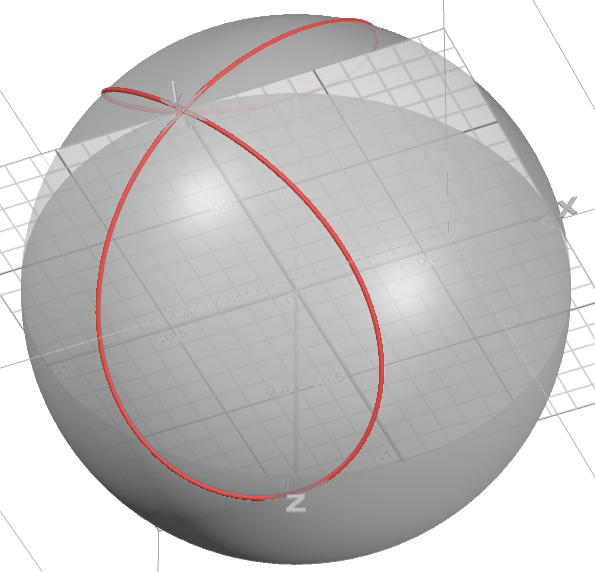
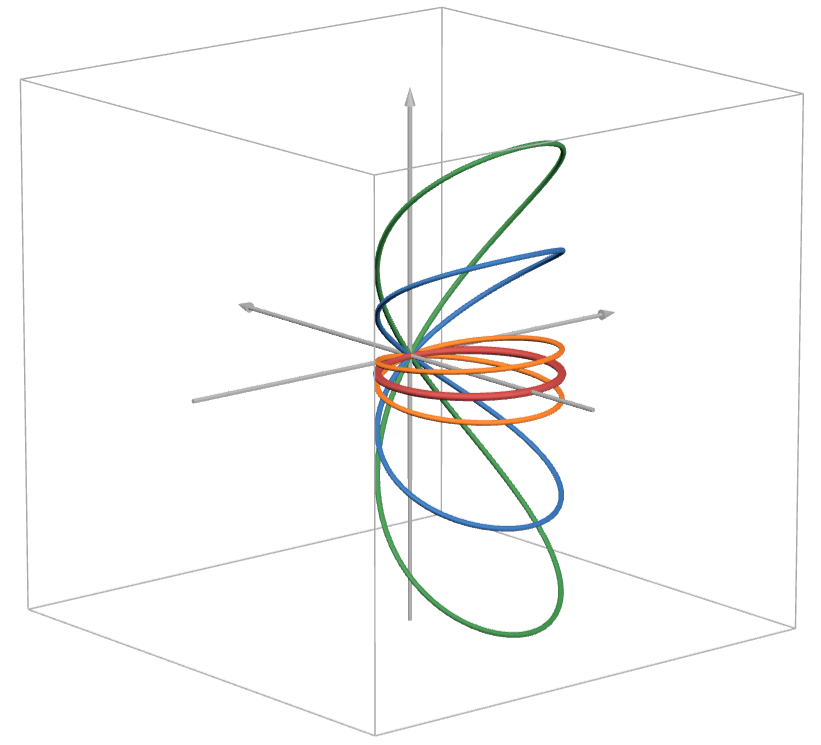
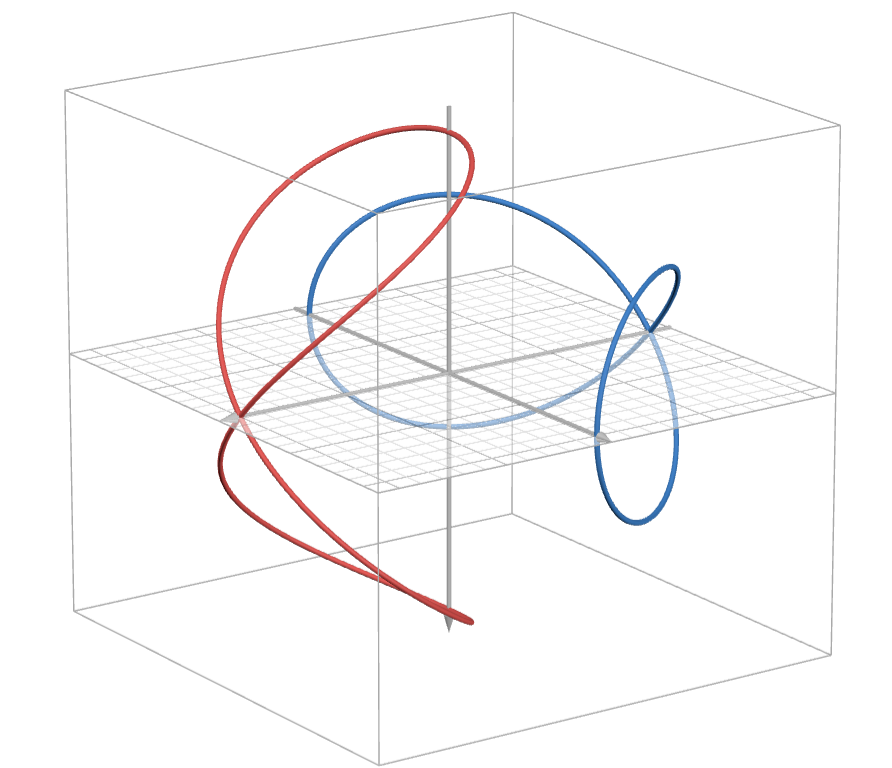
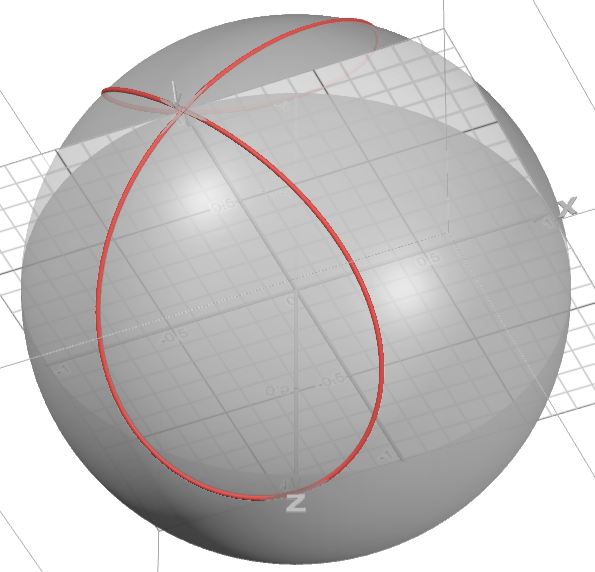

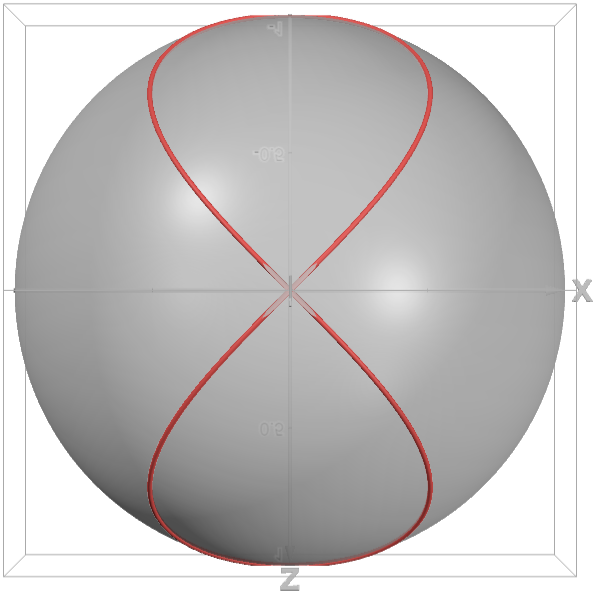
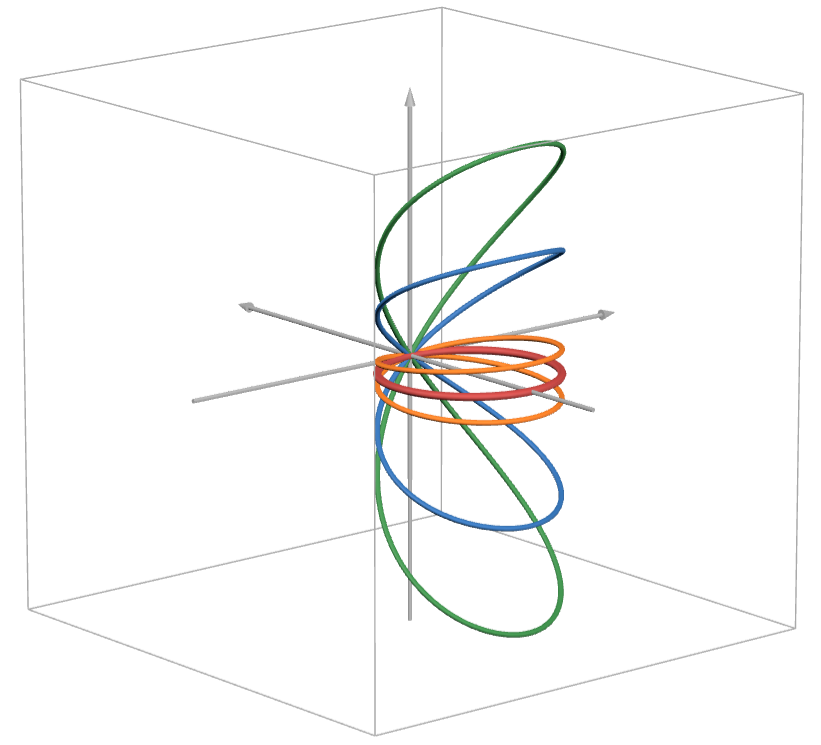
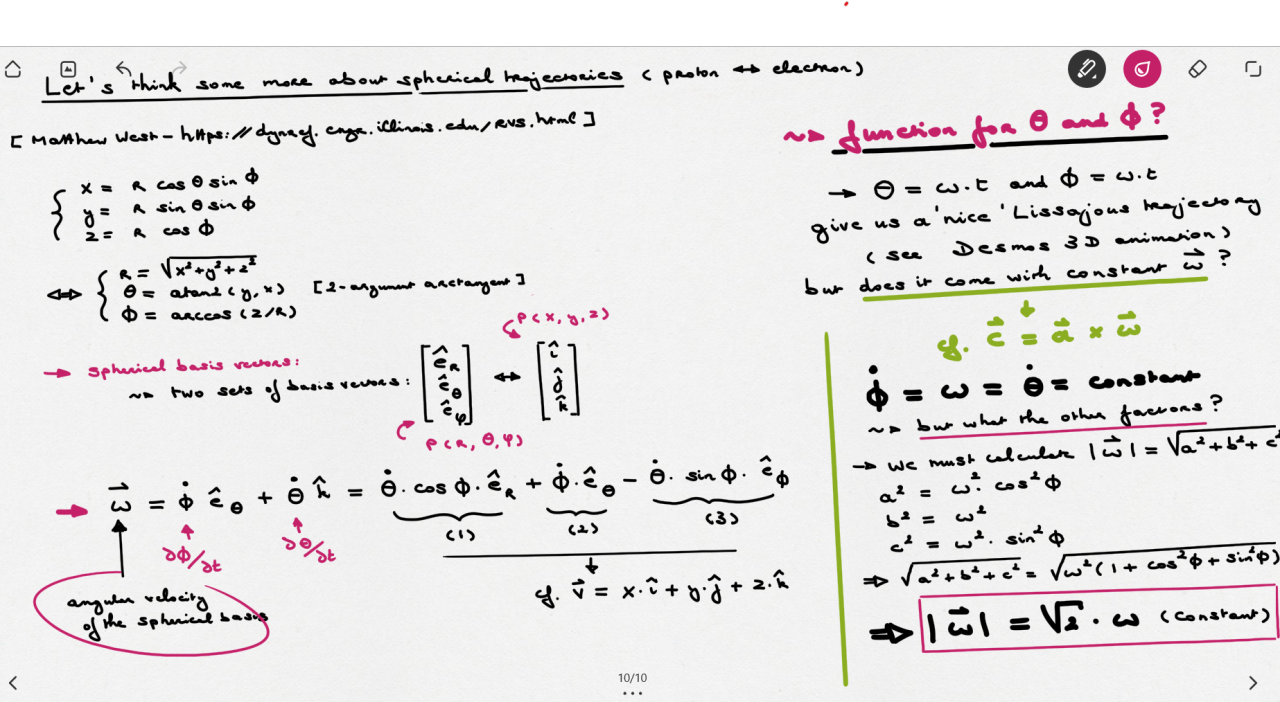


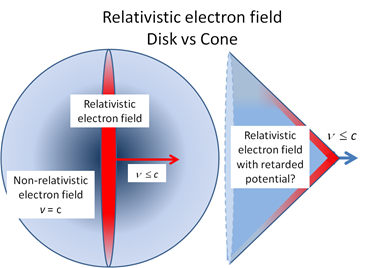
 On the quantization of flux for superconducting loops: see, for example,
  Using the Compton radius of an electron (ae = ħ/mec), this yields the correct magnetic moment for the electron
 What radius do we get when applying the a = μ/0.24…´10–10 relation to the (experimentally measured) magnetic moment of a proton? I invite the reader to verify the next calculation using CODATA values:
 When I first calculated this, I thought: that’s not good enough. I only have the order of magnitude right. However, when multiplying this with √2, we get a value which fits into the 0.831 ± 0.007 interval. To be precise, we get this:

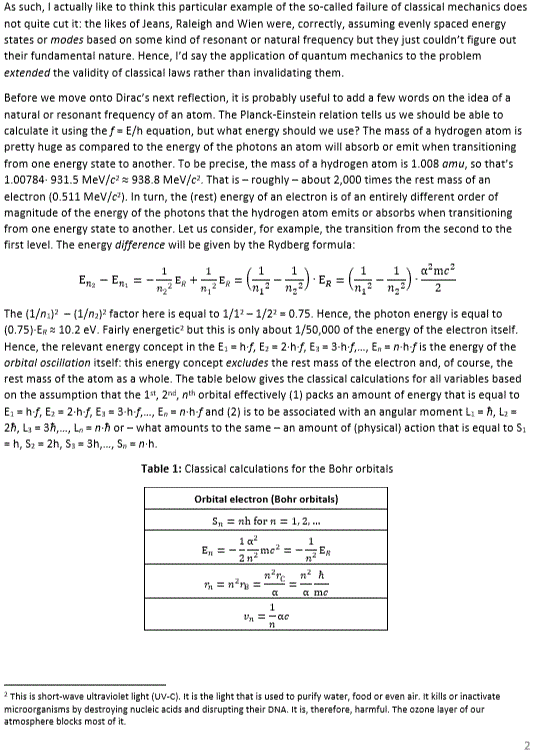
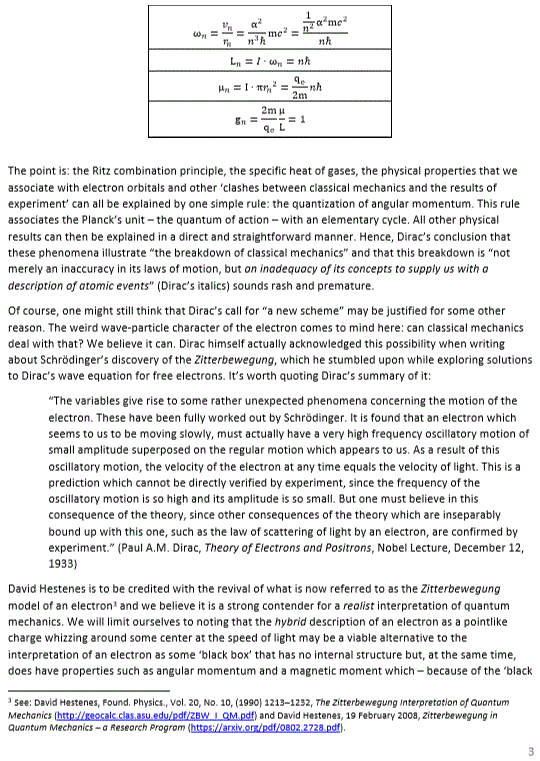
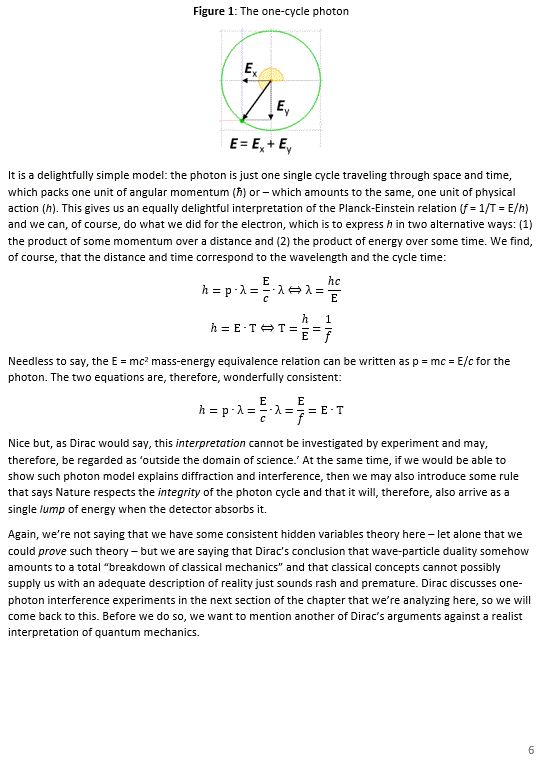
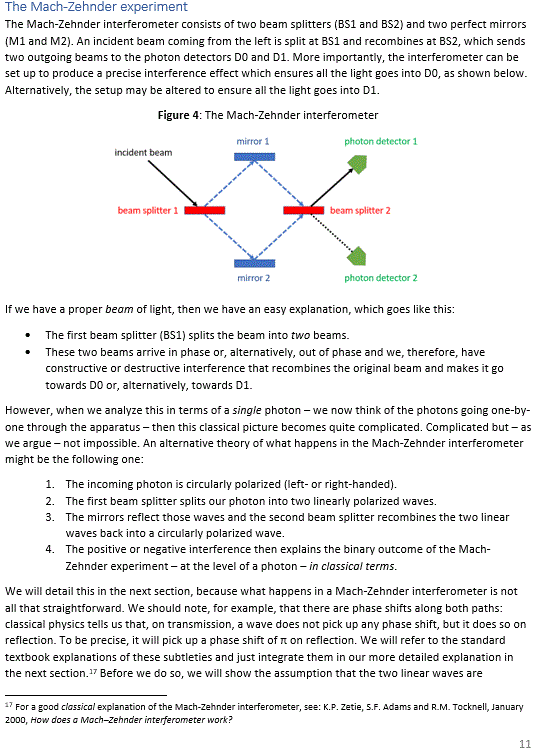
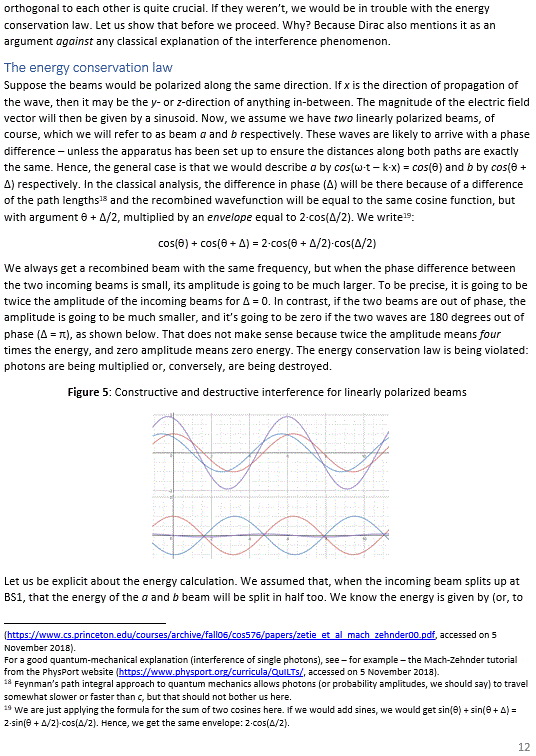
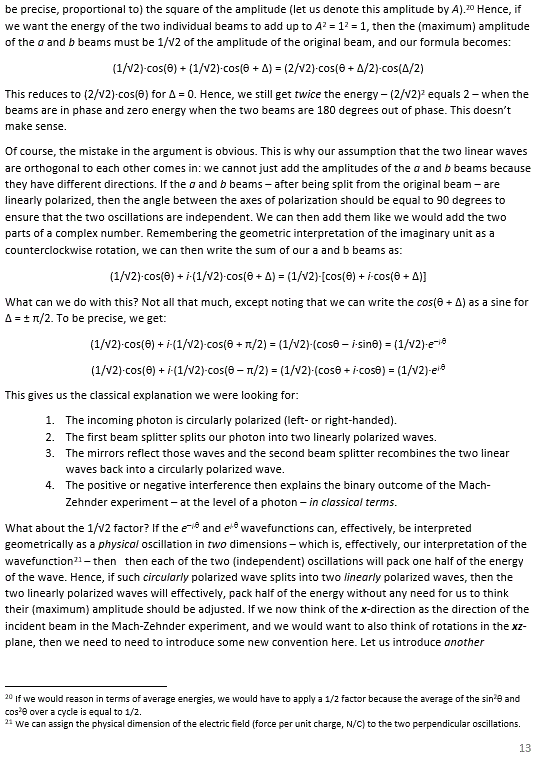
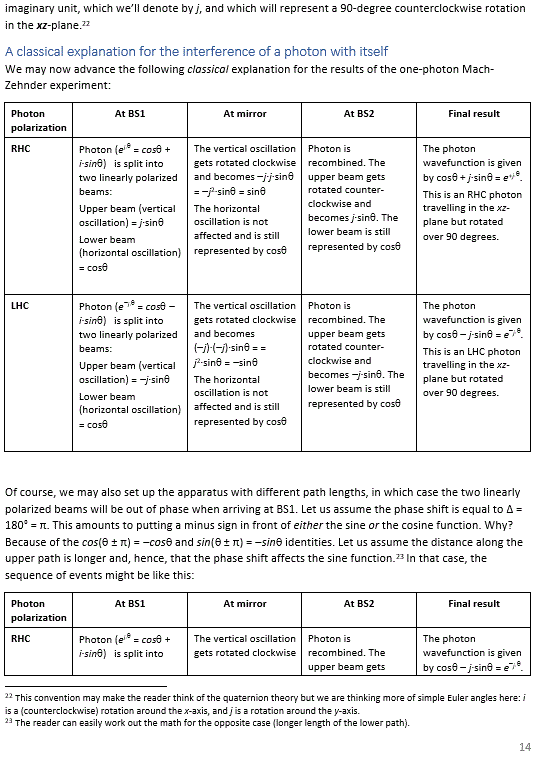
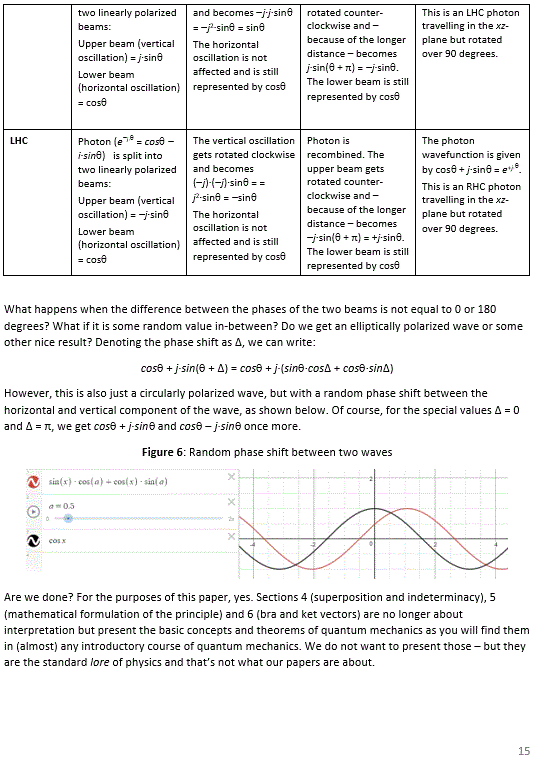

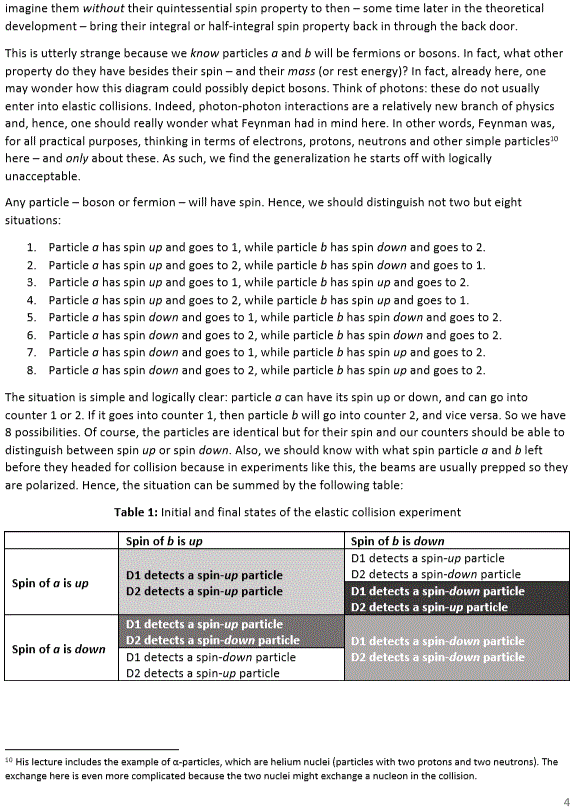
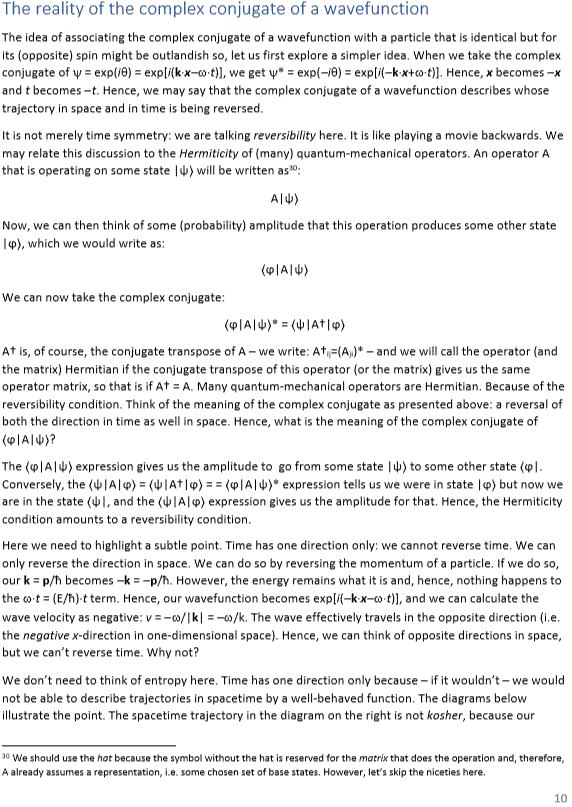
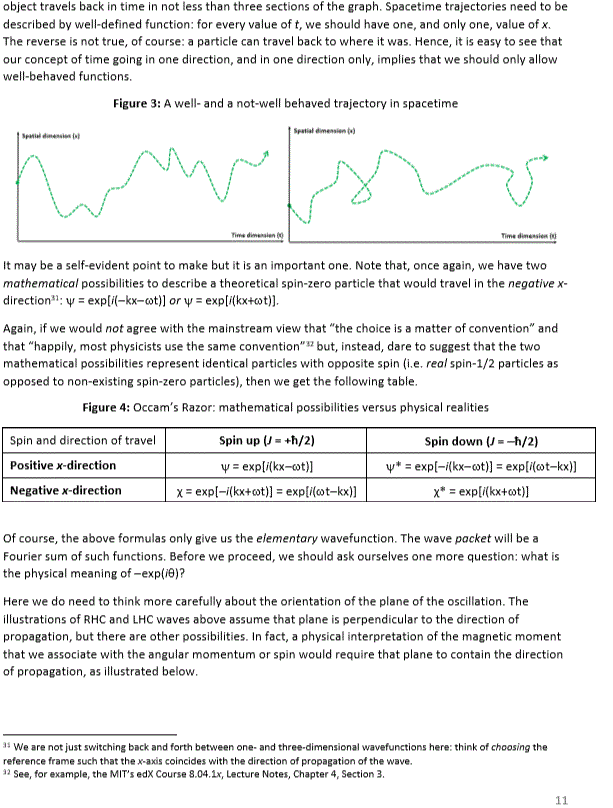
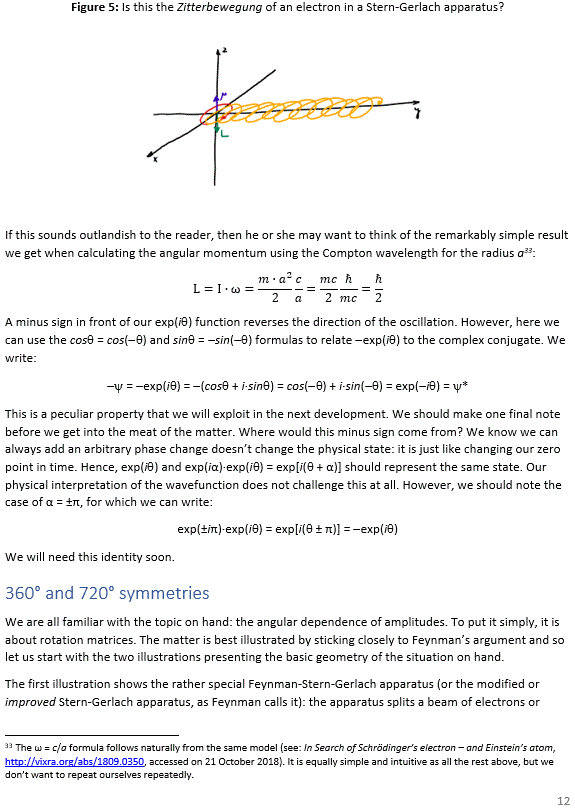
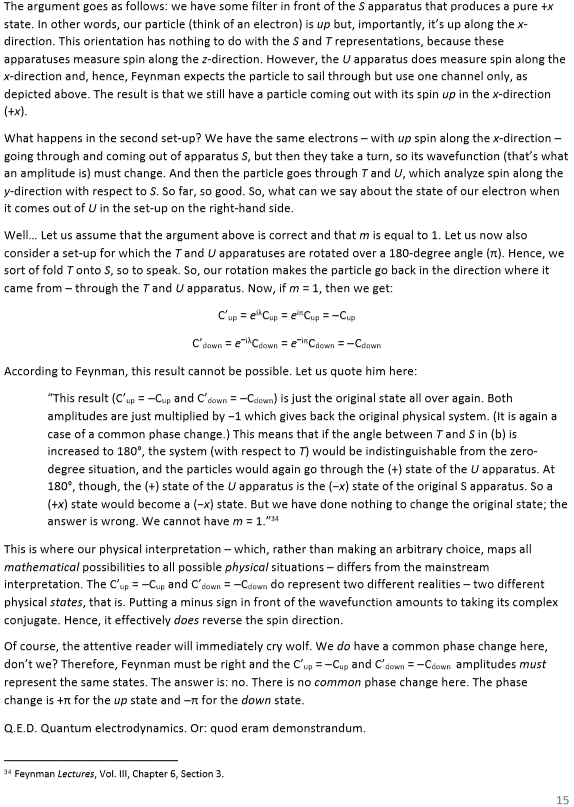
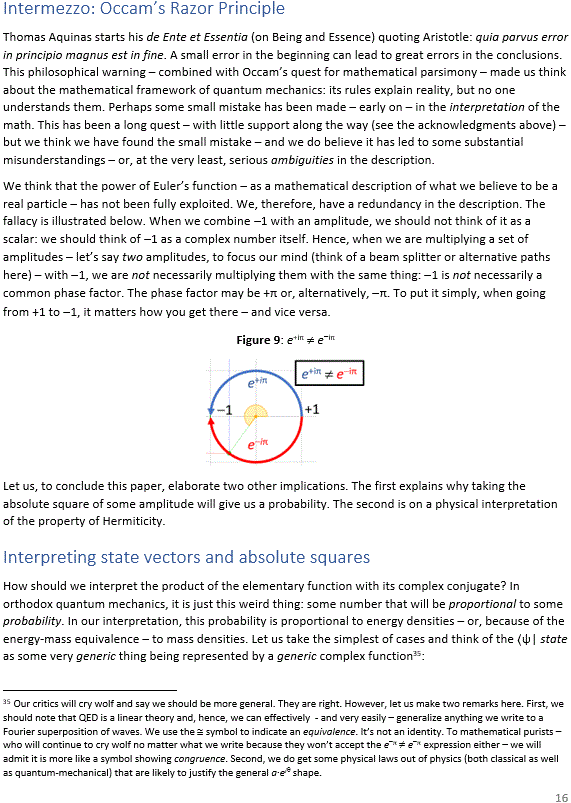
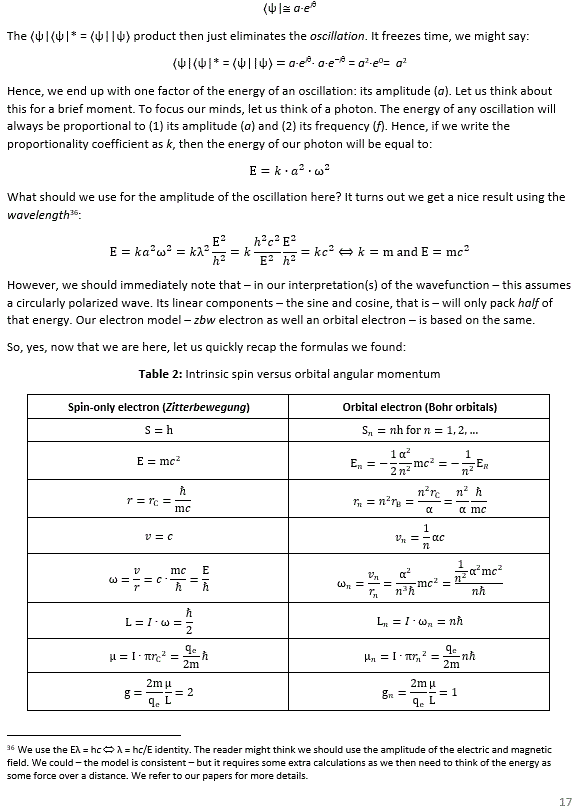
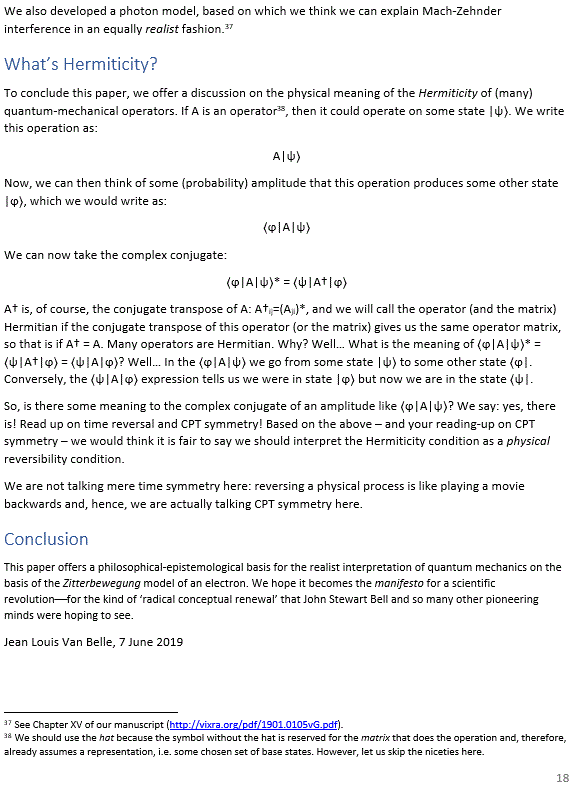
 Reading Feynman