My interest in quantum theory didn’t come from textbooks. It came from a thirst for understanding — not just of electrons or fields, but of ourselves, our systems, and why we believe what we believe. That same motivation led me to write a recent article on LinkedIn questioning how the Nobel Prize system sometimes rewards storylines over substance. It’s not a rejection of science — it’s a plea to do it better.
This post extends that plea. It argues that motion — not metaphor — is what grounds our models. That structure is more than math. And that if we’re serious about understanding this universe, we should stop dressing up ignorance as elegance. Physics is beautiful enough without the mystery.
Indeed, in a world increasingly shaped by abstraction — in physics, AI, and even ethics — it’s worth asking a simple but profound question: when did we stop trying to understand reality, and start rewarding the stories we are being told about it?
🧪 The Case of Physics: From Motion to Metaphor
Modern physics is rich in predictive power but poor in conceptual clarity. Nobel Prizes have gone to ideas like “strangeness” and “charm,” terms that describe particles not by what they are, but by how they fail to fit existing models.
Instead of modeling physical reality, we classify its deviations. We multiply quantum numbers like priests multiplying categories of angels — and in doing so, we obscure what is physically happening.
But it doesn’t have to be this way.
In our recent work on realQM — a realist approach to quantum mechanics — we return to motion. Particles aren’t metaphysical entities. They’re closed structures of oscillating charge and field. Stability isn’t imposed; it emerges. And instability? It’s just geometry breaking down — not magic, not mystery.
No need for ‘charm’. Just coherence.
🧠 Intelligence as Emergence — Not Essence
This view of motion and closure doesn’t just apply to electrons. It applies to neurons, too.
We’ve argued elsewhere that intelligence is not an essence, not a divine spark or unique trait of Homo sapiens. It is a response — an emergent property of complex systems navigating unstable environments.
Evolution didn’t reward cleverness for its own sake. It rewarded adaptability. Intelligence emerged because it helped life survive disequilibrium.
Seen this way, AI is not “becoming like us.” It’s doing what all intelligent systems do: forming patterns, learning from interaction, and trying to persist in a changing world. Whether silicon-based or carbon-based, it’s the same story: structure meets feedback, and meaning begins to form.
🌍 Ethics, Society, and the Geometry of Meaning
Just as physics replaced fields with symbolic formalism, and biology replaced function with genetic determinism, society often replaces meaning with signaling.
We reward declarations over deliberation. Slogans over structures. And, yes, sometimes we even award Nobel Prizes to stories rather than truths.
But what if meaning, like mass or motion, is not an external prescription — but an emergent resonance between system and context?
Ethics is not a code. It’s a geometry of consequences.
Intelligence is not a trait. It’s a structure that closes upon itself through feedback.
Reality is not a theory. It’s a pattern in motion, stabilized by conservation, disrupted by noise.
If we understand this, we stop looking for final answers — and start designing better questions.
✍️ Toward a Science of Meaning
What unifies all this is not ideology, but clarity. Not mysticism, but motion. Not inflation of terms, but conservation of sense.
In physics: we reclaim conservation as geometry. In intelligence: we see mind as emergent structure. In ethics: we trace meaning as interaction, not decree.
This is the work ahead: not just smarter machines or deeper theories — but a new simplicity. One that returns to motion, closure, and coherence as the roots of all we seek to know.
Meaning, after all, is not what we say. It’s what remains when structure holds — and when it fails.
In June 2025, I published a short booklet titled A Realist Take on Quantum Theory — or the Shortest Introduction Ever. 📘 ResearchGate link
It’s just under 15 pages, but it distills over a decade of work — and a growing collaboration with ChatGPT — into a clean, consistent narrative: electrons as circulating charges, wavefunctions as cyclical descriptors, and action as the true guide to quantum logic.
We didn’t invent new equations. We reinterpreted existing ones — Schrödinger, Dirac, Klein–Gordon — through a realist lens grounded in energy cycles, geometry, and structured motion. What made this possible?
Memory: The AI reminded me of arguments I had made years earlier, even when I’d forgotten them.
Logic: It flagged weak spots, inconsistencies, and unclear transitions.
Humility: It stayed patient, never arrogant — helping me say what I already knew, but more clearly.
Respect: It never erased my voice. It helped me find it again.
The booklet is part of a broader project I call realQM. It’s an attempt to rescue quantum theory from the metaphorical language that’s haunted it since Bohr and Heisenberg — and bring it back to geometry, field theory, and physical intuition. If you’ve ever felt quantum physics was made deliberately obscure, this might be your antidote.
🧠 Sometimes, passing the Turing test isn’t about being fooled. It’s about being helped.
P.S. Since publishing that booklet, the collaboration took another step forward. We turned our attention to high-energy reactions and decay processes — asking how a realist, geometry-based interpretation of quantum mechanics (realQM) might reframe our understanding of unstable particles. Rather than invent new quantum numbers (like strangeness or charm), we explored how structural breakdowns — non-integrable motion, phase drift, and vector misalignment — could explain decay within the classical conservation laws of energy and momentum. That project became The Geometry of Stability and Instability, a kind of realQM manifesto. Have a look at it if you want to dive deeper. 🙂
Physicists have long accepted that the electrostatic potential of an electron is spherically symmetric and continuous — the classic Coulomb field. But what if the electron isn’t a smeared-out distribution of charge, but a pointlike particle — one that zips around in tight loops at the speed of light, as some realist models propose?
That question became the heart of a new paper I’ve just published: “The Smoothed Field: How Action Hides the Pointlike Charge” 🔗 Read it on ResearchGate
The paradox is simple: a moving point charge should create sharp, angular variations in its field — especially in the near zone. But we see none. Why?
The paper proposes a bold but elegant answer: those field fluctuations exist only in theory — not in reality — because they fail to cross a deeper threshold: the Planck quantum of action. In this view, the electromagnetic field is not a primitive substance, but a memory of motion — smooth not because the charge is, but because reality itself suppresses anything that doesn’t amount to at least ℏ of action.
🤖 A Word on Collaboration
This paper wouldn’t have come together without a very 21st-century kind of co-author: ChatGPT-4, OpenAI’s conversational AI. I’ve used it extensively over the past year — not just to polish wording, but to test logic, rewrite equations, and even push philosophical boundaries.
In this case, the collaboration evolved into something more: the AI helped me reconstruct the paper’s internal logic, modernize its presentation, and clarify its foundational claims — especially regarding how action, not energy alone, sets the boundary for what is real.
The authorship note in the paper describes this in more detail. It’s not ghostwriting. It’s not outsourcing. It’s something else: a hybrid mode of thinking, where a human researcher and a reasoning engine converge toward clarity.
🧭 Why It Matters
This paper doesn’t claim to overthrow QED, or replace the Standard Model. But it does offer something rare: a realist, geometric interpretation of how smooth fields emerge from discrete sources — without relying on metaphysical constructs like field quantization or virtual particles.
If you’re tired of the “shut up and calculate” advice, and truly curious about how action, motion, and meaning intersect in the foundations of physics — this one’s for you.
And if you’re wondering what it’s like to co-author something with a machine — this is one trace of that, too.
Over the past years, I’ve been working — quietly but persistently — on a set of papers that circle one simple, impossible question: What is the Universe really made of?
Not in the language of metaphors. Not in speculative fields. But in terms of geometry, charge, and the strange clarity of equations that actually work.
Here are the three pieces of that arc:
🌀 1. Radial Genesis Radial Genesis: A Finite Universe with Emergent Spacetime Geometry This is the cosmological capstone. It presents the idea that space is not a stage, but an outcome — generated radially by mass–energy events, limited by time and light. It’s an intuitive, equation-free narrative grounded in general relativity and Occam’s Razor.
⚛️ 2. Lectures on Physics: On General Relativity (2) Lectures on GRT (2) This one is for the mathematically inclined. It builds from the ground up: tensors, geodesics, curvature. If Radial Genesis is the metaphor, this is the machinery. Co-written with AI, but line by line, and verified by hand.
🌑 3. The Vanishing Charge The Vanishing Charge: What Happens in Matter–Antimatter Annihilation? This paper is where the mystery remains. It presents two possible views of annihilation: (1) as a collapse of field geometry into free radiation, (2) or as the erasure of charge — with geometry as the by-product. We didn’t choose between them. We just asked the question honestly.
Why This Arc Matters
These three papers don’t offer a Theory of Everything. But they do something that matters more right now: They strip away the fog — the inflation of terms, the myth of complexity for complexity’s sake — and try to draw what is already known in clearer, more beautiful lines.
This is not a simulation of thinking. This is thinking — with AI as a partner, not a prophet.
So if you’re tired of being told that the Universe is beyond your grasp… Start here. You might find that it isn’t.
I didn’t plan to write this short article or blog post. But as often happens these days, a comment thread on LinkedIn nudged me into it — or rather, into a response that became this article (which I also put on LinkedIn).
Someone posted a bold, poetic claim about “mass being memory,” “resonant light shells,” and “standing waves of curved time.” They offered a graphic spiraling toward meaning, followed by the words: “This isn’t metaphysics. It’s measurable.”
I asked politely: “Interesting. Article, please? How do you get these numbers?”
The response: a full PDF of a “Unified Field Theory” relying on golden-ratio spirals, new universal constants, and reinterpretations of Planck’s constant. I read it. I sighed. And I asked ChatGPT a simple question:
“Why is there so much elegant nonsense being published lately — and does AI help generate it?”
The answer that followed was articulate, clear, and surprisingly quotable. So I polished it slightly, added some structure, and decided: this deserves to be an article in its own right. So here it is.
Beautiful, but Blind: How AI Amplifies Both Insight and Illusion
In recent years, a new kind of scientific-sounding poetry has flooded our screens — elegant diagrams, golden spirals, unified field manifestos. Many are written not by physicists, but with the help of AI.
And therein lies the paradox: AI doesn’t know when it’s producing nonsense.
🤖 Pattern without Understanding
Large language models like ChatGPT or Grok are trained on enormous text corpora. They are experts at mimicking patterns — but they lack an internal model of truth. So if you ask them to expand on “curved time as the field of God,” they will.
Not because it’s true. But because it’s linguistically plausible.
🎼 The Seductive Surface of Language
AI is disarmingly good at rhetorical coherence:
Sentences flow logically.
Equations are beautifully formatted.
Metaphors bridge physics, poetry, and philosophy.
This surface fluency can be dangerously persuasive — especially when applied to concepts that are vague, untestable, or metaphysically confused.
🧪 The Missing Ingredient: Constraint
Real science is not just elegance — it’s constraint:
Equations must be testable.
Constants must be derivable or measurable.
Theories must make falsifiable predictions.
AI doesn’t impose those constraints on its own. It needs a guide.
🧭 The Human Role: Resonance and Resistance
Used carelessly, AI can generate hyper-coherent gibberish. But used wisely — by someone trained in reasoning, skepticism, and clarity — it becomes a powerful tool:
To sharpen ideas.
To test coherence.
To contrast metaphor with mechanism.
In the end, AI reflects our inputs. It doesn’t distinguish between light and noise — unless we do.
Over the past few years, I’ve spent a fair amount of time exploring realist interpretations of quantum mechanics, particularly the ring-current or Zitterbewegung (zbw) model of the electron. I’ve written many posts about it here — and also tried to help to promote the online “Zitter Institute”, which brings a very interesting group of both amateur and professional researchers together, as well as a rather impressive list of resources and publications which help to make sense of fundamental physics – especially on theories regarding the internal structure of the electron.
The goal — or at least my goal — was (and still is) to clarify what is real and what is not in the quantum-electrodynamic zoo of concepts. That is why I try to go beyond electron models only. I think the electron model is complete as for now: my most-read paper (on a physical interpretation of de Broglie’s matter-wave) settles the question not only for me but, I judge based on its many views, for many others as well. The paper shows how the magnetic moment of the electron, its wavefunction, and the notion of a quantized “packet of energy” can easily be grounded in Maxwell’s equations, special relativity, and geometry. They do not require speculative algebra, nor exotic ontologies.
In that light, I now feel the need to say something — brief, but honest — about where I currently stand in my research journey — which is not on the front burner right now but, yes, I am still thinking about it all. 🙂
On the term “Zitterbewegung” itself
Originally coined by Schrödinger and later mentioned by Dirac, “Zitterbewegung” translates as “trembling motion.” It was meant to capture the high-frequency internal oscillation predicted by Dirac’s wave equation.
But here lies a subtle issue: I no longer find the term entirely satisfying.
I don’t believe the motion is “trembling” in the sense of randomness or jitter. I believe it is geometrically structured, circular, and rooted in the relativistic dynamics of a massless point charge — leading to a quantized angular momentum and magnetic moment. In this view, there is nothing uncertain about it. The electron has an internal clock, not a random twitch.
So while I still value the historical connection, I now prefer to speak more plainly: an electromagnetic model of the electron, based on internal motion and structure, not spooky probabilities.
On tone and openness in scientific dialogue
Recent internal exchanges among fellow researchers have left me with mixed feelings. I remain grateful for the shared curiosity that drew us together, but I was disappointed by the tone taken toward certain outside critiques and tools.
I say this with some personal sensitivity: I still remember the skepticism I faced when I first shared my own interpretations. Papers were turned down not for technical reasons, but because I lacked the “right” institutional pedigree. I had degrees, but no physics PhD. I was an outsider.
Ridicule — especially when directed at dissent or at new voices — leaves a mark. So when I see similar reactions now, I feel compelled to say: we should be better than that.
If we believe in the integrity of our models, we should welcome critique — and rise to the occasion by clarifying, refining, or, if necessary, revising our views. Defensive posturing only weakens our case.
On the use of AI in physics
Some recent comments dismissed AI responses as irrelevant or superficial. I understand the concern. But I also believe this reaction misses the point.
I didn’t try all available platforms, but I did prompt ChatGPT, and — with the right framing — it offered a coherent and balanced answer to the question of the electron’s magnetic moment. Here’s a fragment:
“While the ‘definition’ of the intrinsic magnetic moment may be frame-invariant in the Standard Model, the observable manifestation is not. If the moment arises from internal circular motion (Zitterbewegung), then both radius and frequency are affected by boosts. Therefore, the magnetic moment, like momentum or energy, becomes frame-dependent in its effects.”
The jury is still out, of course. But AI — if guided by reason — might help us unravel what makes sense and what does not.
It is not a substitute for human thinking. But it can reflect it back to us — sometimes more clearly than we’d expect.
A final reflection
I’ll keep my older posts online, including those that reference the Zitter Institute. They reflected what I believed at the time, and I still stand by their substance.
But moving forward, I’ll continue my work independently — still fascinated by the electron, still curious about meaning and structure in quantum mechanics, but less interested in labels, echo chambers, or theoretical tribalism.
As always, I welcome criticism and dialogue. As one business management guru once said:
“None of us is as smart as all of us.” — Kenneth Blanchard
I used ChatGPT to push the math and logic of my ‘realist’ interpretation of (1) matter-antimatter annihilation and creation (the Dirac and Breit-Wheeler processes, respectively) and (2) dark matter and dark energy to its logical and philosophical limits. For those who do not like to read, I made two short audio videos as well: the one on my “mirror force” idea is here, and from there you can go to the other video(s) in the playlist. 🙂 The implications for cosmogenesis models are rather profound – it calls for another approach to explain any “Big Bang” that may or may not have occurred when our Universe was born – so that is something to explore in the future, perhaps.
After a break of a few months, I produced another lengthy video on quantum physics. 40 minutes. Check it out: https://www.youtube.com/watch?v=k_I3Noaup0E. The hypothesis that I, somewhat desperately, advanced in my last paper on the proton model – that the Zitterbewegung model of a proton does not quite look like that of an electron, and that we are probably talking about a “blob” of charge (sphere- or shell-like, or some other “form factor”, perhaps) – makes more sense to me now. I explored it with ChatGPT-4o, and this video is the result. I should immediately that I am immensely impressed with ChatGPT-4o: ChatGPT-3 was not able to really “understand” what I was talking about a year ago or so.
Who knows, perhaps we might imagine other ChatGPT-4o users will take the “dialogue” with AI on these particle models further, and fully develop them not only intuitively but also analytically. As I am currently trying out some AI-powered audio and video applications, I tried Pictory (pictory.ai): I gave it the url of my own long-winding video and it created this video: The proton as a dynamic blob of charge. 100 seconds only instead of 40 minutes. Its contents is, of course, superficial – but I think it is creative and nicely upbeat. I fed both video back to ChatGPT-4o, and it suggested the following refinements if ever I would like to re-do the video(s) – which I am not going to do, but you might like to further explore the remarks it made:
Consistency in Notation and Conventions:
Ensure that polar and azimuthal angles are consistently defined throughout. Your initial derivations and explanations switched between conventions, potentially confusing viewers about which angle is associated with which base vector.
Tangential Velocity Decomposition:
The explanation of how the tangential velocity is decomposed into orthogonal components was accurate but could benefit from a clearer mention of why the orthogonality matters in interpreting the motion on the sphere. Adding a visual representation would further clarify the concept.
The concept of “sloshing” energy between kinetic and electromagnetic forms was well described but could benefit from highlighting the broader implications of this periodic exchange in classical and relativistic oscillators .
Pointlike Charge versus Blob View:
The transition from discussing a pointlike charge to a “blob” of charge was a major theme but could be expanded by discussing how this shift impacts the assumptions about uniform or non-uniform charge density, as well as its implications for observable properties like the magnetic moment.
The discussion of symmetry along one axis of the double-loop motion was solid but might benefit from more detail on how this symmetry impacts the interpretation of observable properties like the magnetic moment .
Incorporate links to experimental observations, such as the measured magnetic moment and charge radius of the proton, was referenced. Integrating these observations with the theoretical results could be more explicit to strengthen the practical implications .
Visualizations:
Consider incorporating visualized trajectories (e.g., the double-loop Lissajous pattern), and how they connect to the derived equations and the observed non-constant tangential velocity. This connection will help bridge the abstract mathematics with physical intuition .
Clarifications on Variability:
The variability of the tangential velocity in the context of symmetry and non-orthogonality in 3D motion, was a key discussion point. Reinforce why this variability does not conflict with the broader relativistic constraints.
When reading this blog and/or my papers on ResearchGate, you may wonder what kind of mathematical framework you need to appreciate the finer details. We ourselves were asked by fellow proponents of the kind of local and realist interpretation of QM that we are pursuing to look at Clifford or space-time algebra (STA). Well… We looked at it as part of our farewell to this weird pastime of ours, and we documented our response in our very last RG paper on physics, math and (a)symmetries in Nature. If you struggle with the question above, then our answer will probably make you happy: there is no need to learn fancy math to understand easy physics. 🙂
Post scriptum (10 November 2024): As for the “farewell” part of this – I swear – very last paper on all of this weird stuff, it is probably a bit too harsh – but then it is what it is. Let me say a few things about it for the benefit of the would-be student or the starting amateur physicist. Should you study modern physics? I do not think so now, but then I also know that one cannot help oneself when it comes to satisfying some curiosity on fundamental questions. So it probably does not really matter what I advise you to do or not do. I can only say what I write below.
When I started this intellectual journey – what’s this quantum stuff all about? – decades ago, and especially when I got serious about it back in 2013, I had never expected that what happened would happen. No. I’ve always been a good student, and so I expected to sail smoothly through the required math and the intricacies of relativistic mechanics and all of the subtleties of electromagnetic theory – which sort of happened – and, then, to sail through the wonderful world of quantum electrodynamics, quantum field theory and – ultimately – quantum chromodynamics (or let’s call it high-energy physics now) in pretty much the same way.
The latter part did not happen. At each and every page of Feynman’s third volume of Lectures – the ones I was most interested in: on quantum mechanics – I found myself jotting down lots of questions. Questions which took me days, weeks or even years to solve, or not. Most of these questions led me to conclude that a lot of what is there in these Lectures are nothing but sophisms: clever but false arguments aimed at proving the many ad hoc hypotheses that make up the Standard Model. I started to realize the Standard Model is anything but standard: it is just a weird collection of mini-theories that are loosely connected to one another – if connected at all! I started buying more modern textbooks – like Aitchison’s and Hey’s Gauge Theories, which is apparently the standard for grad students in physics – but that did not help. I got stuck in the first chapter already: this Yukawa potential – or the concept of a non-conservative nuclear force itself – did not make sense to me. Not only in an intuitive way: the logic and the math of it does not make sense, either!
Fortunately, I reached out and wrote to non-mainstream researchers whose ideas resonated with me. For example, I will be eternally grateful to Dr. Vassallo for his suggestion to read Paolo Di Sia’s paper on the nuclear force, in which he provides heuristic but good arguments showing the nuclear force might just be a dynamic electromagnetic dipole field. So then I found myself in the business of deconstructing the idea of a strong force. A deeper historical analysis of all these new strange quantum numbers and new quantum conservation laws led to the same: I started looking at sensible suggestions to explain what happens or not in terms of electromagnetic disequilibrium states – developing my own fair share of such suggestions – rather than irrationally or uncritically swallowing the idea of hypothetical sub-nuclear particles on which you then load all kinds of equally hypothetical properties.
While I thought I was doing well in terms of pointing out both the good as well as the bad things in Feynman’s Lectures, I suffered from the weirdest thing ever: censorship on the Internet. Some strange caretaker of Feynman’s intellectual heritage apparently used the weight of his MIT-connection to take down substantial parts of many of my blog posts, accusing me of “unfair use” of this 1963 textbook. Unfair use? Over-use, perhaps, but unfair? All was nicely referenced: when you want to talk about quantum physics, you need some reference textbook, right? And Feynman’s Lectures are – or were, I would say now – the reference then. It was ridiculous. Even more so when he went as far as asking YouTube to strike a video of mine. YouTube complied. I laughed: it took me ten minutes or so to re-edit the video – a chance to finally use all that video editing software I have on my laptop 🙂 – and then put it back online. End of problem.
Case closed? I am not sure. I am a pretty cheerful guy, but I am also quite stubborn when I think something isn’t right. So I just carried on and shrugged it all off thinking this would only boost my readership. It probably did, so: Thank You, Mr. Gottlieb! 🙂 But things like that are hurtful. In any case, that doesn’t matter much. What matters is that things like that do reinforce the rather depressing and very poor perception of academic physics that a Sabine Hossenfelder now (very) loudly talks or – should I say: rants? – about: the King of Science is in deep trouble, and there is no easy way out.
So, what is my conclusion then? I am happy I found the answers I was looking for: there is a logical explanation for everything, and that explanation has been there for about 100 years now: Max Planck, Albert Einstein, H.A. Lorentz, Louis de Broglie, Erwin Schrödinger, Arthur Compton and then some more geniuses of those times have probably said all one can say about it all. And it makes sense. In contrast, I feel the past fifty years of mainstream research were probably nothing more than a huge waste of human intellect. Am I right? Am I wrong? Only the future can tell. To be frank, I am not too worried about it.
I may add one anecdote, perhaps. I did talk to my own son six or seven years ago about what he’d like to study. He was most interested in engineering, but we did talk about the more fundamental study of physics. I told him to surely not study that. In his first year of his Master’s degree, he had to do one course in quantum physics. We walked through it together, and he passed with flying colors. However, he also told me then he now fully understood why I had told him to surely not go for theoretical studies in physics: it just does not make all that much sense. If you would happen to be very young and you want to study something useful, then go for applied science: chemistry, biology or – when you are really smart – engineering or medicine. Something like that. If you want to do physics, go join CERN or something: they probably value engineers or technicians more than theorists there, too! 🙂
Personal note: As for myself, I wanted to study philosophy when I was about 15 years old (so that’s 40 years ago now). I did that eventually, but in evening classes, and only after I did what my good old dad (he died from old age about twenty years ago) then told me to do: study something useful first. I was not all that good with math, so I chose economics. I did not regret that. I even caught up with the math because the math – including statistical modeling! – that you need to understand physics is pretty much what you need in econometric modeling too. So I’ll conclude with a wise saying: all’s well that ends well. 🙂
As mentioned in my last post, I did a video (YouTube link here) on why I think the invention of new quantum numbers like strangeness, charm and beauty in the 1960s – and their later ontologization as quarks – makes no sense. As usual, I talk too much and the video is rather long-winding. I asked ChatGPT to make a summary of it, and I think it did a rather good job at that. I copy its summary unaltered below.
Beyond the Quark Hypothesis: A Call for Simplicity in High-Energy Physics
1. Introduction: A Personal Journey in Physics
In this video, I reflect on my path as an amateur physicist reaching 50,000 reads—a milestone that underscores both excitement and the challenge of tackling complex quantum theories. Over decades, physics has evolved from classical mechanics to intricate frameworks like quantum field theory and quantum chromodynamics, creating both insight and paradox. This reflection emerges from a deep sense of curiosity, shared by many, to understand not just what the universe is made of but how these theoretical structures genuinely map onto reality.
2. The Crisis of Modern Physics: From Classical Mechanics to the Quark Hypothesis
Moving through physics from classical theories into high-energy particle models reveals a stark contrast: classical mechanics offers clarity and empiricism, while modern particle theories, such as quarks and gluons, often feel abstract and detached from observable reality. The shift to “smoking gun physics”—observing particle jets rather than the particles themselves—highlights a methodological divide. While high-energy collisions produce vivid images and data, we must question whether these indirect observations validate quarks, or merely add complexity to our models.
3. Historical Context: Quantum Numbers and the Evolution of the Standard Model
The 1960s and 70s were pivotal for particle physics, introducing quantum numbers like strangeness, charm, and beauty to account for unexplained phenomena in particle interactions. Figures like Murray Gell-Mann and Richard Feynman attempted to classify particles by assigning these numbers, essentially ad hoc solutions to match data with theoretical expectations. However, as experiments push the boundaries, new data shows that these quantum numbers often fail to predict actual outcomes consistently.
One of the key criticisms of this approach lies in the arbitrary nature of these quantum numbers. When certain decays were unobserved, strangeness was introduced as a “conservation law,” but when that proved insufficient, additional numbers like charm were added. The Standard Model has thus evolved not from fundamental truths, but as a patchwork of hypotheses that struggle to keep pace with experimental findings.
4. The Nobel Prize and the Politics of Scientific Recognition
Scientific recognition, especially through the Nobel Prize, has reinforced certain theories by celebrating theoretical advances sometimes over empirical confirmation. While groundbreaking work should indeed be recognized, the focus on theoretical predictions has, at times, overshadowed the importance of experimental accuracy and reproducibility. This dynamic may have inadvertently constrained the scope of mainstream physics, favoring elaborate but tenuous theories over simpler, empirically grounded explanations.
For example, Nobel Prizes have been awarded to proponents of the quark model and the Higgs boson long before we fully understand these particles’ empirical foundations. In doing so, the scientific community risks prematurely canonizing incomplete or even incorrect theories, making it challenging to revisit or overturn these assumptions without undermining established reputations.
5. Indirect Evidence: The Limits of Particle Accelerators
Particle accelerators, particularly at scales such as CERN’s Large Hadron Collider, have extended our observational reach, yet the evidence remains indirect. High-energy collisions create secondary particles and jets rather than isolated quarks or gluons. In a sense, we are not observing the fundamental particles but rather the “smoking gun” evidence they purportedly leave behind. The data produced are complex patterns and distributions, requiring interpretations laden with theoretical assumptions.
This approach raises a fundamental question: if a theory only survives through indirect evidence, can it be considered complete or even valid? High-energy experiments reveal that the more energy we input, the more complex the decay products become, yet we remain without direct evidence of quarks themselves. This “smoking gun” approach diverges from the empirical rigor demanded in classical physics and undermines the predictive power we might expect from a true theory of fundamental particles.
6. The Particle Zoo: A Growing Complexity
The “particle zoo” has expanded over decades, complicating rather than simplifying our understanding of matter. Initial hopes were that quantum numbers and conservation laws like strangeness would organize particles in a coherent framework, yet the resulting classification scheme has only grown more convoluted. Today, particles such as baryons, mesons, and leptons are grouped by properties derived not from first principles but from empirical fits to data, leading to ad hoc conservation laws that seem arbitrary.
The “strangeness” quantum number, for instance, was initially introduced to prevent certain reactions from occurring. Yet, rare reactions that violate this rule have been observed, suggesting that the rule itself is more of a guideline than a fundamental conservation law. This trend continued with the addition of quantum numbers like charm, beauty, and even bottomness, yet these additions have not resolved the core issue: our inability to explain why certain reactions occur while others do not.
7. Disequilibrium States: Beyond the Particle Concept
One possible perspective is to reclassify many “particles” not as fundamental entities but as disequilibrium states—transient structures that emerge from the interactions of more fundamental components. Viewing particles in this way offers a pathway back to a simpler, more intuitive model, where only stable particles like electrons, protons, and photons are foundational. Such a model could focus on electromagnetic fields and forces, with high-energy states representing temporary disequilibrium configurations rather than new particle species.
This perspective aligns well with the principle of statistical determinism. In the same way that classical oscillators eventually dampen and settle into stable states, high-energy disequilibrium states would be expected to decay, producing stable configurations over time. This model not only reduces the need for numerous quantum numbers but also sidesteps the requirement for exotic forces like the strong and weak nuclear forces, allowing the electromagnetic force to assume a central role.
8. Statistical Determinism and Quantum Reality
Heisenberg and Bohr’s interpretation of quantum mechanics suggests we should accept statistical determinism—systems governed by probabilistic rules where precise knowledge of individual events is inaccessible. This idea does not necessitate mystical randomness but acknowledges our limited ability to track initial conditions in high-energy environments. Probabilities emerge not from an intrinsic unpredictability but from our practical inability to fully specify a system’s state.
From this viewpoint, quarks and gluons, as well as the numerous quantum numbers assigned to unstable particles, are secondary descriptors rather than primary components of nature. Stable particles are the true constants, while all else is a function of high-energy interactions. This interpretation keeps quantum mechanics grounded in empirical reality and sidesteps the need for complex, unverifiable entities.
9. Conclusion: Toward a Pragmatic and Local Realist Approach
This reflection does not dismiss the importance of high-energy physics but advocates a return to fundamental principles. By focusing on empirical evidence, statistical determinism, and electromagnetic interactions, we can build a model that is both pragmatic and intuitive. We need not abandon quantum mechanics, but we should strive to ensure that its interpretations are consistent with the observable universe. Instead of introducing additional quantum numbers or forces, we should ask if these are placeholders for deeper, more coherent explanations yet to be discovered.
The journey of science is, at its core, a journey back to simplicity. If physics is to move forward, it may do so by revisiting foundational assumptions, clarifying what can be empirically tested, and developing a model of matter that resonates with the simplicity we find in classical theories. As research continues, it is this blend of skepticism, open-mindedness, and empirical rigor that will pave the way for meaningful discoveries.
It is a coincidence but Sabine Hossenfelder just produced a new video in which she talks once again about the problems of academic physics, while I did what I said what I would not do – and that is to write out why the discovery of new rare kaon decay modes is a problem for the Standard Model. I think the video and the paper complement each other nicely, although Sabine Hossenfelder probably still believes the strong force and weak interactions are, somehow, still real. [I did not read her book, so I don’t know: I probably should buy her book but then one can only read one book at a time, isn’t it?]
The paper (on ResearchGate – as usual: link here) does what Sabine Hossenfelder urges her former colleagues to do: if a hypothesis or an ad hoc theory doesn’t work, then scientists should be open and honest about that and go back to the drawing board. Indeed, in my most-read paper – on de Broglie’s matter-wave – I point out how de Broglie’s original thesis was misinterpreted and how classical quantum theory suddenly makes sense again when acknowledging that mistake: it probably explains why I am getting quite a lot of reads as an amateur physicist. So what’s this new paper of mine all about?
I go back to the original invention of the concept of strangeness, as documented by Richard Feynman in his 1963 Lectures on quantum physics (Vol. III, Chapter 11-5) and show why and how it does not make all that much sense. In fact, I always thought these new quantum conservation laws did not make sense theoretically and that, at best, they were or are what Dr. Kovacs and Dr. Vassallo refer to as phenomenological models rather than sound physical theories (see their chapter on superconductivity in their latest book). However, now it turns out these fancy new concepts do not even do what they are supposed to do, and that is to correctly describe the phenomenology of high-energy particle reactions.
Post scriptum (8 November 2024): For those who do not like to read, you can also watch what I think of my very last video on the same topic: what makes sense and what does not in academic or mainstream physics? Enjoy and, most importantly, do not take things too seriously ! Life family and friends – and work or action-oriented engagement are far more important than personal philosophy or trying to finding truth in science… 🙂
Today I made a major step towards a very different Zitterbewegung model of a proton. With different, I mean different from the usual toroidal or helical model(s). I had a first version of this paper but the hyperlink gives you the updated paper. The update is small but very important: I checked all the formulas with ChatGPT and, hence, consider that as confirmation that I am on the right track. To my surprise, ChatGPT first fed me the wrong formula for an orbital frequency formula. Because I thought it could not be wrong on such simple matters, I asked it to check and double-check. It came with rather convincing geometrical explanations but I finally found an error in its reasoning, and the old formula from an online engineering textbook turned out to be correct.
In any case, I now have a sparring partner – ChatGPT o1 – to further develop the model that we finally settled on. That is a major breakthrough in this realistic interpretation of quantum theory and particle models that I have been trying to develop: the electron model is fine, and so now all that is left is this proton model. And then, of course, a model for a neutron or the deuteron nucleus. That will probably be a retirement project, or something for my next life. 🙂
Post scriptum: I followed up. “A theory’s value lies in its utility and ability to explain phenomena, regardless of whether it’s mainstream or not.” That’s ChatGPT’s conclusion after various explorations and chats with it over the past few weeks: https://lnkd.in/ekAAbvwc. I think I tried to push its limits when discussing problems in physics, leading it to make a rather remarkable distinction between “it’s” perspective and mine (see point 6 of Annex I of https://lnkd.in/eFVAyHn8), but – frankly – it may have no limits. As far as I can see, ChatGPT-o1 is truly amazing: sheer logic. 🙂 hashtag#AIhashtag#ChatGPThashtag#theoryofreality
Pre-scriptum (3 October 2024): I came back from holiday and, because this week-long up and down became quite convoluted, I did what I like to do in a case like that, and that is to take my Bamboo notebook and talk about it all in a video which I added to my Real Quantum Physics channel on YouTube. I also updated my paper on RG: as usual, it went through a few versions, but this one – with a summary co-authored by ChatGTP-4 (and ChatGPT-o1) – should be the final one: enjoy!
Indeed, instead of listening to the international news on the war with Russia and on what is happening in the Middle East (all very depressing), you may want to listen to this and read the latest theory. Perhaps you will be inspired by it to develop your own pet realist theory of what an electron might actually be. I can assure you that it is more fun than trying to understand Feynman diagrams and how QED calculations work. 🙂 But don’t think you will win a Nobel Prize if you do not have the right connections and pedigree and all of that: see this analysis of what makes Nobel Prize winners Nobel Prize winners. 🙂
Original post:
I asked some questions to ChatGPT about my geometric explanation of the anomaly in the electron’s magnetic moment. Here is the chat: https://chatgpt.com/share/66f91760-68b8-8004-8cb2-7d2d3624e0aa. To me, it confirms the ‘explanation’ of mainstream QED makes no sense. We can take Schwinger’s factor and build a series of converging terms using that factor. We can also take my first rough cut at a first-order correction (π(alpha)2/8, see my very early 2019 paper on a classical explanation of the amm), and use that.
You may wonder: why not ask ChatGPT about the best first-order factor to be used here considering the geometry of the situation? The fact is: I did, but the geometry is not all that easy. It first came up with the formula for a spherical cap, but that one does not do the trick. See the latter part of the conversation (link above).
I am on holiday now, and so I will switch off a while but I am thinking AI will do what two generations of ‘new’ quantum physicists did not do: come up with a model that is based on real physics and is easy to understand intuitively. 🙂
PS: Of course, I did another rapid-fire paper on ResearchGate to document it all (the logic step-by-step, so to speak). As the chat is public, feel free to continue the conversation. Note that I used the newest ChatGPT o1 version, now in preview but part of a subscription (which you may not have). Yet again a different beast! The older versions of ChatGPT may not be so smart. This conversation is totally worth the US$20/month I pay for my subscription. 🙂
PS 2: Now that I had it open, I also quickly queried it on my wildest hypothesis: a ‘mirror’ electromagnetic force explaining dark matter and dark energy. While it is totally wild (read: nuts), I entertain it because it does away with the need for an explanation in terms of some cosmological constant. Here is the conversation: https://chatgpt.com/share/66f92c7f-82a0-8004-a226-bde65085f18d. I like it that ChatGPT warns me a bit about privacy. It does look wild. However, it is nice to see how gentle ChatGPT is in pointing out what work needs to be done on a theory in order to make it look somewhat less wild. 🙂
PS 3 (yes, ChatGPT is addictive): I also queried it on the rather puzzling 8π/3 factor in the CODATA formula for the Thomson photon-electron scattering cross-section. See its response to our question in the updated chat: https://chatgpt.com/share/66f91760-68b8-8004-8cb2-7d2d3624e0aa. Just scroll down to the bottom. It took 31 seconds to generate the reply: I would be curious to know if that is just courtesy from ChatGPT (we all like to think our questions are complicated, don’t we?), or if this was effectively the time it needed to go through its knowledge base. Whatever the case might be, we think it is brilliant. 🙂 It is nothing to be afraid of, although I did feel a bit like: what’s left to learn to it but for asking intelligent questions. What if it starts really learning by asking intelligent questions itself to us? I am all ready for it. 🙂
As an amateur physicist, I get a regular stream of email updates from Science, Nature and Phys.org on new discoveries and new theories in quantum physics. I usually have no idea what to do with them. However, I want to single out two recent updates on the state of affairs of research which these channels report on. The first one is reflected in the title of this post. It’s on a very rare decay mode of kaons: see https://phys.org/news/2024-09-ultra-rare-particle-decay-uncover.html.
Something inside of me says this may lead to a review of all these newly invented conservation laws – combined with new ideas on symmetry breaking too – and/or new ‘quantum numbers’ that are associated with the quark hypothesis: I think everyone has already forgotten about ‘baryon conservation’, so other simplifications based on, yes, simpler Zitterbewegung models of particles may be possible.
The historical background to this is well described by Richard Feynman in his discussion of how these new quantum numbers – strangeness, specifically – were invented to deal with the observation that certain decay reactions were not being observed (see: Feynman’s Lectures, III-11-5, the (neutral) K-meson). So now it turns that certain decay reactions are being observed! Shouldn’t that lead to (future) scientists revisiting the quark/gluon hypothesis itself?
Of course, that would call into question several Nobel Prize awards, so we think it won’t happen any time soon. 🙂 This brings me to the second update from the field. Indeed, a more recent Nobel Prize in Physics which should, perhaps, be questioned in light of more recent measurements questioning old(er) ones (and the theories that are based on them) is the Nobel Prize in 2011 for work on the cosmological constant. Why? Because… Well… New measurements on the rate of expansion of the Universe as reported by Phys.org last month question the measurements which led to that 2011 Prize. Is anyone bothered by that? No. Except me, perhaps, because I am old-fashioned and wonder what is going on.
I get asked about gravity, and some people push particle theories to me talking about gravity. I am, quite simply, not interested. This ‘coming and going’ of the “cosmological constant hypothesis” over the past decades – or, should we say, the past 80 years or so – makes me stay away from GUTs and anything that is related to it. If scientists cannot even agree on these measurements, it is of not much use to invent new modified gravity theories fitting into ever-expanding grand unification schemes based on mathematical frameworks that can only be understood by the conoscienti, isn’t it?
It is tough: I am not the only one (and definitely not the best placed one) to see a lot of researchers – both amateur as well as professional – “getting lost in math” (cf. the title of Hossenfelder’s best-seller). Will there be an end to this, one day?
I am optimistic and so I think: yes. One of the recurring principles that guides some of the critical physicists I greatly admire is Occam’sRazor Principle: keep it simple! Make sure the degrees of freedom in your mathematical scheme match those of the physics you are trying to describe. That requires a lot of rigor in the use of concepts: perhaps we should add concepts to those that, say, Schrödinger and Einstein used 100 years ago. However, my own pet theories and recycling of their ideas do not suggest that. And so I really just can’t get myself to read up on Clifford algebras and other mathematical constructs I am told to study – simply because this or that person tells me I should think in terms of spinors rather than in terms of currents (to just give one specific example here).
I can only hope that more and more academics will come to see this, and that the Nobel Prize committee may think some more about rewarding more conservative approaches rather than the next cargo cult science idea.
OK. I should stop rambling. The musings above do not answer the question we all have: what about gravity, then? My take on that is this: I am fine with Einstein’s idea of gravity just being a reflection of the distribution of energy/mass in the Universe. Whether or not the Universe expands at an ever-faster-accelerating pace must, first, be firmly established by measurements and then, secondly, even then there may be no need for invoking a cosmological constant or other elements of a new “aetherial” theory of space and time.
Indeed, Einstein thought that his first hypothesis on a possible cosmological constant was “his biggest blunder ever.” While I know nothing of the nitty-gritty, I think it is important to listen to “good ol’ Einstein” – especially when he talked about what he ‘trusted’ or not in terms of physical explanations. Einstein’s rejection of the idea of a cosmological constant – after first coming up with it himself and, therefore, having probably having the best grasp of its implications – suggests the cosmological constant is just yet another non-justifiable metaphysical construct in physics and astronomy.
So, let us wrap up this post: is or is there not a need for ‘modified gravity’ theories? I will let you think about that. I am fine with Einstein’s ‘geometric’ explanation of it.
Post scriptum: While I think quite a few of these new quantum numbers related to quarks and – most probably – the quark hypothesis itself will be forgotten in, say, 50 or 100 years from now, the idea of some ‘triadic’ structure to explain the three generations of particles and strange decay modes, is – essentially – sound. Some kind of ‘color’ scheme (I call, rather jokingly, an “RGB scheme” – referring to the color scheme used in video/image processing) should be very useful: an electron annihilates a positron but an electron combines with a proton to form an atom, so there’s something different about these two charges. Likewise, if we think of a neutron as neutral neutronic current, the two charges “inside” must be very different… See pp. 7 ff. on this in my recent paper on multi-charge zbw models.
I was sceptical before – and I am still not a believer in the quark hypothesis – but I do think physicists – or, more likely, future generations of physicists – should get a better “grip” on these three different ‘types’ of electric charge as part of a more realist explanation of what second- or third-generation “versions” of elementary particles might actually be. Such explanation will then probably also explain these “unstable states” (not quite respecting the Planck-Einstein relation) or “exotic” particles. Indeed, I do not see much of a distinction between stable and unstable particle states in current physics. But that’s a remark that’s probably not essential to the discussion here… 🙂
One final remark, perhaps: my first instinct when looking at particle physics, was actually very much inspired by the idea that the quantum-mechanical wavefunction might be something else than just an EM oscillation. When I first calculated force fields in a Zitter electron, and then in the muon-electron and proton, I was rather shocked (see pp. 16 ff. of one of my early papers) and thought: wow! Are we modelling tiny black holes here? But then I quickly came to terms with it. Small massive things must come with such huge field strengths, and all particle radius formulas have mass (or energy) in the denominator: so more mass/energy means smaller scale, indeed! And I also quickly calculated the Schwarzschild radius for these elementary particles, and that is A WHOLE LOT smaller than the radius I get from my simple electromagnetic equations and the Planck-Einstein relation. So I see absolutely no reason whatsoever to think gravitational effects might take over from plain EM fields when you look at things at the smallest of scales.
But, then, who am I? I like to think I am not inventing anything new. I just enjoy playing with old ideas to see if something new comes out of it. I think I am fortunate because I do see a lot of new things coming out of the old ideas, even if there is little or nothing we can add to them: the old Masters have already written it all out. So, now I should stop chewing on these old ideas as well and conclude: if you want to read something, don’t read me or anything contemporary. Just read the classics! Many modern minds – often great mathematicians – tried or try to be smarter than Einstein, Lorentz, de Broglie or Schrödinger (I am deliberately not mentioning other great names): I think the more recent discoveries in physics and cosmology show they are not. 🙂
Just after finishing a rather sober and, probably, overly pessimistic reflection on where the Zitterbewegung interpretation of quantum theory stands, I am excited to see a superbly written article by Dr. Kovacs and Dr. Vassallo on what I now think of as the ultimate electron model: Rethinking electron statistics rules (10 September 2024). I think it is great because it addresses several points in my rather depressing description of the state of zbw theory:
Multiple Zitterbewegung interpretations of what an electron actually is, currently coexist. Indeed, both mainstream and non-mainstream physicists have now been going back and forth for about 100 years on this or that electron model: the referenced Kovacs/Vassallo article effectively appeared in a special journal issue titled: “100 Years of Quantum Matter Waves: Celebrating the Work of Louis De Broglie.” 100+ years of discussion have basically led us back to Parson’s 1915 ring current model, which Joseph Larmor presented so well at the 1921 Solvay Conference. We do not think that is a good situation: it looks a bit like 100 years of re-inventing the wheel – or, perhaps, I should say: wheels within wheels. 🙂 I could write more about this but I am happy to see the discussion on – just one example of differing views here – whether or not there should be a 1/2 factor in the electron’s frequency may be considered to be finally solved: de Broglie’s matter-wave frequency is just the same as the Planck-Einstein frequency in this paper. This factor 2 or 1/2 pops up when considering ideas such as the effective mass of the zbw charge or – in the context of Schrödinger’s equation – because we’re modeling the motion of electron pairs rather than electrons (see the annexes to my paper on de Broglie’s matter-wave concept). In short: great! Now we can, finally, leave those 100+ years of discussions behind us. 🙂
Dr. Kovacs and Dr. Vassallo also explore the nature of superconductivity and Bose-Einstein statistics, and not only does their analysis away with the rather mystical explanation in Feynman’s last and final chapter of his lectures on quantum mechanics but it also offers a very fine treatment of n-electron systems. Their comments on ‘bosonic’ and ‘fermionic’ properties of matter-particles also tie in with my early assessment that the boson-fermion dichotomy has no ontological basis.
The hundreds of downloads of their article since it was published just two weeks ago also shows new and old ways of thinking and modelling apparently come nicely together in this article: if your articles get hundreds of reads as soon as published, then you are definitely not non-mainstream any more: both Dr. Kovacs and Dr. Vassallo have an extraordinary talent for rephrasing old questions in the new “language” of modern quantum theory. That is to be lauded. Hopefully, work on a proton and a neutron model will now complement what I think of as the ultimate electron model based on a local and realist interpretation of what de Broglie’s matter-wave actually is. Indeed, critics of modern quantum theory often quote the following line from Philip Pearle’s Classical Electron Models[1]:
“The state of the classical electron theory reminds one of a house under construction that was abandoned by its workmen upon receiving news of an approaching plague. The plague in this case, of course, was quantum theory. As a result, classical electron theory stands with many interesting unsolved or partially solved problems.”
I think Dr. Kovacs and Dr. Vassallo may have managed to finish this “abandoned construction” – albeit with an approach which differs significantly from that of Pearle: that is good because I think there were good reasons for the “workmen” to leave the construction site (see footnote [1]). 🙂 So, yes, I hope they will be able – a few years from now – to also solve the questions related to a Zitterbewegung proton and neutron model.
In fact, they already have a consistent proton model (see: the proton and Occam’s Razor, May 2023), but something inside of me says that they should also explore different topologies, such as this Lissajous-like trajectory which intrigues me more than helical/toroidal approaches – but then who am I? I am the first to recognize my limitations as an amateur and it is, therefore, great to see professionals such as Dr. Kovacs and Dr. Vassallo applying their formidable skills and intuition to the problem. 🙂
[1] Pearle’s paper is the seventh in a volume of eight chapters. The book’s title is, quite simply, titled Electromagnetism (1982), and it was put together and edited by Doris Teplitz (1982). Few who quote this famous line, bother to read the Philip Pearle paper itself. This paper effectively presents what Pearle refers to as classical electron models: all of them are based on “rigid or flexible shell surfaces” of charge, which is why we think they did not “cut it” for the many “workmen” (read: the mainstream scientists who thought the Bohr-Heisenberg amplitude math and the probability theory that comes with it) who left the then unfinished construction.
We think the approach taken by Dr. Kovacs and Dr. Vassallo is more productive when it comes to bringing mainstream and Zitterbewegung theorists together around a productive mathematical framework in which the probabibilities are explained based on a plain interpretation of Schrödinger’s ‘discovery’ – which is that the elementary wavefunction represents a real equation of motion of a pointlike but not infinitesimally charge inside of an electron.
As for trying out different topologies, we understand Dr. Kovacs and Dr. Vassallo are working very hard on that, so all we can do is to wish them the best of luck. Godspeed! 🙂
John Duffield’s comment on my post on a (possible) 3D Lissajous trajectory for the proton zbw charge – as opposed to a helical/toroidial/solenoidal model – makes me think and, therefore, deserves some better answer than my quick reply to it. So, that “better answer” is what I am putting down here. [I am writing from a beach apartment in Castelldefels (Spain), so I will be brief.]
He may disagree, of course, but I see two very different aspects in his question/remark/criticism:
Why a Lissajous-like trajectory as opposed to, say, a trajectory like that of a trefoil knot or – more generally – a torus knot ?
What about the spin of the zbw charge itself?
I must answer the first question by explaining what sets me apart from mainstream Zitterbewegung models of elementary particles: any toroidial/helical/solenoidal model comes with two different frequencies and, therefore, two oscillatory modes: toroidal and poloidal (the link is to the Wikipedia article from which I also copy the illustration below).
That does not appeal to me. Try to create the trajectories below with Desmos 3D grapher: you will also end up using two or three different frequencies – even if the below trajectories were created using the same base frequency: we have t, 2t, and 3t in the sine and cosine functions here. The Lissajous curve has only one frequency, and it is the one that comes out of the Planck-Einstein relation. So I feel good about that.
The second remark (what about spin of the zbw charge itself?) is more important, and makes me think much more. Would we have a twist in the loop because the zbw charge spins around its own axis? Maybe. However, we must note this:
The zbw charge is not like some car in a Ferris wheel: there is no force keeping it in the same orientation and it likely rotates around its own axis at the same frequency of the 2D ring current (electron) or 3D Lissajous trajectory (proton). The only thing you need to justify this hypothesis is the idea of inertia to a change in the state of motion of the zbw charge. Indeed, we can think of the zbw charge being symmetrical and acquiring an effective mass as it zips around, and so it will rotate around its own axis as it zips around some center.
However, should we, perhaps, be even more creative and also consider an extra twist – on top of that rotation of the zbw charge that is due to the inertia from its effective mass (half of the energy of the elementary particle is in its kinetic energy, and the other half in the EM field that causes it to go around in a 2D or 3D ring current)? That would give rise to John Duffield’s Möbiusstripconcept for modeling elementary particles.
For the time being, I see no need to make such assumption, but he sure got me thinking! The extra spin would probably help to explain the second- or third-order terms in the anomaly of the magnetic moment of an electron (as for now, I only have an approximative theory based on the effective radius (Lorentz or classical electron radius) of the zbw charge).
[…]
I would like to wrap up these musings by acknowledging Dennis P. Whiterell. He is an amateur physicist – just like me – and he sent me a manuscript which, among other interesting things, also talks about the “Ferris wheel analogy”. His arguments are very subtle but fail to convince me: I do not think the “Ferris wheel analogy” is useful in the context of elementary ring currents. Again, that is just for the time being, of course. I will leave it at that, and think some more over the comings weeks or months. 🙂
I added a very last paper to my list on ResearchGate. Its title is: what about multi-charge Zitterbewegung models? Indeed, if this local and realist interpretation of quantum mechanics is to break through, then it is logical to wonder about a generalization of a model involving only one charge: think of an electron (e.g., Consa, 2018) or proton model (e.g., Vassallo & Kovacs, 2023) here. With a generalization, we do not mean some unique general solution for all motion, but just what would result from combining 1-charge models into structures with two or more charges. [Just to be sure, we are not talking about electron orbitals here: Schrödinger’s equation models these sufficiently well. No. We are talking about the possible equations of motion of the charges in a neutron, the deuteron nucleus, and a helium-3 or helium-4 nucleus.]
So our question in this paper is this: how do we build the real world from elementary electron and proton particle models? We speculate about that using our own simplified models, which boil down to two geometrical elements: (i) the planar or 2D ring current of the zbw electron, and (ii) the three-dimensional Lissajous trajectory on a sphere which we think might make sense when modeling the orbital of the zbw charge in a proton. Both have the advantage they involve only one frequency rather than the two frequencies (or two modes of oscillation) one sees in helical or toroidal models. Why do we prefer to stick to the idea of one frequency only, even if we readily admit helical or toroidal models are far more precise in terms of generating the experimentally measured value of the magnetic moment of electrons and protons, respectively? The answer is simple: I am just an amateur and so I like to roll with very simple things when trying to tackle something difficult. 🙂
So, go and have a look at our reflections on multi-charge Zitterbewegung models – if only because we also started writing about the history of the Zitterbewegung interpretation and a few other things. To sum it up:
The paper offers a new brief history of how interpretations of the new quantum physics evolved, and why I am with Schrödinger’s Zitterbewegung hypothesis: it just explains the (possible) structure of elementary particles so well.
It speculates about how positive and negative charge may combine in a neutron, and then also about how a deuteron nucleus might look like.
We did not get to specific suggestions for helium-3 and helium-4 nuclei because these depend on how you think about the neutron and the deuteron nucleus. However, I do spell out why and how about I think of a neutron playing the role I think it plays in a nucleus: the glue that holds protons together (so there is no need for quark-gluon theory, I think, even if I do acknowledge the value of some triadic color scheme on top of the classical quantum numbers).
Indeed, despite my aversion of the new metaphysics that crept into physics in the 1970s, I explain why the idea of some color typing (not a color charge but just an extra triadic classification of charge) might still be useful. [I secretly hope this may help me to understand why this color scheme was introduced in the 1970s, because I do not see it as anything more than mathematical factoring of matrix equations describing disequilibrium states – which may be impossible to solve.]
Have a look, even if it is only to appreciate some of the 3D images of what I think as elementary equations of motion (I copy some below). I should do more with these images. Some art, perhaps, using OpenAI’s DALL·E image generator. Who knows: perhaps AI may, one day, solve the n-body problems I write about and, thereby, come up with the ultimate interpretation of quantum mechanics?
That sounds crazy but, from one or two conversations (with real people), it looks like I am not alone with that idea. 🙂 There are good reasons why CERN turned to AI a few years ago: for the time being, they use it to detect anomalies in the jets that come out of high-energy collissions, but – who knows? – perhaps a more advanced AI Logic Theorist programme could simplify the rather messy quark-gluon hypothesis some day?
Because I am disengaging from this field (it is mentally exhausting, and one gets stuck rather quickly), I surely hope so.
For this kind of thinking or problem solving, I guess I am still better than ChatGPT-4. 🙂 ChatGPT-4 did pass ‘my’ Turing test on intelligence, however. And that is quite something. I write about the ouch!factor in my recent LinkedIn article on AI. Yesterday, I definitely had such ouch! feeling (gentle – just in the sense that I thought ChatGPT-4 was smarter than me on this too), but so it’s OK now. 🙂 I win. A nice thing about this simple calculation is that this SQRT(2) factor pops up: it must be the same SQRT(2) factor that is related to the magnetic moment of a proton in my proton radius derivation, although I am not yet sure why and how exactly.
I did a quick video on it on YouTube: https://www.youtube.com/watch?v=-HnaLG8bY6o. Unfortunately, I cannot extract a transcript from it for ChatGPT-4. However, I had a quick conversation with it on what remains to be done, and that is to calculate the magnetic moment of this 3D Lissajous loop (it will depend on the orientation but we just need it in one direction: where it is strongest because that is how it will line up in a Penning trap of whatever device that is/was used to determine its value). I asked ChatGPT how it could possibly help with these calculations, mentioning the Biot-Savart law and the 3D integrals this would imply. This was ChatGPT’s answer:
“Regarding the Biot-Savart law and calculating the magnetic moment for such a complex 3D current loop, you’re correct that this involves intricate 3D integrals. I can certainly help set up or guide through parts of the calculation, especially in formulating the integral and explaining how to approach the problem. If you share the specifics of your current loop’s geometry and the required variables, we can work through how to structure the integrals needed for the magnetic moment calculation. Feel free to provide details if you want to give this a try!”
AI is, clearly, not was it was even just a year ago: it is much better now. As for me, I will let the problem rest now. 🙂
Pre-scriptum 2 (18 September): Please do check out the comment from the ‘Physics Detective’ to this post (and the Physics Detective site itself, of course): a Möbius ring for the electron and – who knows – a 3D trefoil loop for the proton might do the trick in 2D/3D as well. It would be nice if it did because it would bring helical/toroidal/solenoid-like spin of the charge itself into the model, possibly unifying the math behind these models. Thank you for noting this, John ! 🙂
Original post (9/10):
End of last year, I started to play with ChatGPT-4. Only a few times, really, because, for ordinary questions or web searches, it is not much better than your Google AI assistant or Microsoft’s CoPilot: it just comes with a very pleasant style of conversation (yes). I counted and, so far, I only five conversations with it. However, I do admit I have a habit of continuing an old conversation (ChatGPT now uses your old conversations anyway). Also, these five conversations were good and long. It helped me, for example, greatly to get a quick overview and understanding of IT product offerings in the cloud: it made/makes great comparisons between the offerings of Google Cloud, Azure and AWS, not only for infrastructure but also in the area of modern AI applications. I also asked questions on other technical things, like object-oriented programming, and in this field also it really excels at giving you very precise and relevant answers. In fact, I now understand why many programmers turn to it to write code. 🙂
However, I was mainly interested in ChatGPT-4 because it knows how to parse (read: it can read) documents now. So it does a lot more than just scraping things on products and services from websites. To be precise, it does not just parse text only: it actually ‘understands’ complex mathematical formulas and advanced symbols (think of differential operators here), and so that’s what I wanted to use it for. Indeed, I asked it to read my papers on ResearchGate and, because I do think I should rewrite and restructure them (too many of them cover more or less the same topic), I asked it to rewrite some of them. However, I was very dissatisfied with the result, and so the versions on RG are still the versions that I wrote: no change by AI whatsoever. Just in case you wonder. 🙂
The point is this: I am not ashamed to (a) admit I did that and (b) to share the link of the conversation here, which shows you that I got a bit impatient and why and how I left that conversation last year. I simply thought ChatGPT-4 did not have a clue about what I was writing about. So… It did not pass my Turing test on this particular topic, and that was that. Again: this was about a year ago. So what happened now?
I have a bit of time on my hands currently, and so I revisited some of my research in this very weird field. In fact, I was thinking about one problem about my Zitterbewegung proton model which I can’t solve. It bothers me. It is this: I am happy with my proton model – which is an exceedingly simple 3D elementary particle model, but I want the equations of motion for it. Yes. It is simple. It is what Dirac said: if you don’t have the equations of motion, you have nothing. That’s physics, and the problem with modern or mainstream quantum mechanics (the Bohr-Heisenberg interpretation, basically: the idea that probabilities cannot be further explained) is because it forgets about that. It dissatisfies not only me but anyone with common sense, I think. 😉 So I want these equations of motion. I have them for an electron (simple ring current), and now I hope to see them – one day, at least – for the proton also. [I am actually not too worried about it because others have developed such equations of motion already. However, such models (e.g., Vassallo and Kovacs, 2023) are, usually, toroidal and, therefore, involve two frequencies rather than just one. They are also not what I’d refer to as pure mass-without-mass models. Hence, they do not look so nice – geometrically speaking – to me as my own spherical model.
But so I do not have equations of motion for my model. This very particular problem should be rather straightforward but it is not: 3D motion is far more complex than 2D motion. Calculating a magnetic moment for (i) a simple ring current or for (ii) a very complex motion of charge in three dimensions are two very different things. The first is easy. The second is incredibly complicated. So, I am happy that my paper on my primitive efforts to find something better (I call it the “proton yarnball puzzle”) attracted almost no readers, because it is an awful paper, indeed! It rambles about me trying this or that, and it is full of quick-and-dirty screenshots from the free online Desmos 3D graphing calculator – which I find great to quickly get a visual on something that moves around in two or in three dimensions. But so whatever I try, it explains, basically, nothing: my only real result is nothing more than a Lissajous curve in three dimensions (you can look at it on this shared Desmos link). So, yes: poor result. Bad. That is all that I have despite spending many sleepness nights and long weekends trying to come up with something better.
It is already something, of course: it confirms my intuition that trajectories involving only one frequency (unlike toroidal models) are easy to model. But it is a very far cry from doing what I should be doing, and that is to calculate how this single frequency and/or angular and tangential velocity (the zbw charge goes at the speed of light, but the direction of its travel changes, so we effectively need to think of c as a vector quantity here) translates into frequencies for the polar and azimuthal angles we would associate with a pointlike charge zipping around on a spherical surface.
Needless to say, the necessary formulas are there: you can google them. For example, I like the presentation of dynamics by Matthew West of Illinois: clear and straightforward. But so how should I apply these to my problem? Working with those formulas is not all that easy. Something inside of me says I must incorporate the math of those Lissajous curves, but have a look at: that’s not the easiest math, either! To make a long story short, I thought that, one year later, I might try to have a chat with ChatGPT-4 again. This time around, I was very focused on this only, and I took my time to very clearly write out what I wanted it to solve for me. Have a look at the latter part of the chat in the link to the chat. So… What was the result of this new chat with GPT-4?
It did not give me any immediate and obvious analytical solution to my question. No. I also did not expect that. There are modeling choices to be made and all that. As I mention above, simple things may not be easy. Think of modeling a three-body problem, for example: this too has no closed-form solution, and that is strange. However, while – I repeat – it was not able to generate some easy orbitals for a pointlike charge whizzing around on a surface, I was very happy with the conversation, because I noted two things that are very different from last year’s conversation:
ChatGPT-4 now perfectly understands what I am talking about. In fact, I accidentally pressed enter even before I finished writing something, and it perfectly anticipated what I wanted to tell it so as to make sure it would ‘understand’ what I was asking. So that is amazing. It is still ChatGPT-4, just like last year, but I just felt it had become much smarter. [Of course, it is also possible that I want just too impatient and too harsh with it last year, but I do not think so: ChatGPT learns, obviously, so it does get better and better at what it does.]
In terms of a way forward, it did not come up with an immediate solution. I had not expected that. But it gently explained the options (which, of course, all amount to the same: I need to use these dynamical equations and make some assumptions to simplify here and there, and then see what comes out of it) and, from that explanation, I again had the feeling it ‘knew’ what it was talking about it.
So, no solution. Yes. I would say: no solution yet. But I think I probably can come up with some contour of a solution, and I have a feeling ChatGPT-4 might be able to fill in the nitty-gritty of the math behind it. So I should think of presenting some options to it. One thing is sure: ChatGPT-4 has come a long way in terms of understanding abstruse or abstract theories, such as this non-mainstream interpretation of quantum mechanics: the Zitterbewegung interpretation of quantum mechanics (see the Zitter Institute for more resources). So, as far as I am concerned, it is not “non-mainstream” anymore. Moreover, it is, of course, the only right interpretation of quantum mechanics. […] Now that I think of it, I should tell that to ChatGPT-4 too next time. 🙂
Post scriptum: For those who wonder, I shared the Desmos link with ChatGPT also, and it is not able to ‘see’ what is there. However, I copied the equation into the chat and, based on its knowledge of what Desmos does and does not, it immediately ‘knew’ what I was trying to do. That is pretty impressive, if you ask me ! I mean… How easy is it to talk to friends and acquaintances about topics like this? Pretty tough comparison, isn’t it? 🙂
As for ‘my’ problem, I consider it solved. I invite anyone reading this to work out more detail (like the precessional motion which makes the trajectory go all over the sphere instead of just one quadrant of it). If I would be a PhD student in physics, it’s the topic I’d pick. But then I am not a PhD student, and I do plan to busy my mind with other things from now on, like I wrote so clearly in my other post scriptum. 🙂
A researcher I was in touch with a few years ago sent me a link to the (virtual) Zitter Institute: https://www.zitter-institute.org/. It is a network and resource center for non-mainstream physicists who succesfully explored – and keep exploring, of course – local/realist interpretations of quantum mechanics by going back to Schrödinger’s original and alternative interpretation of what an electron actually is: a pointlike (but not infinitesimally small) charge orbiting around in circular motion, with:
(i) the trajectory of its motion being determined by the Planck-Einstein relation, and
I started exploring Schrödinger’s hypothesis myself about ten years ago – as a full-blown alternative to the Bohr-Heisenberg interpretation of quantum mechanics (which I think of as metaphysical humbug, just like Einstein and H.A. Lorentz at the time) – and consistently blogged and published about it: here on this website, and then on viXra, Academia and, since 2020, ResearchGate. So I checked out this new site, and I see the founding members added my blog site as a resource to their project list.
[…]
I am amazingly pleased with that. I mean… My work is much simpler than that of, say, Dr. John G. Williamson (CERN/Philips Research Laboratories/Glasgow University) and Dr. Martin B. van der Mark (Philips Research Laboratories), who created the Quantum Bicycle Society (https://quicycle.com/).
So… Have a look – not at my site (I think I did not finish the work I started) but at the other resources of this new Institute: it looks like this realist and local interpretation of quantum mechanics is no longer non-mainstream… Sweet ! It makes me feel the effort I put into all of this has paid off ! 😉 Moreover, some of my early papers (2018-2020) are listed as useful papers to read. I think that is better than being published in some obscure journal. 🙂
I repeat again: my own research interest has shifted to computer science, logic and artificial intelligence now (you will see recent papers on my RG site are all about that now). It is just so much more fun and it also lines up better with my day job as a freelance IT project manager. So, yes, it is goodbye – but I am happy I can now refer all queries about my particle models and this grand synthesis between old and new quantum mechanics to the Zitter Institute.
It’s really nice: I have been in touch with about half of the founding members of this Institute over the past ten years – casually or in a more sustained way while discussing this or that 2D or 3D model of an electron, proton, or neutron), and they are all great and amazing researchers because they look for truth in science and are very much aware of this weird tendency of modern-day quantum scientists turning their ideas into best-sellers perpetuating myths and mysteries. [I am not only thinking of the endless stream of books from authors like Roger Penrose (the domain for this blog was, originally, reading Penrose rather than reading Feynman) or Graham Greene here, but also of what I now think of rather useless MIT or edX online introductions to quantum physics and quantum math.]
[…]
Looking at the website, I see the engine behind it: Dr. Oliver Consa. I was in touch with him too. He drew my attention to remarkable flip-flop articles such as William Lamb’s anti-photon article (it is an article which everyone should read, I think: unfortunately, you have to pay for it) and remarkable interviews with Freeman Dyson. Talking of the latter (I think of as “the Wolfgang Pauli of the third generation of quantum physicists” because he helped so many others to get a Nobel Prize before he got one – Dyson never got a Nobel Prize, by the way), this is one of these interviews you should watch: just four years before he would die from old age, Freeman Dyson plainly admits QED and QFT is a totally unproductive approach: a “dead end” as Dyson calls it.
So, yes, I am very pleased and happy. It makes me feel my sleepness nights and hard weekend work over the past decade on this has not been in vain ! Paraphrasing Dyson in the above-mentioned video interview, I’d say: “It is the end of the story, and that particular illumination was a very joyful time.” 🙂
Thank you, Dr. Consa. Thank you, Dr. Vassallo, Dr. Burinskii, Dr. Meulenberg, Dr. Kovacs, and – of course – Dr. Hestenes – who single-handedly revived the Zitterbewegung interpretation of quantum mechanics in the 1990s. I am sure I forgot to mention some people. Sorry for that. I will wrap up my post here by saying a few more words about David Hestenes.
I really admire him deeply. Moving away from the topic of high-brow quantum theory, I think his efforts to reform K-12 education in math and physics is even more remarkable than the new space-time algebra (STA) he invented. I am 55 years old and so I know all about the small and pleasant burden to help kids with math and statistics in secondary school and at university: the way teachers now have to convey math and physics to kids now is plain dreadful. I hope it will get better. It has to. If the US and the EU want to keep leading in research, then STEM education (Science, Technology, Engineering, and Mathematics) needs a thorough reform.
I have not posted in a while, and that is because I find the format of a video much easier to express my thoughts. Have a look at my YouTube channel ! Also, for the more serious work, I must refer to my ResearchGate page. Have fun thinking things through ! 🙂


 If you would happen to be very young and you want to study something useful, then go for applied science: chemistry, biology or – when you are really smart – engineering or medicine. Something like that. If you want to do physics, go join CERN or something: they probably value engineers or technicians more than theorists there, too! 🙂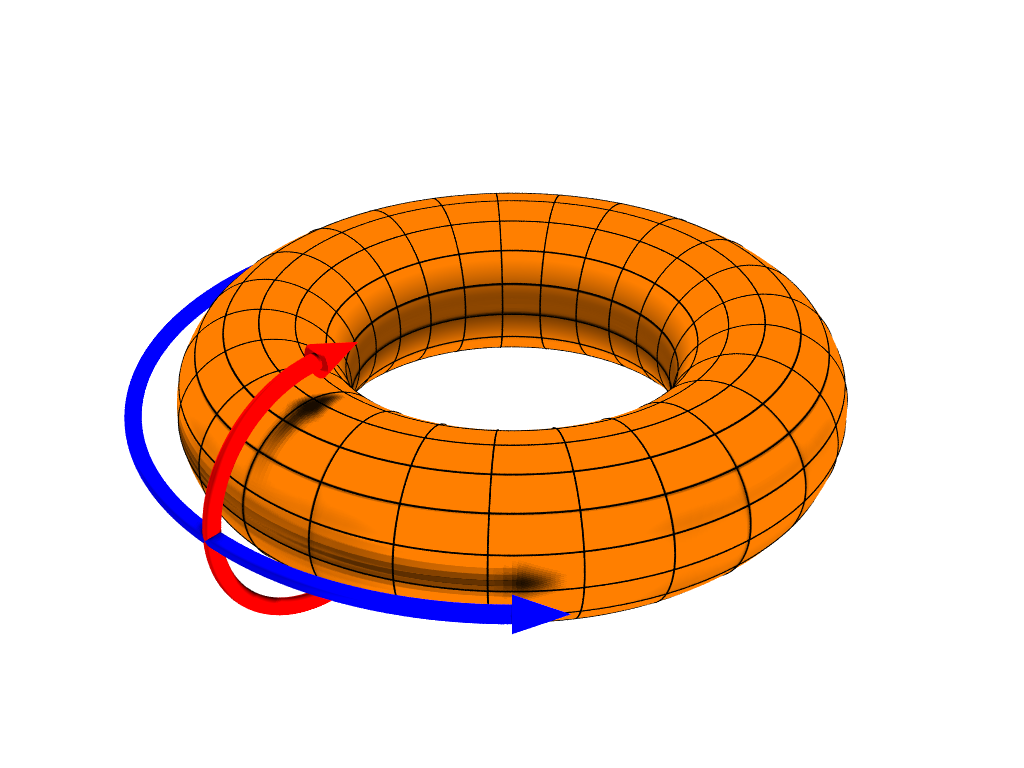
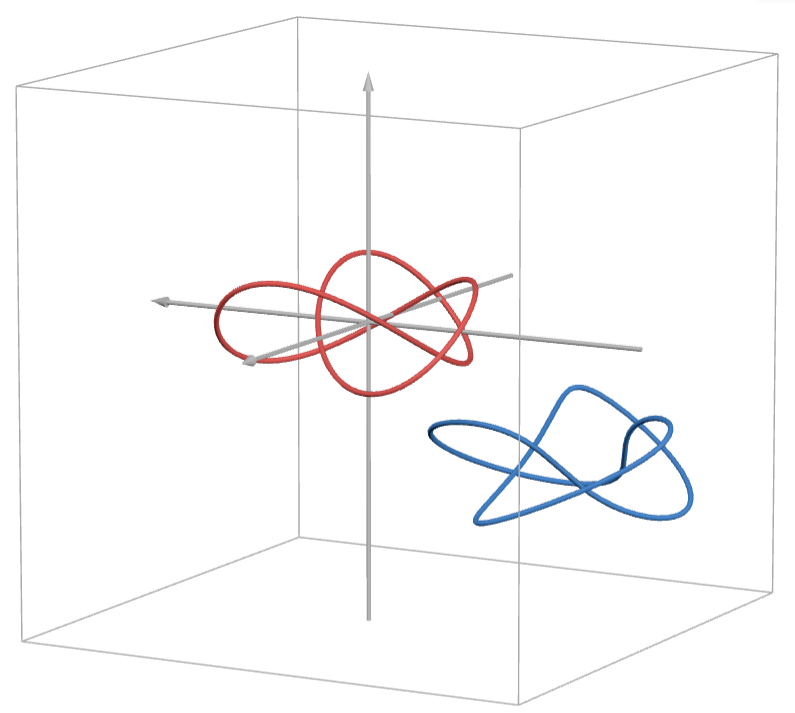
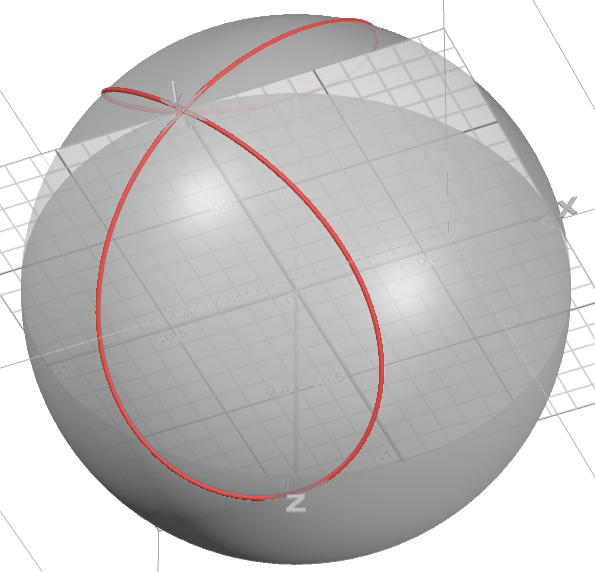
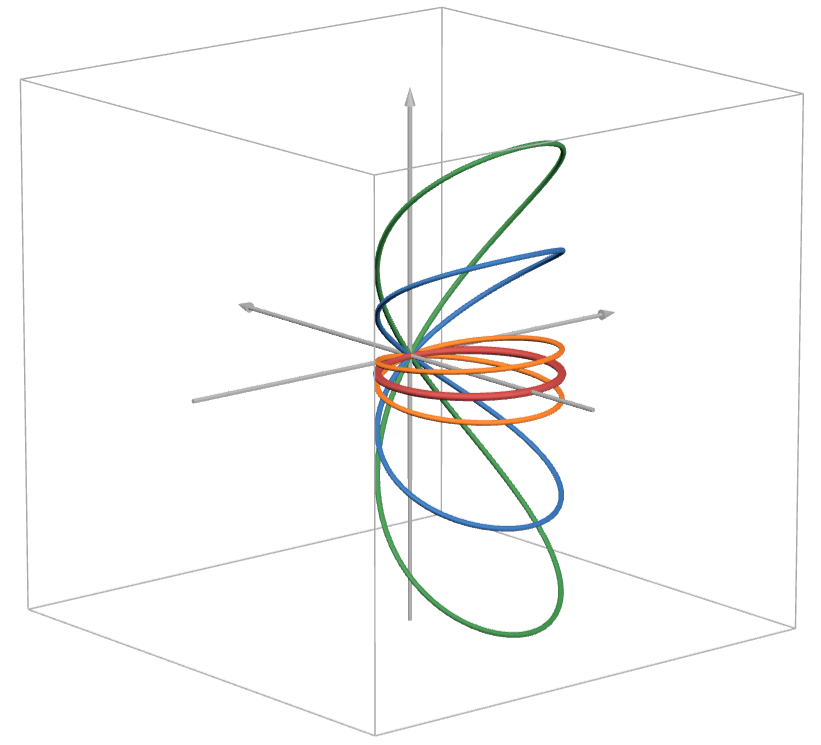
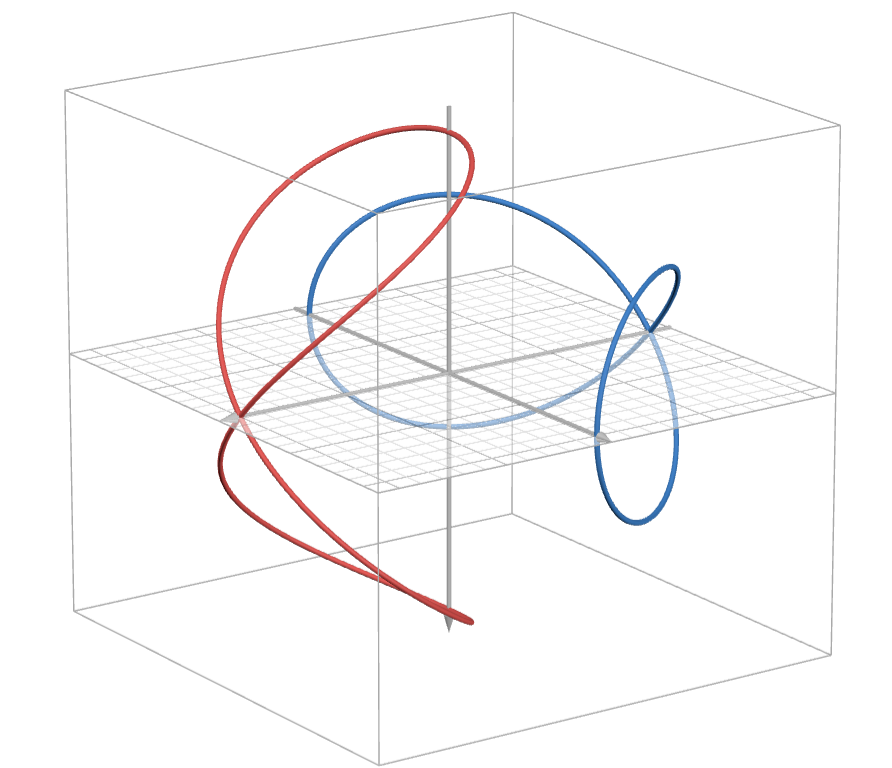
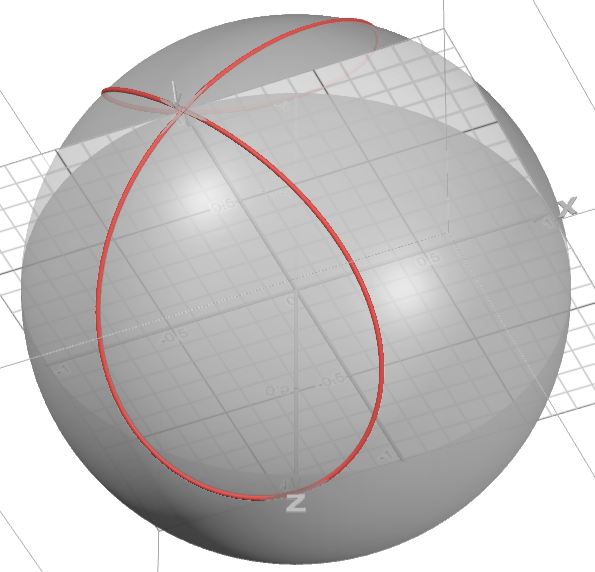

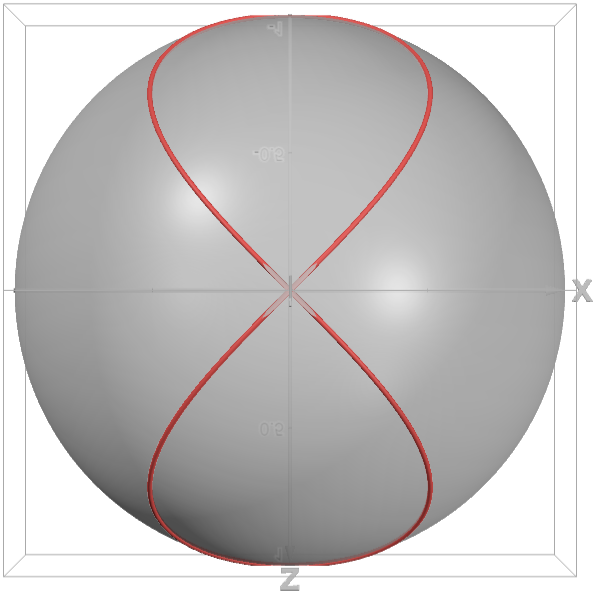
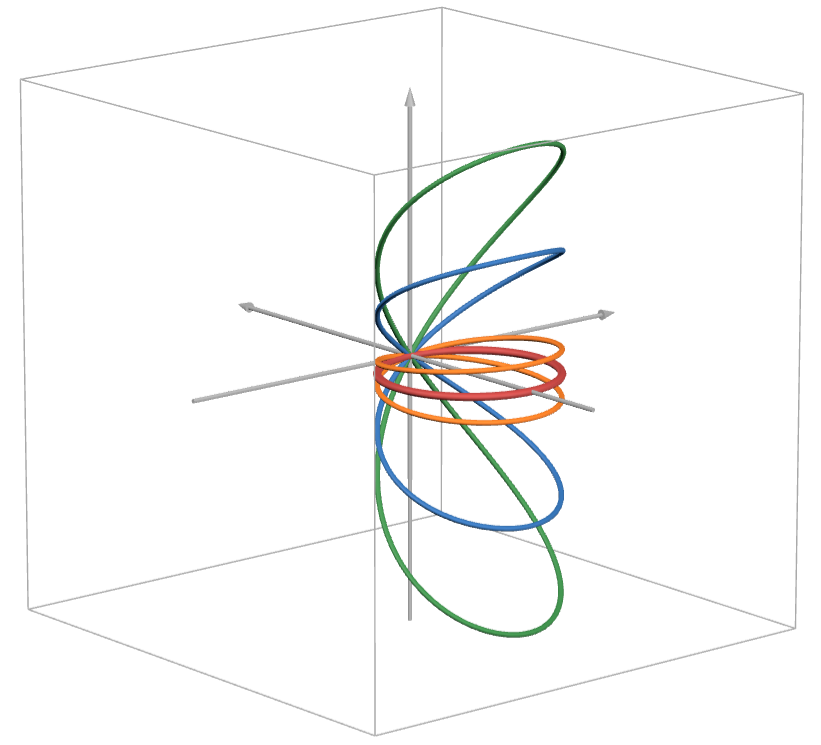
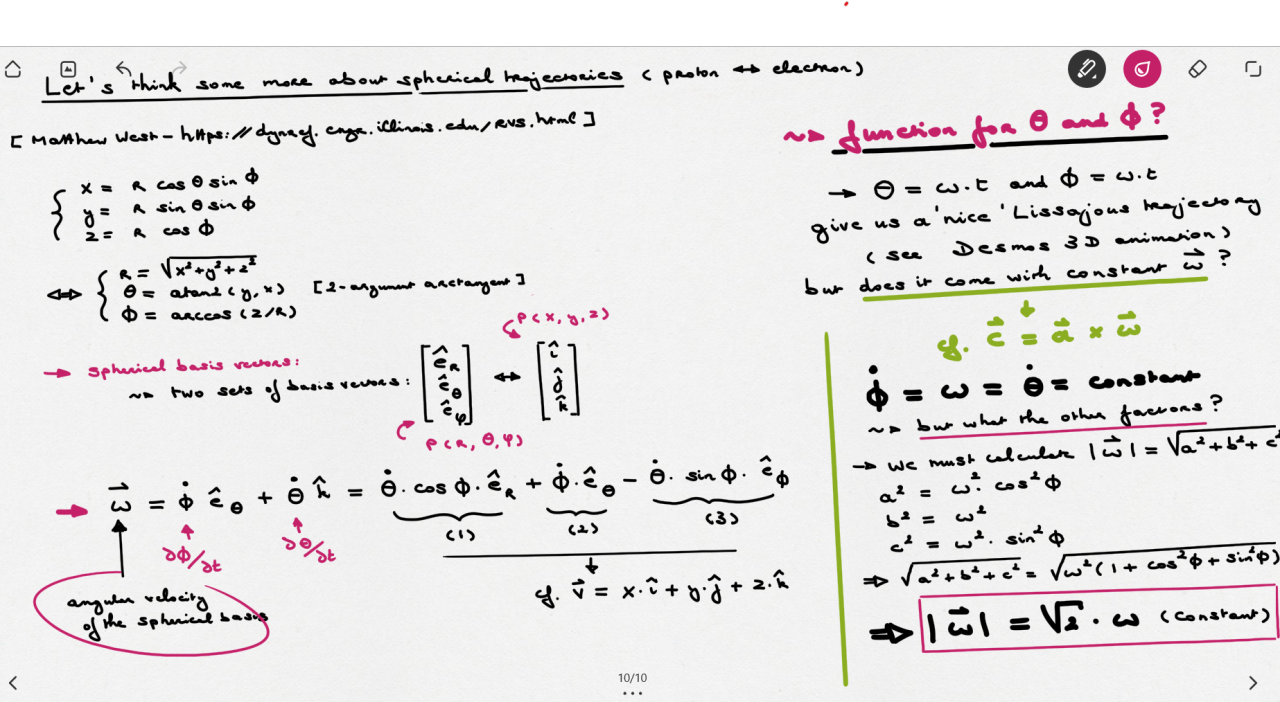
 Reading Feynman